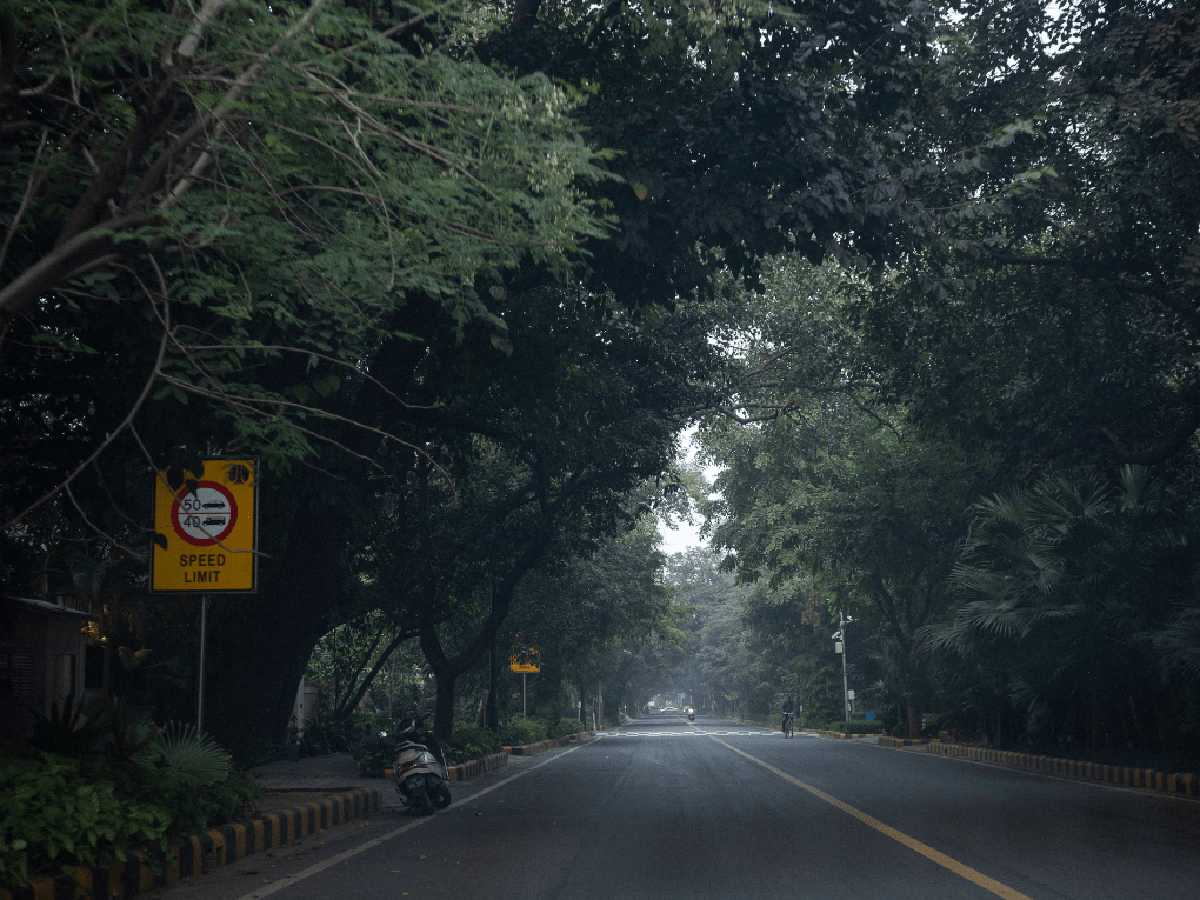
In the scorching summer months in Delhi, when the sun blazes, some parts of the city transform into unexpected scenes of beauty. A drive through Chanakyapuri, for instance, can feel like stepping into a painting. Rows of amaltas trees line the roads, their branches heavy with bright yellow flowers that hang in long clusters. These blooms fall gently, covering the streets in gold, glowing like strands of sunlight. On Amrita Shergil Marg, the same trees form a tunnel, creating a peaceful, almost dreamlike space in the middle of the busy city.
Meanwhile, Delhi is now undertaking its first full tree census. This is an important step that has been pending for many years under the Delhi Preservation of Trees Act, 1994. The project is supported by Rs 2.9 crore in funding and will be carried out over four years in three phases. The aim is to map, tag, and assess all non-forest trees in the city. By doing this, authorities hope to create a detailed database that can help protect and manage Delhi’s green cover, which currently stands at around 20% and continues to face pressure from development.
Historical ties
The story of Delhi’s trees goes back centuries and is closely tied to the city’s own history. Before 1911, when the British shifted the capital from Calcutta to Delhi, the region was dominated by a thorn forest landscape. Native species such as khejri, ber, and peelu were well-adapted to the dry, rocky conditions of the Aravalli hills. These trees were not only resilient but also essential to the local ecosystem.
Other parts of Delhi come alive in a different colour. In Lodhi Gardens, Nehru Park, and Sanjay Lake in Laxmibai Nagar, gulmohar trees burst into fiery red. Their flowers spread across the skyline and carpet the ground below, adding warmth and brightness to the harsh summer landscape. Together, these seasonal blooms give Delhi a unique character. They are not just beautiful to look at — they reflect the city’s connection to nature, its layered history, and its struggle to survive rapid urban growth.
Symbols of continuity
During the Mughal period, the relationship between people and trees became more visible in everyday life. In Shahjahanabad, homes, courtyards, and gardens were often filled with fruit-bearing trees like jamun, shahtoot, and neem. Sacred trees such as peepal and banyan were commonly planted near mosques, tombs, and other important sites, symbolising continuity and protection. Even today, some ancient khirni trees can still be found in places like Mehrauli, quietly bearing fruit and reminding visitors of a much older Delhi.
A major transformation took place after 1911, when the British began redesigning Delhi as a planned capital. Under the leadership of Edwin Lutyens and his team, the city was shaped into what they called a “garden city”. Trees were not planted randomly — they were carefully selected and arranged to enhance the visual appeal of roads and monuments. Jamun trees were planted along what is now India Gate, providing dense shade during the summer. Neem trees lined Safdarjung Road, while amaltas trees were planted along Amrita Shergil Marg. Other species, like arjun and peepal, were also used along major roads. This careful planning gave Delhi its distinctive green avenues.
“The British also introduced several foreign tree species through nurseries such as Sunder Nursery in Nizamuddin. Today, this nursery hosts a wide range of trees, including many that are not native to Delhi,” says Pritam Dhariwal, who has developed several gardens in New Delhi.
Over time, areas like Lodhi Gardens, Sanjay Van on the south Delhi Ridge, and Mehrauli Archaeological Park have developed into spaces where native vegetation and planted species coexist, creating a rich and varied landscape.
Defining seasons
In modern times, Delhi’s trees continue to define its seasons. The amaltas, planted widely in the 1980s, bloom from late April to June. It requires very little water, making it well-suited to the city’s dry climate. Its bright yellow flowers and long seed pods are now a familiar sight across many roads. “The gulmohar is equally striking, covering parks and streets in red during the same period. Though its branches can be fragile during storms, its beauty and shade make it a favourite among residents,” says Babu Khan, former Deputy Director (Horticulture) at NDMC.
Different trees have come to be associated with different parts of the city. Jamun trees are common along Rajaji Marg, neem can be seen on Barakhamba Road and Sikandra Road, and imli trees line areas such as Akbar Road and Teen Murti Marg. These trees are more than just part of the landscape — they shape the identity of neighbourhoods and contribute to the everyday experience of living in Delhi.
Under threat
However, this green heritage is under serious threat. Rapid urban development has led to the loss of thousands of trees over the years. The construction of the Delhi Metro alone has resulted in the cutting of more than 50,000 trees. In places like Pragati Maidan, nearly 2,000 mature trees, including neem and peepal, were removed. Redevelopment projects in areas such as Sarojini Nagar and Kidwai Nagar have also led to large-scale tree loss.
The problem is not just about numbers. Old trees, which take decades to grow, provide habitats for birds, insects, and other forms of life. They also play a crucial role in regulating temperature and improving air quality. Young saplings cannot immediately replace these benefits. As a result, wildlife in the city is increasingly under pressure. Birds such as parrots and owls are losing their natural habitats, and pollution, along with high-rise construction, is making survival more difficult for many species.
Some green spaces still act as refuges. Old trees in Lodhi Gardens, Sanjay Van, and Buddha Jayanti Park continue to support biodiversity. However, even these areas are not completely safe. Many old trees have fallen due to storms, pollution, and water scarcity, highlighting the challenges they face in a changing environment. It is important to remember that a full-grown tree canopy takes decades to develop, making conservation efforts all the more urgent.
Conservation strategies
In this context, the ongoing tree census becomes especially important. This data will help authorities plan better conservation strategies, guide future planting, and manage urban greenery more effectively.
As summer slowly gives way to the monsoon, the bright yellow and red blooms fade into shades of green. Yet Delhi’s trees continue to perform their vital role quietly. They cool the air, reduce pollution, provide shade, and support life in countless ways. They also carry cultural and historical meaning, connecting the present to the past.
Delhi traffic police warn of major diversions and delays on Monday as opposition plans Supreme…
Fire broke out near Yamuna Vihar market in northeast Delhi, fire department is investigating the…
Delhi Police denotifies Jantar Mantar, naming Ramlila Maidan, Burari Ground, and CBD Ground as new…
Delhi HC gives police till Oct 13 to reply to IYC plea for Jantar Mantar…
CJP leaders set a 24-hour ultimatum for Delhi Police to approve a peaceful anti-CEC Jantar…
CJI-led bench to hear SCBA plea Tuesday on lawyer disruptions amid Delhi anti-CEC protests: "Democratic…

