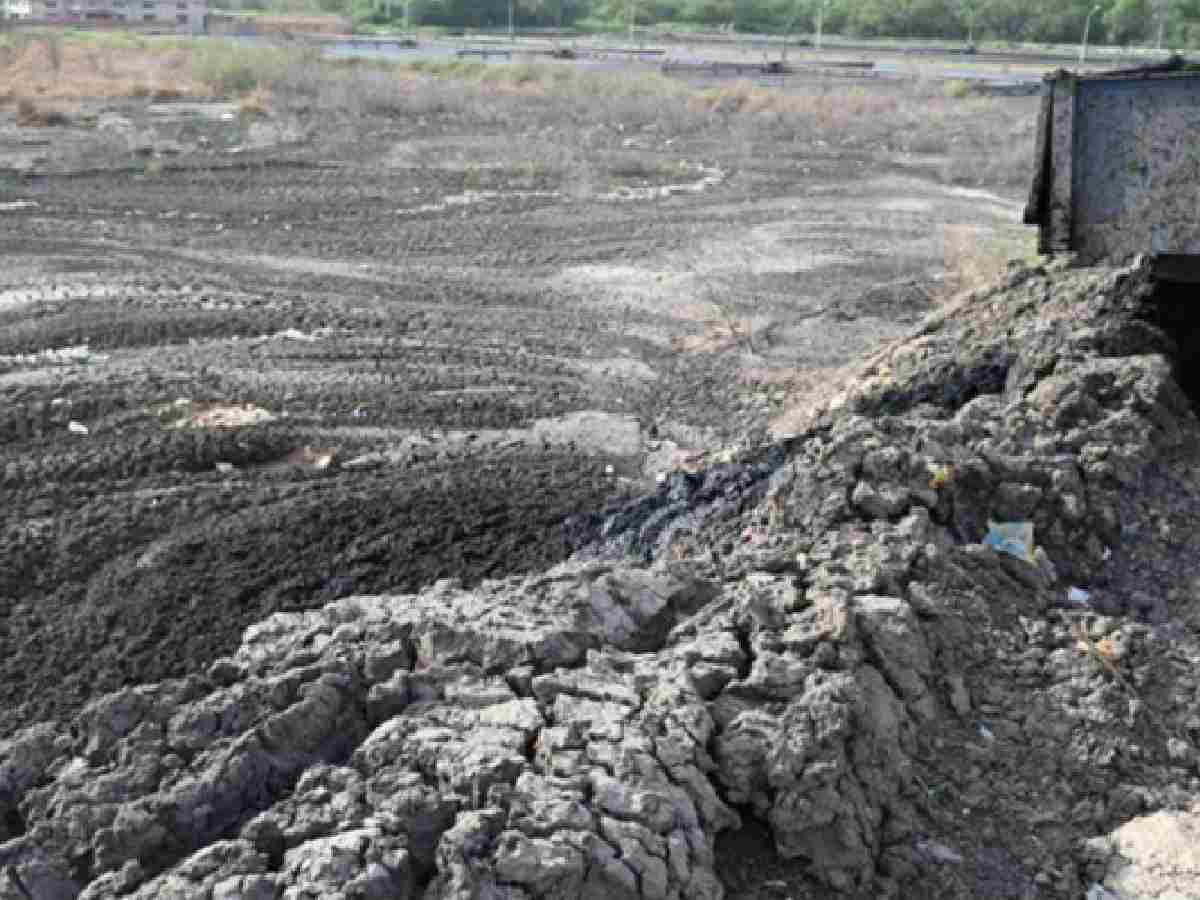
Delhi’s sewage treatment plants (STPs) are not only failing to clean the water flowing into the Yamuna — they are also mishandling the tonnes of sludge generated in the process. A committee appointed by the Delhi High Court, which inspected all 37 STPs between May and July 2025, found “no proper provision of sludge management and disposal” in most facilities. Some dump sludge in open areas, while others store it indefinitely within plant premises.
Sludge — the solid waste filtered out during treatment — contains organic matter, pathogens, heavy metals, and chemical contaminants. If mismanaged, it poses severe health and environmental risks. Yet, the committee’s report describes a system where neglect is the norm. Across the Capital, semi-solid waste is left to rot in plants or dumped in low-lying open areas, threatening soil, groundwater, and ultimately, the Yamuna.
Wet waste and industrial toxins
At Delhi Gate Phase I (2.2 MGD) and Phase II (15 MGD), sludge disposal is linked, with Phase II records showing 20–30 tonnes sent daily to the Kondli incinerator. However, neither plant has drying beds or moisture-reduction systems, meaning wet sludge is sent, increasing the risk of rejection. The SNH Drain STP (2.2 MGD) follows the same route to Kondli without any pre-treatment.
Chilla STP (9.1 MGD) generates 2.5–4 tonnes of wet sludge daily, but because it contains heavy particles from industrial waste in the Ghazipur drain, the Kondli incinerator refuses to accept it. Instead, it is dumped on Delhi Jal Board (DJB) land near Kondli STP — an open disposal practice the committee warns will contaminate soil and groundwater.
The CWG (Akshardham) STP has virtually no documented sludge handling, while the Coronation cluster (Coronation New, Coronation 2, and Coronation 3) also lacks a dedicated process, transferring waste without moisture control or tracking.
Rohini STP and Narela STP have no separate sludge data or drying infrastructure. Given Narela’s high industrial inflow, its sludge likely contains harmful chemical residues — yet no precautions are taken.
Piling up on-site
At Rithala Phases I and II, dried sludge is piled within plant premises, with no evidence of removal or secure containment. Kondli STP’s four units (Phases I–IV) send sludge to the Kondli incinerator without adequate moisture reduction, while blockages and solid waste further degrade quality.
Sonia Vihar STP lacks a sludge plan altogether, and contamination risks from open channels remain high. Yamuna Vihar’s three plants openly dump sludge on DJB land, where inflow from dyeing units, dairies, and slaughterhouses leaves it heavily polluted.
Keshopur Phases I–III have minimal sludge management, with no proper drying beds and irregular disposal. Nilothi Phases I and II lack a sludge strategy, and operational lapses cause untreated sewage to mix with treated water, worsening contamination.
Hazards from the biggest to the smallest plants
Najafgarh STP, which receives industrial and domestic sewage, has no recorded disposal method. The Okhla STP complex (124 MGD, 16 MGD, and 6 MGD) is among the worst offenders, with large heaps of dried sludge dumped on site.
Molar Band STP has no sludge records or disposal system. Vasant Kunj STPs (3.0 MGD and 2.2 MGD) produce sludge contaminated with cow dung from about 3,000 cattle in Kishangarh village, but have no moisture control before disposal. Ghitorni and Mehrauli plants are equally ill-equipped, with no inlet meters, outdated treatment norms, and zero sludge management.
Pappan Kalan Phases I and II — already bypassing untreated sewage — have no sludge handling system, while Kapashera STP operates with complete opacity. The committee could not determine its inflow source or the destination of treated water, and found no sludge management in place.
From the largest complexes to the smallest local plants, the pattern is identical: wet sludge without moisture control, industrial contamination, open dumping, and no tracking of disposal. The Kondli incinerator is overloaded and rejects poor-quality loads, fuelling illegal dumping across the city. As the committee warns, “Without safe and scientific sludge management, Delhi’s wastewater treatment efforts are fundamentally undermined. The city is simply shifting the pollution from water to land, and eventually, back into the Yamuna.”
Urgent reforms proposed
The committee has urged the DJB and the government to overhaul sludge handling across all STPs without delay. It recommends installing dedicated treatment units — including drying beds, centrifuges, or belt filter presses — to reduce moisture before disposal.
Also Read: Delhi’s Yamuna choked by sewage treatment failures
It calls for an immediate end to open dumping and storage of sludge within plant premises for more than 48 hours. Dewatering systems must ensure sludge meets incineration standards and is not rejected due to excess moisture or heavy particles.
Disposal should be tracked from generation to final destination through digital logs and GPS-enabled transport, preventing illegal dumping. Safe reuse — such as compost for non-food crops or conversion into construction materials — should be considered only after rigorous contaminant testing.
The committee also advises creating backup disposal capacity so that rejection or breakdown at one facility does not trigger uncontrolled dumping. Without these measures, it warns, mismanagement will continue to undo Delhi’s investment in sewage treatment and keep the Yamuna trapped in a cycle of pollution.
An FIR over Jamia protests alleges Congress MPs Imran Pratapgarhi and Imran Masood unlawfully entered…
Delhi's 'Namo Yamuna River Safari' cruise will launch before Chhath, offering 40-minute family trips between…
Delhi's Old RTR flyover reopens for light vehicles today after repair work following road cracks,…
Visits to Govindpuri, Jangpura, Saket and Mayur Vihar show unlabelled corrosive substances sold for Rs…
Rescue teams recovered two bodies from the debris of a collapsed under-construction house in northeast…
Built on Jawaharlal Nehru’s vision, the Delhi landmark has witnessed the evolution of a young…
