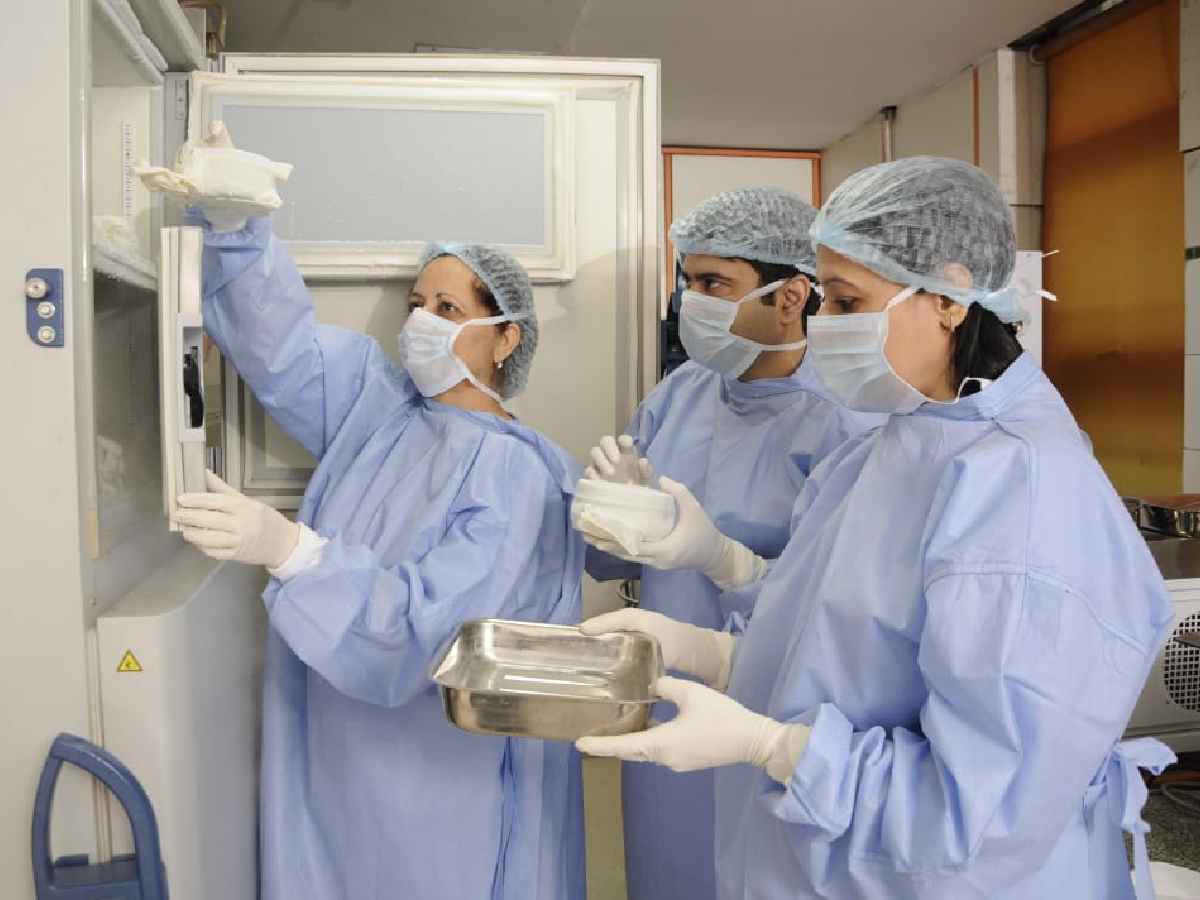
Delhi has established its first central tissue bank at the Maulana Azad Institute of Dental Sciences (MAIDS). This state-of-the-art facility has successfully developed allografts—tissue grafts taken from one person and transplanted to another of the same species. Commonly used in surgeries for bones, skin, tendons, and organ transplants, these grafts will now be available at a drastically reduced cost—from Rs 25,000 to just Rs 300.
The tissue bank aims to provide high-quality grafts at minimal costs, addressing the increasing demand for reconstructive surgeries and other medical procedures. While it will primarily support oral and dental surgeries, its applications will extend to other critical medical needs.
Efficient sourcing and overcoming delays
The tissue bank collects discarded bone fragments from surgeries at Lok Nayak Hospital, ensuring an ethical and efficient supply chain. Although initial plans began in 2019, the COVID-19 pandemic and other challenges delayed the project’s implementation. Despite these setbacks, the creation of allografts marks a significant achievement, offering new hope to thousands of patients.
Speaking to Patriot, Dr Farrukh Faraz, Professor (SAG) and Head of Periodontics at MAIDS, said, “This tissue bank will help us provide quality treatment to patients by reducing the cost drastically from Rs 25,000 to Rs 300, while also ensuring the best quality of the graft.”
“Currently, these grafts are sourced from abroad, which significantly increases the cost due to taxes and other factors. This also prolongs the treatment timeline. With the help of this tissue bank, we can provide quality treatment that is both time- and cost-effective,” Dr Faraz added.
What are allografts?
According to Dr Archita Dutta, Project Scientist, Xenograft Research Project, “Allografts are tissue grafts transplanted from one individual to another of the same species but with a different genetic makeup. These grafts are commonly used in bone, skin, and tendon repair, as well as organ transplantation.”
“Allografts consist of two types—block graft and particulate bone graft. We have successfully created both types, and we are already in the process of obtaining the relevant licences for these grafts. The tissue bank is fully equipped with all the technology needed to make allografts,” Dr Dutta explained.
What is a block graft?
A block graft is a large bone block that is fixed to the ridge to increase the width of the alveolar ridge. The procedure is used to correct bony deformities and to provide enough bone for dental implant placement.
What is a particulate bone graft?
A particulate bone graft involves using a powder or small particles of bone to restore areas of the jawbone lost due to missing teeth.
When asked about how allografts will help patients, Dr Dutta explained, “These allografts function like natural body parts and interact with the cells of the body. Currently, artificial bone available in the market is used only to fill space during surgeries. This artificial bone cannot interact with the patient’s cells and cannot work like the original bone, while the allograft acts as a natural body part.”
Giving details about the time involved in making these grafts, Dr Dutta said, “It took us two to three months to produce nearly 25 to 30 allografts at the tissue bank. However, plans are in place to increase production to benefit the masses.”
A state-of-the-art facility
“The tissue bank at MAIDS is designed to meet international standards, featuring advanced preservation and processing technologies. The facility will focus on the collection, processing, and storage of tissue grafts, ensuring they meet stringent safety and quality guidelines,” said Dr Dutta.
“It features cryopreservation units for maintaining tissue viability and testing facilities to ensure safety and compatibility. MAIDS has signed an MoU with Shri Ram for checking the bioburden and sterilisation of the collected bone from donors,” she added.
The procedure: how it works
When questioned about the procedure of the tissue bank, Dr Dutta explained, “The tissue banking process involves several critical steps to ensure the safety and efficacy of grafts. Collection begins with tissues sourced from living donors, such as dental tissues. Donors undergo a comprehensive medical history review and rigorous screening to rule out infectious diseases or conditions that might compromise tissue quality. Following collection, tissues are sterilised and processed in a controlled environment to eliminate contaminants. Specific procedures, such as decalcification for bone grafts, are performed to prepare tissues for medical applications.”
Also Read: Saif Ali Khan attack: Neurosurgeon discusses complications of spinal stab wounds
“Once processed, tissues are preserved in cryopreservation units at temperatures ranging from -80°C to -196°C, ensuring their viability for extended periods. When needed, tissues are thawed, sterilised again, and distributed to operating rooms under strict protocols. Post-procedure, recipients are closely monitored for any signs of rejection or complications, ensuring the long-term success of the graft,” she added, noting that the shelf life of these grafts is up to five years.
Benefits for patients
“This tissue bank will primarily support jawbone reconstruction for those with severe dental issues or trauma, oral cancer surgeries by providing grafts for post-tumour removal reconstruction, facial trauma repair for accident victims, and aesthetic dental procedures such as implants and cosmetic corrections,” Dr Dutta explained.
Next step
Dr Dutta underlined that MAIDS has put forth a request for procuring advanced technology to facilitate the production of xenografts at the tissue bank.
“Xenografts will provide a critical resource for patients requiring soft tissue repair, cardiac surgeries, and burn treatments, especially in cases where human donor tissues are unavailable,” she said.
“These grafts are made by sourcing tissues from animals, such as pigs or cows, which are then processed to remove cellular components that might cause immune rejection. Advanced sterilisation techniques ensure that the xenografts are safe for human use. By offering a readily available and effective alternative to human tissues, xenografts have the potential to improve patient outcomes and reduce wait times for life-saving procedures.”
What is a xenograft?
A xenograft is a type of tissue graft or organ transplant taken from a donor of one species and transplanted into a recipient of another species.
Future plan of action
“The future plan of action for the Central Tissue Bank at MAIDS includes expanding its operations from hard tissue grafts to soft tissue grafts. The next step involves acquiring acellular dermal matrix, which plays a significant role in aesthetic surgical procedures, particularly in perio-plastic surgeries,” Dr Dutta explained.
“Additionally, the tissue bank is working on developing the necessary infrastructure and facilities for long-term sterile storage and distribution of these grafts. This effort reflects their commitment to providing advanced healthcare solutions at minimal cost for improved outcomes.”
Dr Faraz added, “Dr Arundeep Kaur Lamba, Director Principal of the Periodontics, started this initiative with an aim to provide quality treatment to patients at a negligible cost, and she is the founder of this tissue bank.” He also appreciated the hard work of other members, including Dr Shruti Tandon, Professor of Periodontics.
Delhi HC will rule Oct 23 on AISA chief Neha Bora’s plea against a police…
A CREA analysis shows Delhi's winter AQI has seen no steady gain since 2022, with…
DMRC will plant over 28,000 saplings across 991 MCD parks in 3 months to offset…
Delhi HC quashed an FIR against an SSC aspirant, ruling mere presence at a protest…
CJP leaders Saurav Das and Ashutosh Ranka sought more time to join the Delhi Police…
Delhi Police held 3 more people, including a couple using a minor to sell heroin…

