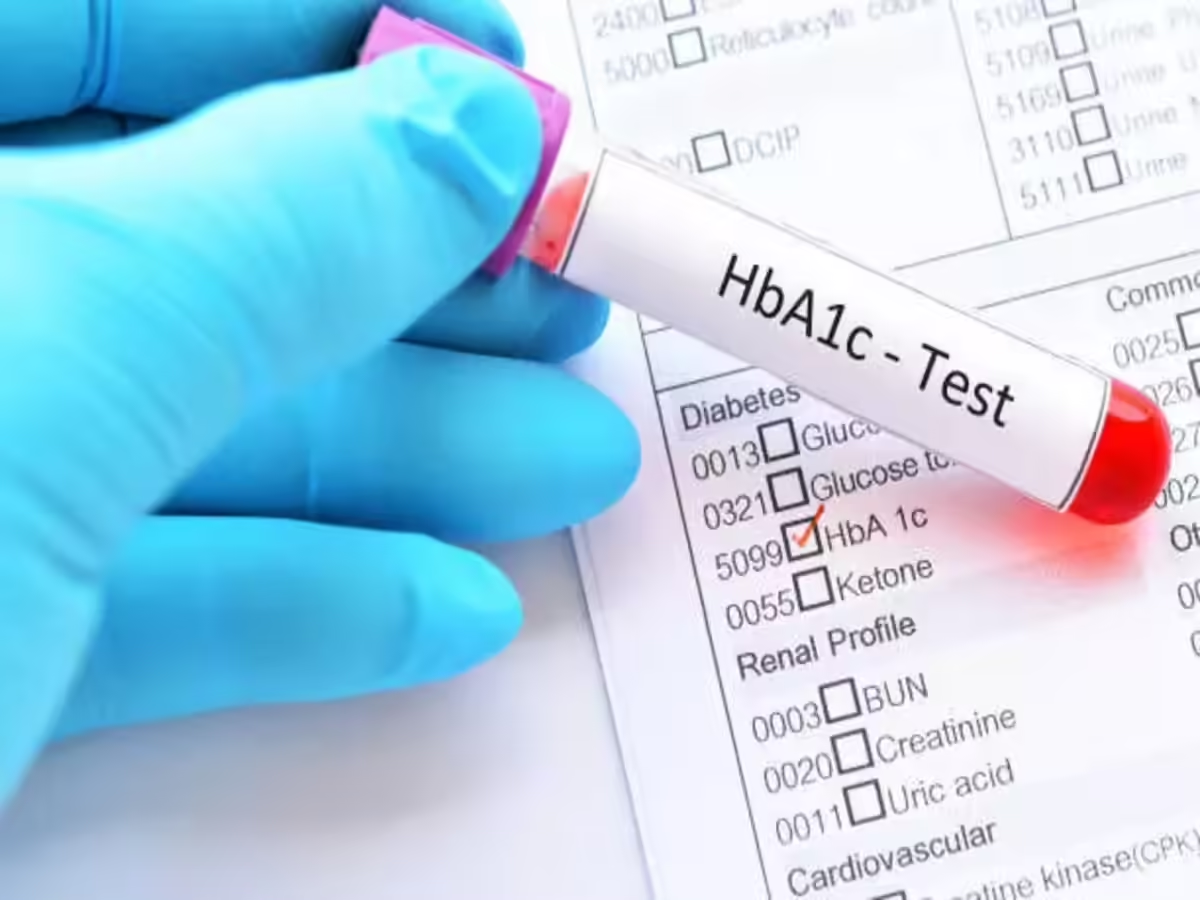
A long-standing cornerstone of diabetes diagnosis and monitoring may be failing a significant proportion of patients in South Asia, experts have warned, calling for a rethink of India’s reliance on glycated haemoglobin (HbA1c) as the primary clinical marker for Type 2 diabetes.
A new evidence-based Viewpoint published in The Lancet Regional Health – Southeast Asia highlights that HbA1c, widely regarded as the global “gold standard”, can produce misleading results in populations with a high prevalence of iron-deficiency anaemia, haemoglobinopathies and G6PD deficiency—conditions common across India and the wider region.
Experts say these biological factors alter the lifespan and structure of red blood cells, undermining the very assumptions on which HbA1c testing is based and raising concerns about delayed diagnoses, misclassification of patients and flawed public health data.
Biological limits of a global standard
HbA1c estimates average blood glucose levels over the previous three months by measuring how much glucose binds to haemoglobin in red blood cells. Under typical conditions, red blood cells survive for about 120 days, allowing for a reliable assessment of long-term glycaemic exposure.
However, the review notes that in many South Asian individuals, red blood cell turnover is altered due to nutritional deficiencies or inherited blood disorders. Shortened cell lifespans can lead to falsely low HbA1c readings, while prolonged survival in certain anaemic states can result in falsely elevated values.
This biological disconnect, experts caution, makes exclusive reliance on HbA1c clinically risky.
“Relying exclusively on HbA1c can result in misclassification of diabetes status,” said Professor Anoop Misra, corresponding author of the review and Chairman of Fortis C-DOC Centre of Excellence for Diabetes, Metabolic Diseases and Endocrinology. “Some individuals may be diagnosed later than appropriate, while others could be misdiagnosed, affecting timely diagnosis and management. Monitoring of blood sugar status may also be compromised.”
Anaemia and genetic disorders complicate diagnosis
The scale of the challenge is considerable. Nutritional iron-deficiency anaemia remains a major public health concern in India, affecting large sections of the population, particularly women and children. Iron deficiency can alter haemoglobin composition, often producing elevated HbA1c levels that do not reflect true blood glucose control.
This raises the risk of patients being started on unnecessary or aggressive diabetes treatment, while the underlying anaemia remains unaddressed.
Inherited haemoglobin disorders such as thalassaemia and sickle cell traits further complicate testing accuracy. Many laboratory analysers are calibrated for normal haemoglobin variants and may misread altered forms, the authors note.
G6PD deficiency, an enzyme disorder that causes premature red blood cell breakdown and is prevalent in several Indian communities, poses an additional risk. The review suggests that in men with undiagnosed G6PD deficiency, dependence on HbA1c alone could delay a diabetes diagnosis by up to four years, increasing the risk of complications affecting the heart, kidneys and eyes.
Also Read: 466 cancer care centres functional across country: Union govt
Urban–rural divide widens diagnostic gaps
While diagnostic inaccuracies are often associated with resource-poor settings, the review underscores that even well-equipped urban hospitals are not immune to the limitations of HbA1c testing.
“Even in well-resourced urban hospitals, HbA1c readings can be influenced by red blood cell variations and inherited haemoglobin disorders,” said Shashank Joshi, co-author of the study and endocrinologist at Joshi Clinic, Mumbai. “In rural and tribal areas, where anaemia and red cell abnormalities are more common, the discrepancies may be greater.”
Experts said the continued use of a single biomarker across vastly different biological and socio-economic contexts reflects a “one-size-fits-all” approach that fails to account for India’s diversity.
Implications for public health policy
Beyond individual care, inaccuracies in HbA1c testing have significant implications for national health planning. Large-scale surveys and screening programmes rely heavily on HbA1c to estimate diabetes prevalence across districts and states.
If these readings are systematically skewed by widespread anaemia and genetic blood disorders, experts warn that India’s diabetes burden may be either overestimated or underestimated in different regions. This could lead to misdirected public spending and policy priorities.
The authors caution that without correcting for haematological variables, public health strategies may end up targeting the wrong problems in certain populations, while overlooking nutritional deficiencies or inherited conditions that require parallel intervention.
Moving beyond mono-biomarker reliance
To address these concerns, the review calls for a shift towards a multidimensional diagnostic framework that combines HbA1c with other tools, rather than relying on it in isolation.
The authors recommend greater use of the oral glucose tolerance test (OGTT) for diagnosis, alongside self-monitoring of blood glucose and routine haematologic assessments. Unlike HbA1c, OGTT directly measures the body’s response to glucose and is not influenced by red blood cell lifespan.
“Combining oral glucose tolerance test, self-monitoring of blood glucose, and haematologic assessments provides a more accurate picture of diabetes risk,” said Dr Shambho Samrat Samajdar, co-author of the review from Kolkata. “This approach can help refine public health estimates and guide resource allocation.”
Resource-adapted care models
Acknowledging India’s healthcare diversity, the authors propose a tiered, resource-sensitive framework. In low-resource and primary care settings, they suggest prioritising OGTT for diagnosis and affordable self-monitoring of blood glucose, supported by basic screening for anaemia and red cell abnormalities.
In tertiary and urban centres, clinicians are encouraged to pair HbA1c testing—performed on standardised, high-quality equipment—with continuous glucose monitoring. The review also highlights fructosamine testing as a useful alternative marker, particularly for patients with anaemia or haemoglobin variants, as it reflects short-term glucose control without relying on red blood cells.
Experts said adopting such context-specific strategies would improve diagnostic accuracy, reduce harm from misclassification and align diabetes care more closely with India’s biological and public health realities.
The review concludes with a call for clinicians, policymakers and researchers to reassess long-standing assumptions and ensure that diagnostic convenience does not come at the cost of patient safety and population-level accuracy.
Read More: India must prioritise community-based geriatric care as population ages
Delhi HC will rule Oct 23 on AISA chief Neha Bora’s plea against a police…
A CREA analysis shows Delhi's winter AQI has seen no steady gain since 2022, with…
DMRC will plant over 28,000 saplings across 991 MCD parks in 3 months to offset…
Delhi HC quashed an FIR against an SSC aspirant, ruling mere presence at a protest…
CJP leaders Saurav Das and Ashutosh Ranka sought more time to join the Delhi Police…
Delhi Police held 3 more people, including a couple using a minor to sell heroin…
