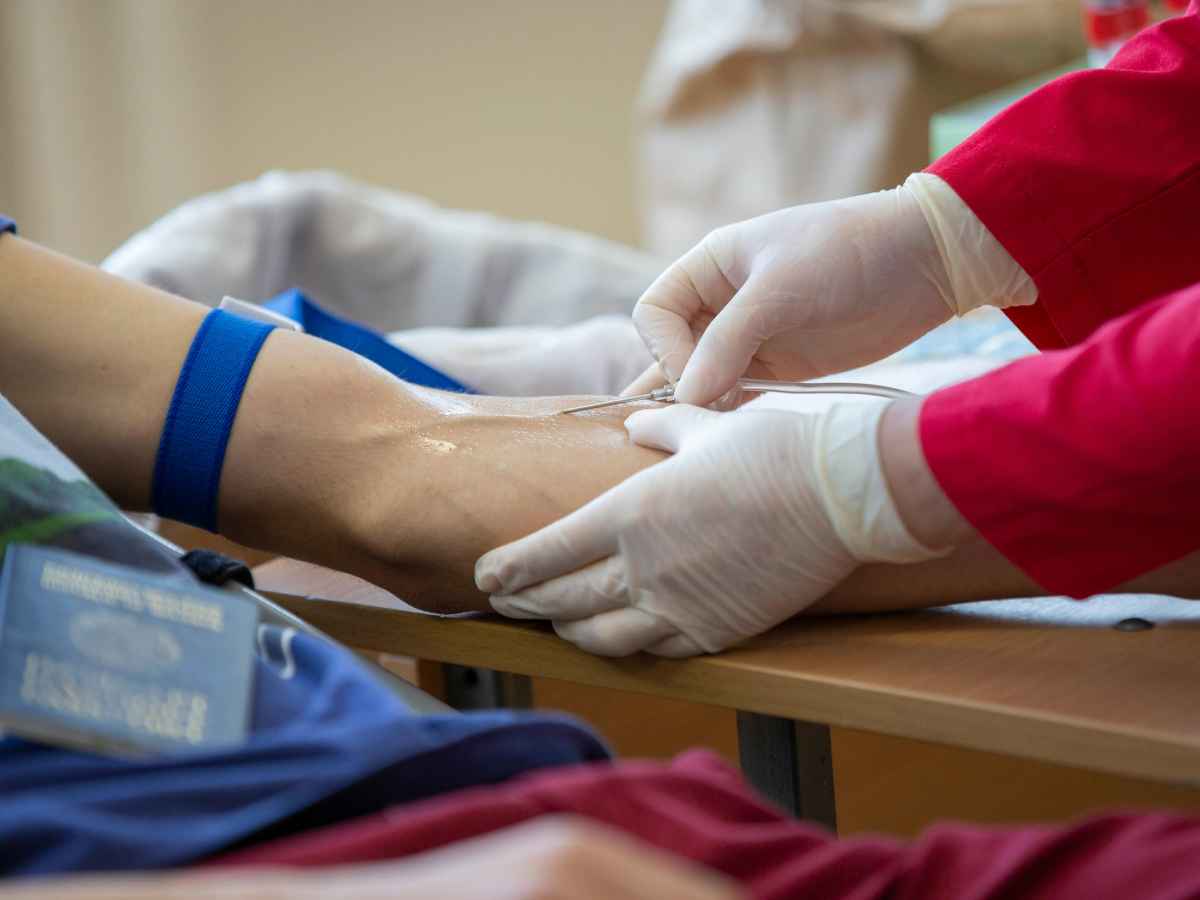
Every two seconds, someone in India needs blood—whether it’s a mother during childbirth, a child battling cancer, or a road accident victim. Despite widespread volunteerism, the country continues to face an annual shortfall of over 1 million units, prompting doctors to call for a more consistent and informed approach to blood donation.
India requires approximately 14.6 million units of blood each year but falls short by nearly 1 million units, according to official data. This shortage often results in critical gaps in emergency care. Experts point out that while blood donation is safe and straightforward, a combination of widespread myths and lack of awareness—particularly in rural areas—continues to deter many potential donors.
“Blood donation is not just a noble act—it is essential and irreplaceable,” said Dr Harpreet Kaur, Head of Lab Services and Blood Centre at Aakash Healthcare. She emphasised the urgency of regular donations, adding, “We treat cancer patients, those with thalassaemia, trauma injuries, and others undergoing complex surgeries. For many of them, timely blood transfusion is the only lifeline.”
No synthetic substitute exists for human blood. A single unit of donated blood can be separated into red blood cells, plasma, and platelets—benefiting up to three patients. Yet, hesitancy persists due to misinformation.
“People believe they’ll feel weak or fall sick after donating, which is untrue,” said Dr Uma Rani, Director of Pathology at Asian Hospital. She explained that a healthy adult can safely donate every three months, and the body quickly replenishes the lost volume.
The need is most acute for certain groups. Children with thalassaemia often require transfusions every 15–20 days. Cancer patients undergoing chemotherapy and individuals in intensive care also depend on a steady blood supply. “The need is continuous and urgent,” said Dr Liza Bulsara, Consultant in Hemato-oncology and Bone Marrow Transplant at Jupiter Hospital.
Tech helps, but cannot replace awareness
The government has introduced digital platforms like e-Rakt Kosh—a national blood bank portal that links donors with hospitals in real time. While these solutions are promising, doctors warn that technology alone cannot close the gap.
Also Read: World Blood Donor Day: One donation can save 3 lives, leave lifelong impact
“In urban areas, people respond to drives,” said Dr Sunita Kapoor, Director and Lab Head at City X-Ray and Scan Clinic. “But in rural India, donation is still surrounded by stigma. We need to educate at the grassroots level—through schools, panchayats, and community or religious leaders.”
Myths about menstruation and childbirth persist
Many women are discouraged from donating due to incorrect assumptions. Dr Archana Dhawan Bajaj, Gynaecologist and IVF expert at Nurture IVF Clinic, clarified: “During menstruation, if a woman feels well and her iron levels are normal, she can usually donate. After childbirth, though, we recommend waiting at least six months for the body to recover.”
A habit, not a campaign
World Blood Donor Day, observed every year on June 14, carries the theme this year: Give blood, give hope: together we save lives. Doctors say the message is an important reminder of how a simple act can have life-saving consequences—but warn that the sentiment must extend beyond a single day.
“If even 1% of India’s population donated regularly, the national shortage would be eliminated,” said Dr Harpreet.
“Blood donation should not be reserved for campaign days. It must become a habit,” added Dr Uma.
A Delhi court denied bail to a former DU professor accused of raping a student,…
Delhi Police charged seven dhaba workers in the fatal beating of a Manipuri musician who…
Seven Delhi STPs failed DPCC standards in September, dumping high levels of faecal coliform and…
AISA chief Neha Bora petitioned the Delhi HC against a police notice requiring a peace…
Average AQI of 171 in the first week of this month; falling temperatures and stubble…
Delhi Police dismissed claims of disrupting CR Park Durga Puja, stating actions strictly enforced court-mandated…
