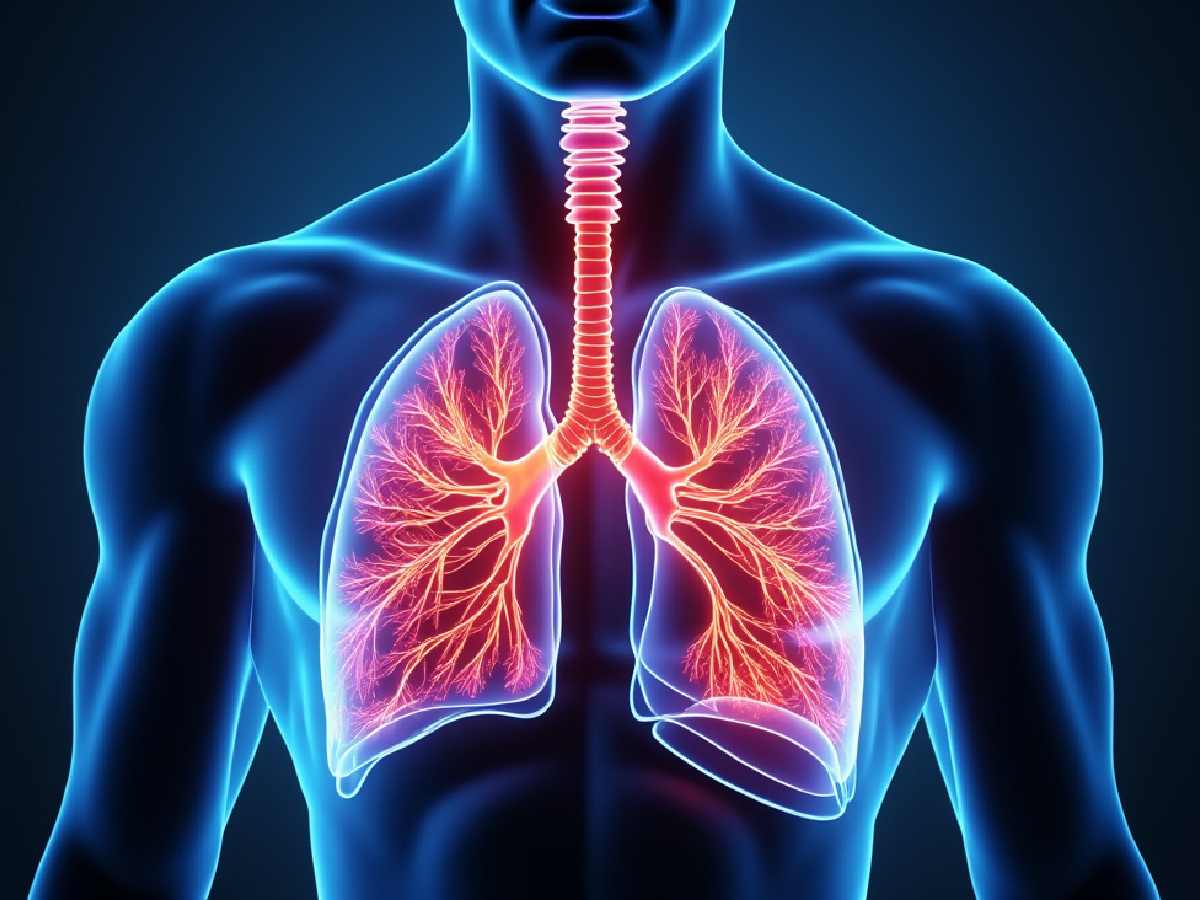
Lung cancer, long associated almost exclusively with cigarette smoking, is increasingly being diagnosed in people who have never lit a cigarette. Doctors across Delhi are flagging a worrying trend: prolonged exposure to toxic air is now emerging as a significant contributor to the disease, particularly among younger individuals and non-smokers.
As the world marks World Cancer Day on February 4, medical experts caution that air pollution—often treated as an environmental inconvenience—is in fact a serious carcinogenic threat with long-term health consequences.
“While tobacco remains the leading cause of lung cancer, air pollution is now a growing and unavoidable risk,” said Dr Imran Khan, consultant medical oncologist at Fortis Escorts, Okhla. “The evidence linking polluted air to lung cancer is no longer speculative—it is robust and well established.”
Air pollution a confirmed carcinogen
The International Agency for Research on Cancer (IARC), the cancer research arm of the World Health Organization, has classified outdoor air pollution and fine particulate matter—PM2.5—as Group 1 carcinogens, placing them in the same category as tobacco smoke.
PM2.5 particles are small enough to penetrate deep into the lungs and even enter the bloodstream. Large population-based studies have demonstrated a clear link between long-term exposure to PM2.5 and lung cancer risk.
“For every 10 micrograms per cubic metre increase in PM2.5, the risk of developing lung cancer rises by approximately 10 to 20 per cent,” Dr Khan explained.
Polluted air carries several cancer-causing substances, including polycyclic aromatic hydrocarbons, asbestos and heavy metals such as arsenic. Once inhaled, these pollutants can trigger chronic inflammation, oxidative stress and direct DNA damage. Over time, repeated cellular injury and impaired DNA repair can lead to malignant transformation of lung cells.
Doctors point out that unlike many environmental hazards, air pollution appears to have no safe lower limit. “Oncological data show a gradual increase in lung cancer risk as pollution levels rise, without a clear threshold below which the risk disappears,” Dr Khan said.
Younger, non-smokers at risk
Clinicians are observing a shift in the profile of lung cancer patients. Dr Ravi Wategaonkar, senior consultant in medical oncology at TGH Onco Life Cancer Centre, said the disease is being detected in younger age groups than before.
“There is a concerning increase in lung cancer cases among non-smokers and even younger individuals aged between 23 and 35,” he said. “Air pollution, second-hand smoke, occupational exposure and genetic mutations are all contributing factors.”
While the cancer risk from air pollution remains lower than that from active smoking, Dr Wategaonkar stressed that its impact is widespread because exposure is continuous and often unavoidable in urban environments.
Prolonged exposure to polluted air may also influence the stage at which lung cancer is detected. “Delayed symptom recognition often leads to advanced-stage diagnosis, particularly in non-smokers,” he said. “This limits treatment options and affects outcomes, although targeted therapies have improved survival in selected patients.”
Dr Devavrat Arya, principal director of medical oncology at Max Super Speciality Hospital, Saket, said data from recent years reinforces this trend. “Nearly 40 to 50 per cent of lung cancer patients diagnosed recently have no history of smoking,” he said. “This points to non-tobacco risk factors such as air pollution and indoor pollution.”
He added that doctors are also seeing a shift towards adenocarcinoma, a lung cancer subtype more commonly associated with non-smoking-related causes.
Silent lung damage
Dr Akshay Budhraja, senior consultant and head of respiratory and sleep medicine at Aakash Healthcare, said the effects of polluted air on lung health are cumulative and often go unnoticed in the early years.
“Our lungs are delicate organs that work silently day and night,” he said. “When the air is full of dust, smoke and toxic gases, long-term irritation can eventually lead to serious diseases, including lung cancer.”
He noted that many lung cancer patients he treats have never smoked. “They include homemakers exposed to kitchen smoke, workers exposed to industrial dust, and people living near busy roads or factories,” he said.
Indoor air pollution, particularly in smaller towns and rural areas, is emerging as an equally serious concern. Cooking with firewood or coal, poor ventilation and waste burning near homes release harmful smoke, disproportionately affecting women and the elderly.
Children and older adults are especially vulnerable to polluted air. Long-term exposure from a young age can permanently damage lung health, increasing cancer risk later in life.
Late detection limits treatment
Dr Durgatosh Pandey, chairman of surgical oncology at Asian Hospital, said doctors are seeing more lung cancer cases than ever before—many of them in patients with no history of smoking.
“Earlier, lung cancer was mostly linked to smoking. Today, a large number of patients who come to us have never smoked in their life,” he said. “One of the biggest reasons is the air we breathe.”
According to Dr Pandey, lung cancer develops slowly over many years. “Harmful particles in polluted air enter the lungs and remain there, repeatedly injuring lung cells. Over long exposure, some of these damaged cells turn cancerous,” he explained.
He added that late detection remains one of the biggest challenges. “Many patients ignore a persistent cough, chest pain, breathlessness or weight loss, assuming it is due to pollution, age or a past infection. By the time proper tests are done, the cancer may have already spread.”
Early-stage lung cancer can often be treated surgically, involving removal of part of the lung along with affected lymph nodes. “Advanced cases require a combination of chemotherapy, targeted therapy or immunotherapy,” Dr Pandey said. “While treatments have improved, early detection makes a critical difference.”
Pollution-linked pre-cancer
Dr Parveen Yadav, chief and senior consultant of minimally invasive and robotic thoracic onco surgery at Artemis Hospitals, highlighted that lung cancers and pre-cancerous lung changes are being seen increasingly in patients with no history of smoking.
“Many of these patients live in cities with heavy traffic, industrial emissions and indoor pollution. Fine particles and toxic gases damage lung cells over time, causing inflammation and DNA changes,” he said. “This silent injury gradually increases the risk of cancer even if the person has never smoked.”
Dr Yadav also emphasised the significance of cumulative exposure in urban settings. “Breathing polluted air every day for years lets harmful particles reach deep into the lungs and blood. Chronic inflammation stresses lung tissues, raising the risk of abnormal cell growth—often comparable to other well-known lifestyle risks,” he said.
He warned that early warning signs of pollution-related lung damage often go unnoticed. “Frequent cough, breathlessness, chest tightness, wheezing and repeated respiratory infections are commonly ignored. Patients assume it’s ageing or seasonal pollution. Ignoring these signs delays diagnosis and allows disease progression,” Dr Yadav added.
Prevention and awareness
Dr Kumardeep Dutta Choudhury, senior director of oncology at Max Hospitals, Shalimar Bagh, said long-term exposure to polluted air can damage lungs even in otherwise healthy individuals.
“Persistent irritation inflames airways, weakens natural lung defenses and reduces lung capacity. Over time, this raises the risk of asthma, chronic lung disease and lung cancer,” he said.
He noted that awareness among patients remains limited. “Many think pollution is just a part of city life, not a serious health risk. Because symptoms appear gradually, long-term damage often goes unnoticed, and preventive measures are not adopted,” Dr Dutta Choudhury explained.
Experts advise both individual and public-level interventions: limiting outdoor exposure on high-pollution days, wearing masks, improving indoor air quality, maintaining a healthy diet rich in antioxidants, omega-3 fatty acids and staying hydrated. Regular check-ups and reporting persistent respiratory symptoms are equally crucial.
“Clean air can save lives,” Dr Dutta Choudhury said. “Pay attention to persistent cough, breathlessness or fatigue. Early medical advice and preventive steps can help protect your lungs and reduce the risk of cancer.”
A 24-year-old delivery executive died on Oct 20 after ingesting poison following an assault over…
CAQM reviewed dust pollution in Delhi and enforced GRAP-1 rules after AQI fell to 'poor'.…
Over 1 lakh of 4.56 lakh Form 6 voter enrollment applications in Delhi have been…
NDMC cut water and power near Race Course Mosque during a demolition drive, affecting nearby…
BNSS caps custody at 24 hours and requires production before a Magistrate; force permitted only…
An SEM court reserved its order on extending the judicial custody of CJP leaders Saurav…


