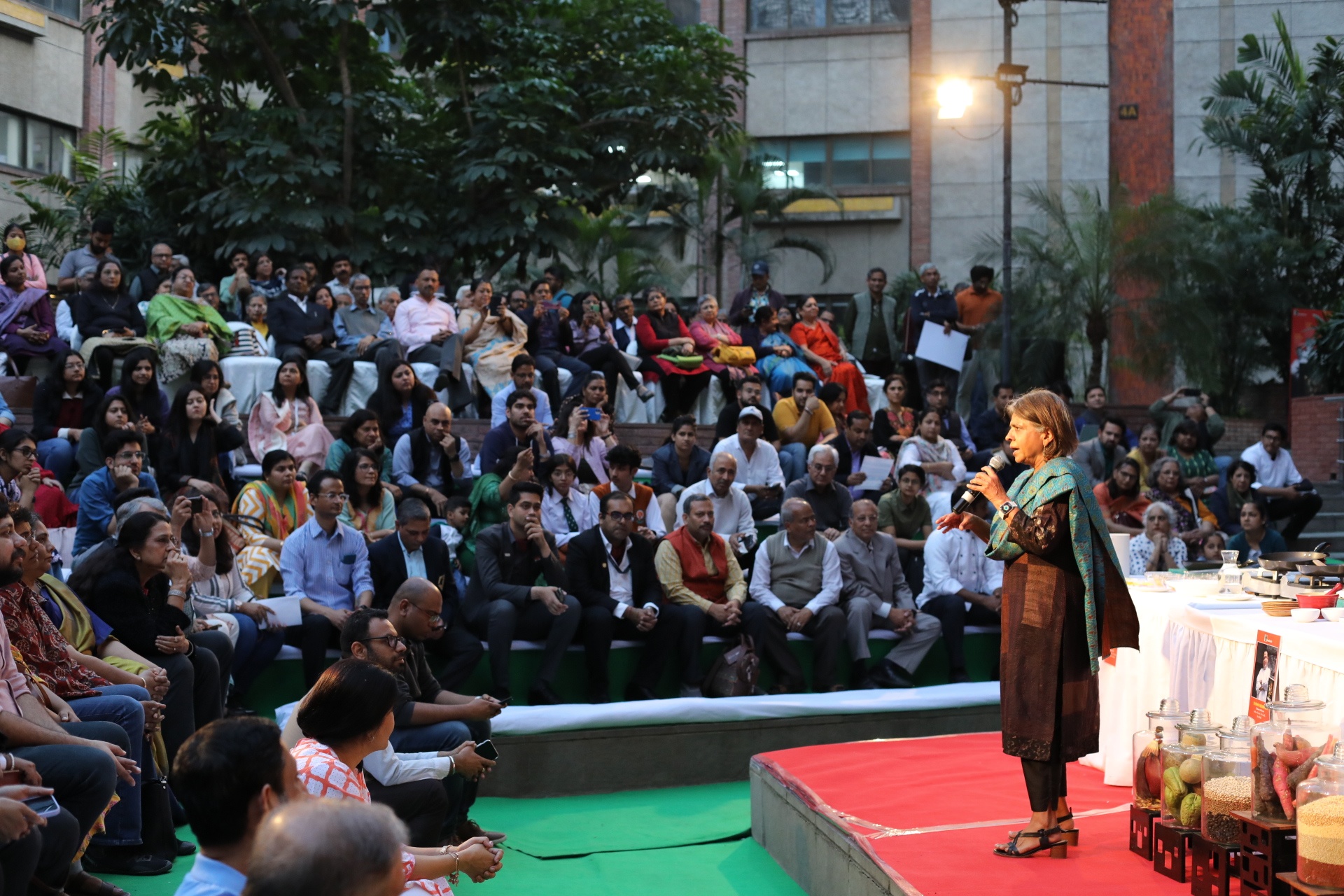
WISE WORDS: Sunita Narain talks about the importance of eating right
What we eat not only impacts our own health but also the health of our world, which is threatened by extreme weather events.
Environmentalist Sunita Narain of Down to Earth magazine poses a question, “How should we practice agriculture and food production in our world, so that we can ensure the security of livelihood, nutrition and nature?”
Her thought-provoking query challenges consumers to reconsider the nexus between agriculture, food production, and global well-being.
She emphasises the power consumers hold in shaping agricultural practices: “What we eat; and why we eat it. If we change our diet, it provides signals to the farmer to grow differently. We know food is medicine, yet we continue to eat wrong, eat junk. The food on our plates has lost the meaning of nutrition. We are in danger of losing the knowledge of good food — what our grandmothers and mothers cooked in different seasons. This is why we must be part of this changed agriculture story. Cuisines are about culture and biodiversity.”
To encourage better eating habits in a world, which is at the risk of climate changes, the Centre for Science and Environment (CSE) has launched its latest publication, First Food: The Future of Taste. The book features contributions from renowned chefs and culinary experts, including Jatin Mallick, Manish Mehrotra, Manjit S Gill, and Rajiv Malhotra.
The First Food series, conceived by Vibha Varshney, Consulting Editor at Down to Earth, delves into the intersection of climate change, food, and its production. Offering over 100 unique recipes sourced from India’s rich biodiversity, the book serves as a culinary beacon amidst a world grappling with climate crises. Notably, chefs and culinary experts have contributed their expertise, infusing popular indigenous foods like millets with innovative twists.
Varshney elucidates, “Local communities in India knew about millets much before they became fashionable… Our book brings together over 100 of these ‘non-mainstream’ recipes, foods that could turn out to be ideal for a world that is struggling with the ravages wrought by climate change.”
Acknowledging the profound impact of food production on global greenhouse gas emissions, chef Manish Mehrotra of Indian Accent underscores the importance of traditional foods and cooking methods for maintaining health. He emphasises, “Traditional cuisines are mindful of this and practice this on a daily basis,” advocating for the nutritional benefits of finger millet or ragi.
Mehrotra further recommends innovative recipes like ragi srikhand cannoli, utilising nutrient-rich ingredients like ragi and jaggery to create satisfying desserts.
Chef Jatin Mallik echoes this sentiment, suggesting the use of foxtail millet for a vegetable loaf, showcasing the versatility and digestibility of indigenous grains in contemporary cuisine.
The chefs underscore the importance of promoting food choices that prioritise both nutrition and environmental sustainability. They advocate for the cultivation of water-prudent crops like millets in regions facing water scarcity, urging government to support through policy initiatives. Sunita emphasises, “Government must enable policies that will promote the cultivation of these crops.”
Narain delineates the dichotomy within agricultural systems, distinguishing between intensive industrial models and subsistence farming practices. She warns against perpetuating an emission-heavy, luxury-focused food production model, particularly as smallholder farmers worldwide face threats from climate change and other challenges.
Delhi’s esteemed historian, academician, and food critic Pushpesh Pant cites the versatile usage of turmeric (haldi) in Indian cuisine, ranging from sweet dishes like zarda and halwa to savoury curries and flavoured rice. He highlights the traditional preparation of haldi ki subzi in Rajasthan during winters, exemplifying the richness of indigenous culinary traditions.
Pant urges a return to indigenous foods and culinary practices, stressing that the diversity of regional cuisines across India renders imported or packaged food choices unnecessary. He emphasises the importance of embracing our culinary heritage.
The First Food: Future of Taste, published by the CSE, is available for Rs 950.
Elected to the Delhi Golf Club general committee, Mansher Singh says he wants to build…
A $780 million market built on pavements, where the pleasure of reading meets the price…
Supreme Court advocate Abhishek Pawar alleges women were denied washroom access for seven to eight…
Each day of closure costs shops in Khan Market and Connaught Place between Rs 60,000…
Delhi generates nearly 15,000 tonnes of waste daily, prompting the government to deploy 1,000 mechanical…
Delhi Police has issued an NOC for the Congress rally at Ramlila Maidan on November…

