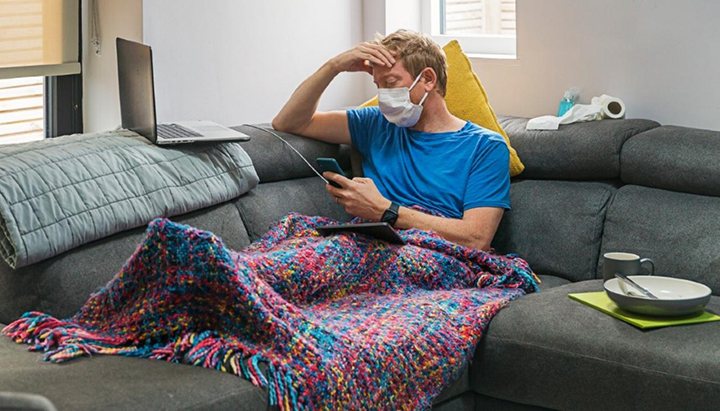
Delhi has registered the third-highest number of Coronavirus cases in the country and this is putting immense stress on its medical infrastructure. To help ease this stress, the government has issued notifications stressing home quarantine for those who are asymptomatic as well as for patients with mild symptoms of the Covid-19.
Patients who have tested positive for the virus and show minor to no symptoms are advised to stay under home quarantine for the stipulated time periods and take necessary precautions. In view of this, it is important to take the necessary steps for a healthy recovery of the patients as well as ensure that the health and the safety of their family members are not compromised.
To better understand the precautions one should take under home quarantine, Dr Nikhil Modi, Senior Consultant, Respiratory, Critical care And Sleep Disorder, Institutes of Critical Care, Indraprastha Apollo Hospitals says, “When a patient tests positive for Covid-19, he/she should immediately be put under quarantine at home in a separate bedroom with a separate a bathroom not be used by anyone else in the family. In case of any breathlessness or worsening of the condition, contact a doctor and immediately go for admission”.
For family members living with the patient, maintaining a minimal physical distance from the patient is of utmost importance. He says that care should be taken when giving food or any essentials like “They should wear face masks and gloves and leave the essentials on the entry of the room.
He further says that the caregiver should monitor his/her health too on a regular basis so early detection is possible in case they develop any symptoms and if they do, should get tested as soon as possible. “Regular handwashing and hand sanitisation is a must,” he adds.
For the well-being of the patient, he advises that patients should follow a healthy diet with green leafy vegetables as they are rich in vitamins which help in building immunity.
These precautions need to be adhered to for at least 17 days as per the government guidelines and 14 days for people who have come in contact with Covid patients. With the medical infrastructure already burdened by the pandemic, the best thing to do is to ensure social distancing and adhere to government regulations. However, if someone tests positive for the Coronavirus and is advised home quarantine, medical help should be sought if there is any worsening of symptoms, increase in breathlessness or fall in oxygen saturation. If any such problems arise, the patient should be rushed to a hospital.
Dr Reshma is an advocate of wellness, prevention and holistic health. Instagram handle: dr.reshmakhattarbhagat
You are not alone

Here’s a step-by-step guide for home quarantine as advised by Dr Aravinda GM Consultant, Internal Medicine, Manipal Hospitals:
Consultation from family & medical/paramedical staff
If the patient is aged more than 60 years with co-morbidities like diabetes, kidney diseases, hypertension, heart diseases, seek medical help
Quarantine the patient at home and ensure that they stay in a separate room/ floor
Use a separate toilet/ bathroom
Separate vessels and plates. Clothes used by the patient should be handled and sanitised
Do not self-medicate. Take medication as per the advice of medical professionals
Follow a normal diet with plenty of fluids (take Vitamin C rich foods and beverages)
In case of persistent fever, shortness of breath, seek immediate medical help
Keep handy a digital thermometer (to check the temperature), digital BP apparatus and pulse oximeter (if available)
Stay in quarantine for 2-3 weeks at least
Advice to family members
Stay calm, do not panic
Speak/chat with the patient, reassure him through video call and maintain social distancing
In case any other family members develop symptoms like fever /cough/sore throat/ shortness of breath, get tested as soon as possible
In case there are any elders, diabetics, people with heart /kidney diseases, in the house try to shift them to different floor/ house
In case of people aged over 65 years with long-standing diabetes, hypertensive, with kidney/heart/ lung disease, persistent fever, systolic BP below 100, heart rate below 110, Spo2 less than 90% on room air, shortness of breath during routine activities, drowsiness or persistent vomiting, report to a hospital immediately.
BNSS caps custody at 24 hours and requires production before a Magistrate; force permitted only…
An SEM court reserved its order on extending the judicial custody of CJP leaders Saurav…
Delhi recorded its first 'poor' air day of the season on Wednesday as AQI hit…
Stage I of GRAP was invoked later this year in Delhi due to govt's preventive…
DDA plans to resume tethered hot air balloon rides at Baanseera park from Nov 14,…
NDMC is consulting RWAs and traders on draft 2026 property tax bye-laws, seeking feedback on…

