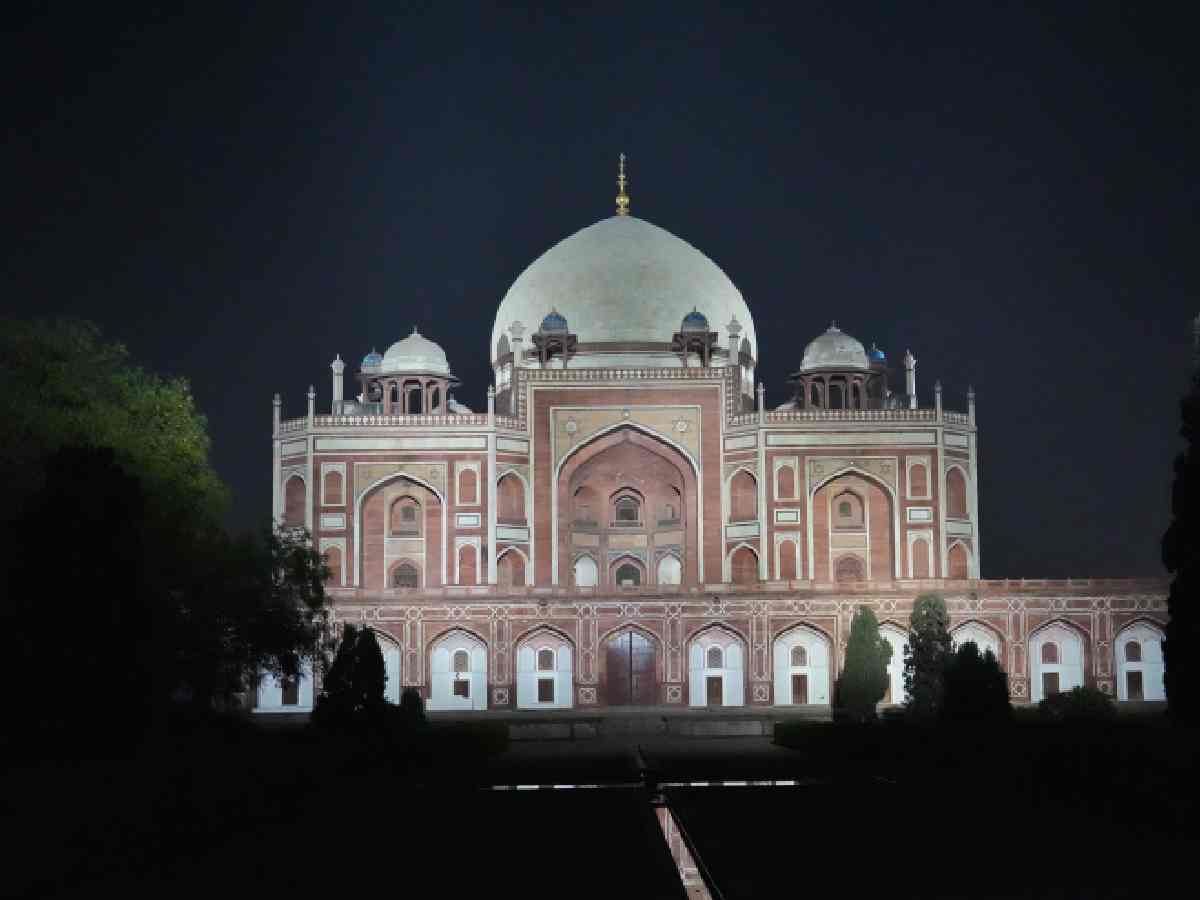
The Archaeological Survey of India (ASI) has illuminated 17 monuments in Delhi in recent years, according to a reply to a Right to Information (RTI) query filed by Patriot.
The list provided in the RTI response includes prominent heritage sites such as Red Fort, Qutub Minar complex, Humayun’s Tomb, Purana Qila, Safdarjung’s Tomb, Tughlaqabad Fort, and the Tomb of Khan-i-Khanan.
Others on the list are Bara Gumbad, Sheesh Gumbad (in Lodhi Garden), Adam Khan’s Tomb in Mehrauli, Sakri Gumti, Choti Gumti, Bara Khamba, Dadi-Poti ka Gumbad, Qila-i-Kuhna Mosque, Jantar Mantar complex, and Delhi Gate.
While several of these monuments were lit up years ago, others have been illuminated only recently. New additions include the Tomb of Khan-i-Khanan, Bara Gumbad, Sheesh Gumbad, Sakri Gumti, Choti Gumti, Bara Khamba, Dadi-Poti ka Gumbad, and Qila-i-Kuhna Mosque.
Also read: DTC to boost revenue with bus wrap ads
Lighting up heritage
According to a senior official from ASI’s Delhi Circle, the initiative is aimed at promoting night tourism in the national capital. “We have recently illuminated a few more monuments in Delhi with the aim of attracting more visitors,” the official said.
When Patriot sought details about the expenditure involved, the ASI responded, “As far as the illumination of monuments is concerned, there is no separate connection for the same at any monument, and the electricity bill of any monument under the jurisdiction of ASI Delhi Circle is paid for overall consumption of electricity used for various purposes inside a monument complex.”
A bright idea dimmed by poor planning
Despite ASI’s intent to encourage night-time visits, historians and experts have voiced concerns—particularly about the safety of women during evening hours. They argue that while illumination is a welcome step, it is not sufficient on its own. Improved infrastructure and visitor amenities, they insist, are essential for the success of night tourism.
Further complicating matters are coordination issues between ASI and the executing agencies responsible for implementing upgrades.
“They are not carrying out tasks according to our requirements,” said the ASI official. In response, the executing agencies argue that they lack the autonomy needed to implement and maintain enhancements that would make night tourism viable.
One such agency, the Dalmia Foundation, had proposed organising cultural events and setting up a cafeteria at Humayun’s Tomb and Safdarjung’s Tomb. However, the ASI eventually dropped these plans.
Also read: Good news for parents! Delhi to regulate private school fees
Barricades and bureaucracies
While marquee sites such as Red Fort and Qutub Minar attract decent crowds for their sound and light shows, visitor footfall remains disappointingly low at other illuminated monuments like Humayun’s Tomb and Safdarjung’s Tomb. A key deterrent is the limited access for visitors—barricades often prevent them from getting close enough to take photographs or explore the sites fully.
When asked why night tourism in Delhi has not yet taken off, the ASI official said, “It is a step-by-step process.”
Delhi HC will rule Oct 23 on AISA chief Neha Bora’s plea against a police…
A CREA analysis shows Delhi's winter AQI has seen no steady gain since 2022, with…
DMRC will plant over 28,000 saplings across 991 MCD parks in 3 months to offset…
Delhi HC quashed an FIR against an SSC aspirant, ruling mere presence at a protest…
CJP leaders Saurav Das and Ashutosh Ranka sought more time to join the Delhi Police…
Delhi Police held 3 more people, including a couple using a minor to sell heroin…
