When Covid-19 pandemic broke out in 2020, it resulted in a worldwide lockdown pushing the price of crude oil down. Now with vaccines to fight Covid, things are looking up, and so is the demand for oil and thus the cost. In India it has meant a steady rise in petrol and diesel prices almost every day. In Delhi, petrol price is Rs 91.17 per litre as on March 4, and diesel at Rs 81.47 per litre.
To find out how this price hike is influencing the rates in Asia’s largest wholesale market for fruit and vegetables we visited Azadpur Mandi and spoke with traders. At least 10 we spoke with said the rise in fuel costs had not affected their prices. Ram Dayal, president of the warehouse operation association here also maintained that the prices remained unaffected.
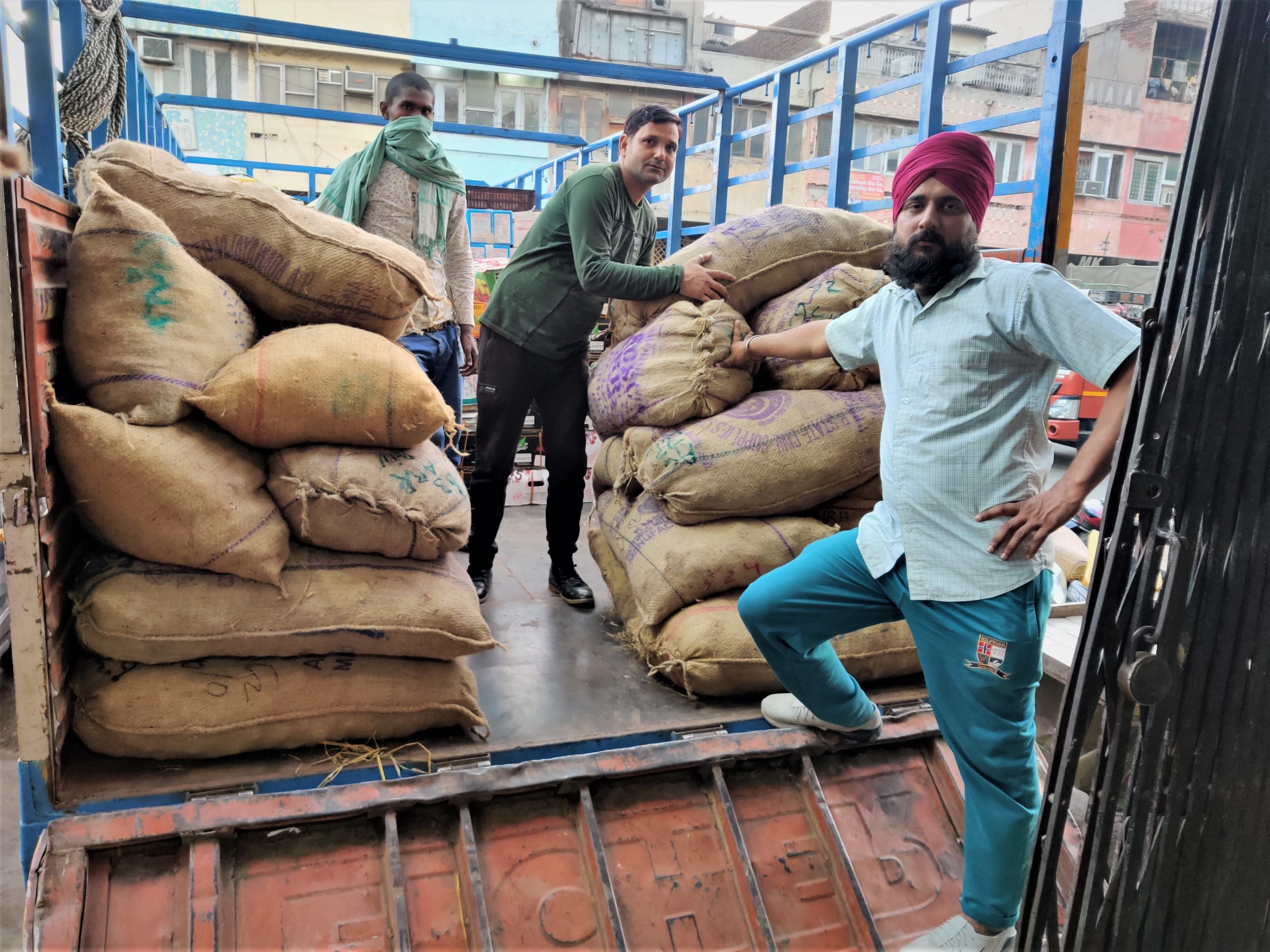
This is not the case with the truckers who spoke about how the daily rise in diesel prices means they are barely able to scrape by. One of the truckers we spoke with is Subhas Chand Sainik, who comes from Rajasthan’s Sikar some 335 kms from Delhi. The price of diesel currently in Sikar is Rs 90.80, while petrol is now at Rs 98.61 per Litre. Sainik is one of hundreds of drivers who rent their vehicle and then themselves drive the produce to be sold in Delhi’s wholesale markets.
Sainik, who has been a trucker for 16 years, says he has never witnessed such a time. While his cost to get here has increased, the price for his services have not. “I am being paid exactly what I was making months ago, there is no change in how much I am given. But the cost for me to get here has increased.”
As we speak with him, his truck gets loaded by workers, and others join in to listen and echo their displeasure towards the centre’s policy. They also go one to speak about police personnel stopping them at various points inside Delhi for “challans”.
The one toll while entering Delhi of Rs 500 is not all they pay, according to the drivers. They point to at least three overhead charges. “We have to pay at three other stops inside Delhi. Usually about Rs 200 at every stop, we don’t even know what they charge us for,” the people say, speaking over each other, making the same point. This they say, coupled with the rise in diesel means they are unable to make any extra money and only barely manage to pay for all their needs at home.
Anil, who identifies himself as a manager for loading the trucks says no one is as affected as the truckers. He says labourers hired for loading and off loading of goods are paid the same measly amount as before, and the prices of goods being sold in the huge marketspace have also not changed.
We met Gurmeer Singh whose truck brings in ghee from Patiala, and takes back fruits. He gets Rs 11,000 for the truck, but now spends Rs 7,500 for the 500 kms both ways. Along with that he has to pay his drivers, the labour costs for loading and unloading and toll prices. “The goods I bring are the same price. The rent I get paid is the same, it only increases once a year or once in two years, but the price of fuel is increasing every single day”.
He has however been able to save on some toll charges due to the diversion caused by farmers’ protest at Delhi’s borders, barring his normal road journey. “But even if there’s some saving from the toll, I am still having to pay much more for the diesel. This government is the worst for poor people, first they affected us with demonetisation and now this.”
The petrol price in Patiala (Punjab) is Rs. 92.64 per Litre on March 4 and diesel at Rs 83.66.
Patriot also spoke with truck drivers coming from Maharashtra and Haryana. One common factor amongst all of them, other than being deeply affected by the price rise, was their belief that nothing could change. Sainik said, this was a life of hardship and they were used to it.
Double whammy: China and petrol
At the Sadar Bazar wholesale market, prices have been affected because of two reasons, cites Rakesh Kumar Yadav, the General Secretary of Sadar Bazaar traders. One because raw material coming in from China has drastically decreased, which means home players are now in demand but charging more. Secondly, the high cost of petrol is now being reflected on the goods that Sadar Bazaar deals with.
While strains in relations between China and India worsened in 2020, Yadav says even during the height of the pandemic the costs had not been so deeply affected. “There is more duty being charged for goods coming from China now. On top of that the transnational transportation costs are now higher, and now the petrol/ diesel costs have increased.”
He gives us an example of cost rise, with the price of adhesive which used to be Rs 44-50 per kg now going for Rs 148-152 per kg. Then because there has been a rise in paper prices, it has meant that carton boxes which used to cost Rs 25-30 now costs about Rs 70. The increase he says has resulted in raw materials being at least 80% more expensive, which has been the case since mid-January.
Yadav says all of this has effectively kept traders in a dark period which began during Covid-19 lockdown, and still continues. Raw materials like petrochemicals, plastic, BOPP film, have all seen an increase in price. “We even wrote to Delhi’s deputy chief minister Manish Sisodia who is also the finance minister about the VAT on oil which he has control over. If the government brings down the VAT, then the traders will be able to emerge from this dark period which has been going on since Covid-19 started.”
VAT in Delhi is presently Rs 21.04 per litre, which the state government makes. The excise duty which the central government takes is Rs 32.90 per litre in Delhi.
(Cover: Gurmeer Singh (extreme right) is paid Rs 11,000 from Patiala and back. He spends Rs 7,500 on diesel, with additional costs of drivers and labourers / Photo: Sashikala VP )
AISA students march to Supreme Court over 'vote chori' claims against CEC, as police barricade…
DMRC extends closure of six central Delhi metro station gates until 5 pm citing security…
Delhi Metro reopens entry and exit gates at six central stations after 10-hour closure due…
NDTA welcomes Jantar Mantar protest ban, saying alternative venues will reduce traffic chaos and business…
Trade and transport bodies reject Ramlila Maidan as a protest site, citing major traffic disruptions…
Delhi Police remove ~300 social media posts and seek block on misleading content to curb…


