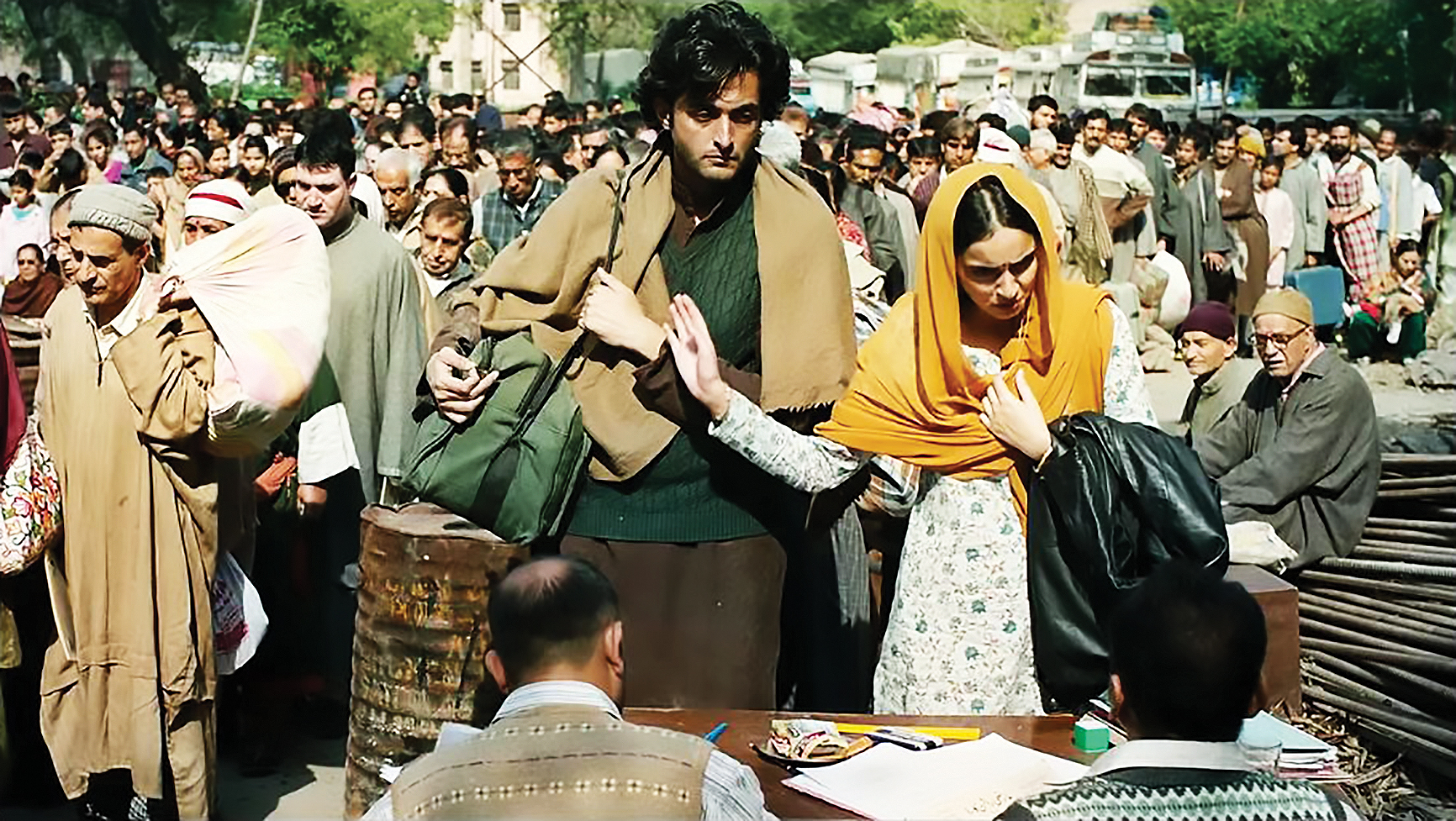
ONE DAY in the late 1980s Srinagar, a young couple is asked, at random, to walk down a garden path as extras in a film shoot. Kashmir was the beating heart of romance in Bollywood then and the couple walked off the set into a love story that has been chronicled 30 years later in the film Shikara.
Set in the backdrop of the exodus of Kashmiri Pandits from the Valley in early 1990s, Shikara is more an atmospheric love story of a poet, Shiv Kumar Dhar, played by Aadil Khan, and a nurse, Shanti Sapru, played by Sadiya. They come together unintentionally, but then fulfil their destiny bonded by love, resilience, hope and determination.
Shikara is director Vidhu Vinod Chopra’s ode to his parents, especially his mother who had to leave her home in Kashmir during the exodus, never to return. Shanti Dhar’s character is based on her.
It is a Modern Love story with a Throwback Romance: once upon a time there was a girl and a boy and they fell in love and lived together ever after!
The film has the tonality and pace of a TV series about a young love that is faced with an adversity that takes a lifetime to overcome. The story of True Love.
Chopra has said in an interview that he hopes love will be able to conquer the hate his beloved Kashmir has seen in the past few decades. “The movie has a message of love and that it should serve as a healer.”
It’s a stirring sentiment even if a little incongruous at the moment, given that the erstwhile state of Jammu and Kashmir has been divided into two union territories after being put on a prolonged lockdown and communications blackout.
In the film, there’s a personal affection and sentimentality, a longing for the old syncretic traditions and simplicity of life that made Kashmir a synonym for paradise. That innocence, however, is unlikely to return to Kashmir anytime soon.
Despite claiming to be based on research and journalistic input, Shikara does not really delve in depth into the cause of the exodus of the Pandits from Kashmir. There’s little to explain the reason for the disruption and hate that made them hurriedly abandon their homes and take recourse in overcrowded and unsanitary refugee camps in Jammu.
This lack of explanation makes the journey of the lead characters uneven and episodic.
Two themes run through the film and unfortunately neither connect the audience to the main idea – the pain of exile and the loss of your identity and homeland.
The first is Shiv Dhar writing to the presidents of the United States, from George HW Bush to Barack Obama, in an attempt to galvanise support for their lost homeland and the continuing destitution of the Pandits in refugee camps. For an Indian audience, the internationalisation of the Kashmir dispute has no resonance.
We know Shiv won’t have his grievances redressed this way, and it takes away any emotion or suspense from the elaborate plot device leading to the climax.
The second is Shanti Dhar’s desire to see the Taj Mahal, a monument of love and devotion, on her honeymoon. It is a simple request that Shiv fulfils towards the end of the film, but for a couple that has had to leave behind their beloved homeland and their cherished way of life, the Taj Mahal should be an empty mausoleum devoid of that innocent ode to love and joy that it had initially seemed. Surely, life changes your dreams and hopes and longings when it slaps you with adversity. If your dreams still do not change then, perhaps, you have not grown.
When life has trampled upon you, you can either accept or fight the situation. The Dhar couple accept their situation and move on with their lives until the denouement.
It is a sad and heartrending story which could perhaps have been elevated with a better screenplay and greater sensitivity to the situation in Kashmir, including the continued exile of the Pandits who long to return home.
There are some who argue that a film is an artistic creation and must not be held up to greater scrutiny for its inability to deliver a comprehensive understanding of real issues. That we must cultivate an awareness of our own that does not hinge solely on that provided by the film.
It is, however, important that a film equip us with the tools for such an analysis and create a meaningful dialogue if it’s based on historical reality and seeks to highlight the truth of what actually happened in the moments it depicts.
Susan Sontag says in Regarding the Pain of Others that we need to reflect on how our privileges may be linked to the suffering of other people. Talking about war images, she says they are “an invitation to pay attention, to reflect, to learn, to examine the rationalizations for mass suffering offered by established powers. Who caused what the picture shows? Who is responsible?”
If a viewer is looking for an examination of the causes that led to the exodus of the Kashmiri Pandits, then Shikara is not the film for them. If the viewer is looking for an understanding of the conundrum that is Kashmir, then this is not the film. If the viewer is looking for a sympathetic or even angry look at the lives of the Kashmiri Pandits in the refugee camps then this is not the film.
Perhaps, Chopra could use all the research material that he has collected on the subject to make a definitive TV series on the Pandit exodus.
With Shikara, Chopra has put the spotlight on a neglected community. But the film is a conversation starter and should hopefully get others to examine this neglected part of Kashmir’s history through fiction or the documentary format. So, perhaps, Chopra has said all that he wanted on the subject and he is within his rights as a filmmaker to put out the story he wants to tell.
It’s up to the viewer to independently pursue the stories they want to know more about or see unfold on the screen.
www.newslaundry.com ■
DMRC extends closure of six central Delhi metro station gates until 5 pm citing security…
Delhi Metro reopens entry and exit gates at six central stations after 10-hour closure due…
NDTA welcomes Jantar Mantar protest ban, saying alternative venues will reduce traffic chaos and business…
Trade and transport bodies reject Ramlila Maidan as a protest site, citing major traffic disruptions…
Delhi Police remove ~300 social media posts and seek block on misleading content to curb…
Abhijeet Dipke slams Jantar Mantar denotification, warning "poora desh Jantar Mantar banega" and accusing PM…
