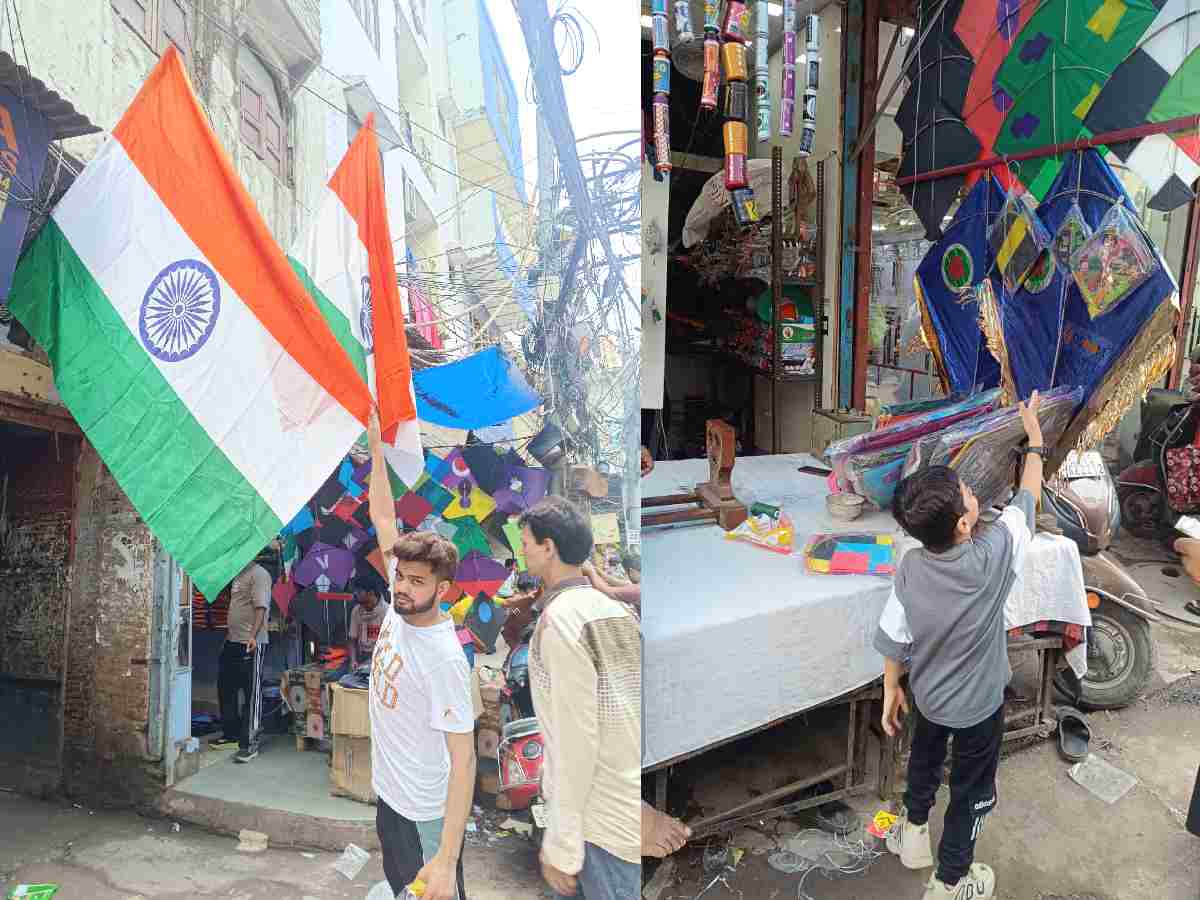
Every year, as Independence Day approaches, the narrow lanes of Old Delhi’s Lal Kuan transform from an everyday utensil hub into a sea of colour and energy. This year is no different. Once again, the area has become India’s largest kite market, with every corner draped in vibrant hues of the Tricolour.
From 10-centimetre decorative kites to massive four-foot flyers, from delicate kite strings to bold flags stretching up to five feet, the market is a visual celebration of freedom. Walking through the crowded bazaar, one is met with the rustle of paper, the glint of Tricolour bangles, and the sparkle of badges, hats, hand bands, and jewellery in saffron, white, and green.
“On weekends, there is no time to even breathe, and even weekdays are quite good,” said one smiling trader, carefully arranging piles of kites.
Craft and creativity
While most stalls stick to familiar designs, some sellers are innovating. Shehzaad, a local kite maker, proudly displayed his miniature 7–8 cm kites alongside a tiny charkhi meant only for show. “Little girls are buying them in bulk. Boys prefer slightly bigger kites of about 15 cm that can actually fly with a small real charkhi. I have other sizes too, but these are giving me the most profit,” he said.
Others reported more modest results. “I have had a decent profit, not good, not bad,” said shopkeeper Naeem Ansari, who runs a temporary stall. He has noticed a shift in demand. “Candles are not selling like before. For ten years, they brought me a lot of income. This year I am selling more kites and accessories instead,” he explained.
At Sachin Kite House, a loyal crowd browsed everything from sturdy plastic kites, suited to unpredictable weather, to half-paper and half-plastic varieties. Themes range widely — from the patriotic Tricolour to playful “Proposal Kites” with “I Love You” scrawled across them, Sidhu Moosewala kites, Rahul Gandhi kites, Saiyaara bike pose kites, “Trump Tariff” kites, and even “Free Palestine” designs.
Bangles, fabric, and tradition
For women in Old Delhi, wearing Tricolour bangles and clothing on Independence Day is more than a passing fashion — it is a tradition handed down for generations. As August 15 draws near, cloth shops in Lal Kuan replace their regular stock with saffron, white, and green dupattas, scarves, and fabrics. Every few steps, a stall displays bangles for all ages, from newborns to grandmothers, neatly arranged in the shades of the national flag.
Also Read: Remembering the Partition’s scars on the eve of Independence Day
This year, Tricolour sunglasses have joined the list of must-haves, proving especially popular among younger shoppers.
The old guard of kite-making
Haji Kite House has stood for decades, and the current owner is proud of its legacy. “In my father’s time, there were maybe a dozen kite shops here. We used to make kites all by hand — cutting the paper, bending the bamboo, pasting it with a flour-and-water glue. People would come weeks before Independence Day or Basant Panchami just to get their favourite designs. Now, most kites come from factories, and kids are more into mobile phones than kite flying. But still, those who know the joy of seeing a kite dance in the wind — they keep coming back. We still make special orders for old customers. They say our kites have a soul, not just a frame and paper,” he said, threading kite string onto a charkhi.
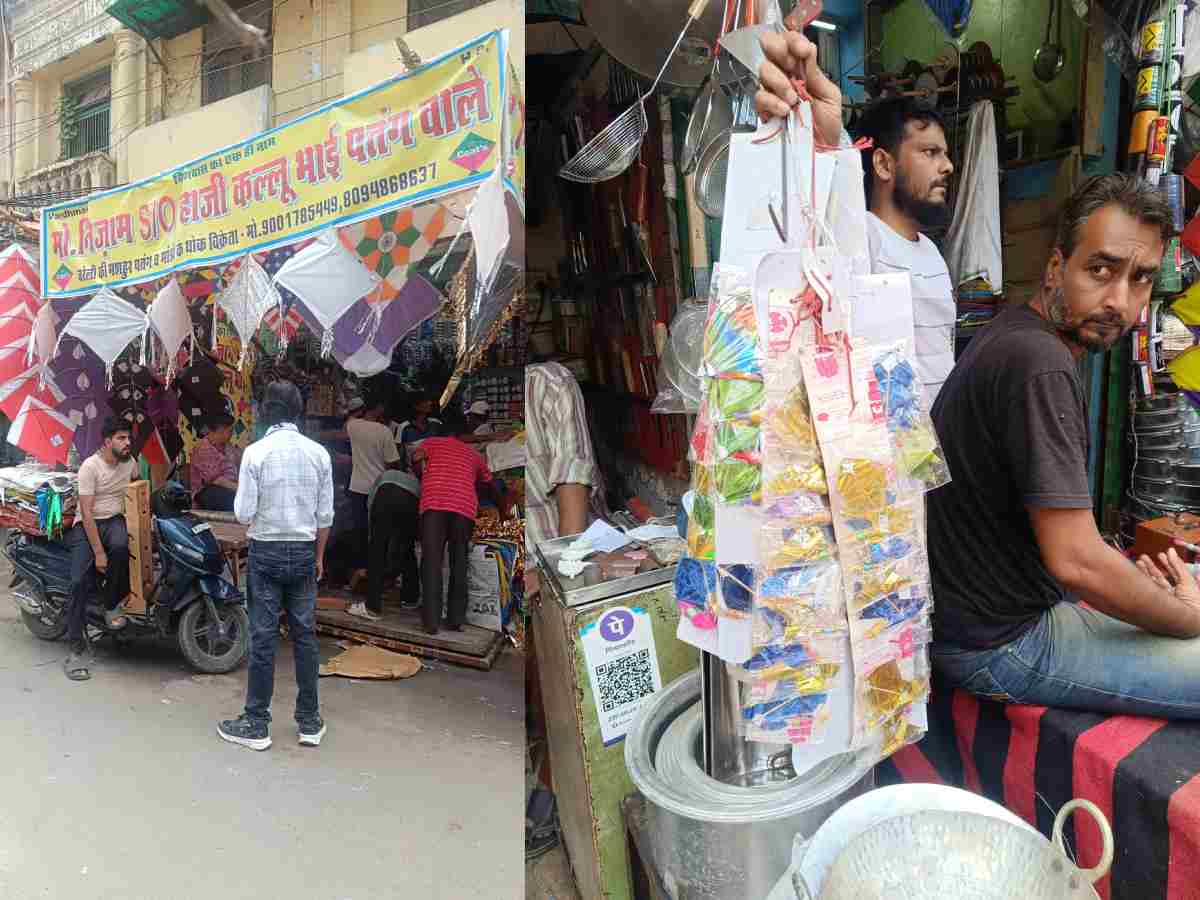 Nearby, Mohammad Nizam of Kallu Bhai Patang Wale, known for his barley kites, was busy with customers. “For us, this is the season when the market comes alive. Every corner is colourful — kites in the shape of birds, superheroes, and the classic diamond pattern. Customers come from far-off places, some even from other cities, because they say the variety here is unmatched. In just a few days, we sell what might otherwise take months. The atmosphere is nice this year — previous years were tough but the people of the market are happy,” he said.
Nizam added that sales peak from the first week of August. “Some come to buy in bulk for competitions, others just want a few for family fun. It’s the colours and the nostalgia that bring them here every year,” he said, gesturing towards stacks of kites in every shade imaginable.
Shopkeepers also noted that the market is now free from Chinese manjha, a shift welcomed by many.
Voices from the crowd
Mohammad Wasif, a well-known local kite champion with several competition wins, was examining the spine of a handmade kite for balance. “I come here every year before Independence Day,” he said. “It’s not just about buying kites. It’s the whole feel of Lal Kuan — the smell of glue, the colours hanging overhead, the shopkeepers calling out prices. It takes me straight back to my childhood, spending hours on rooftops chasing the wind. This year I’m buying paper kites for height and plastic ones for speed. You need both if you want to win.”
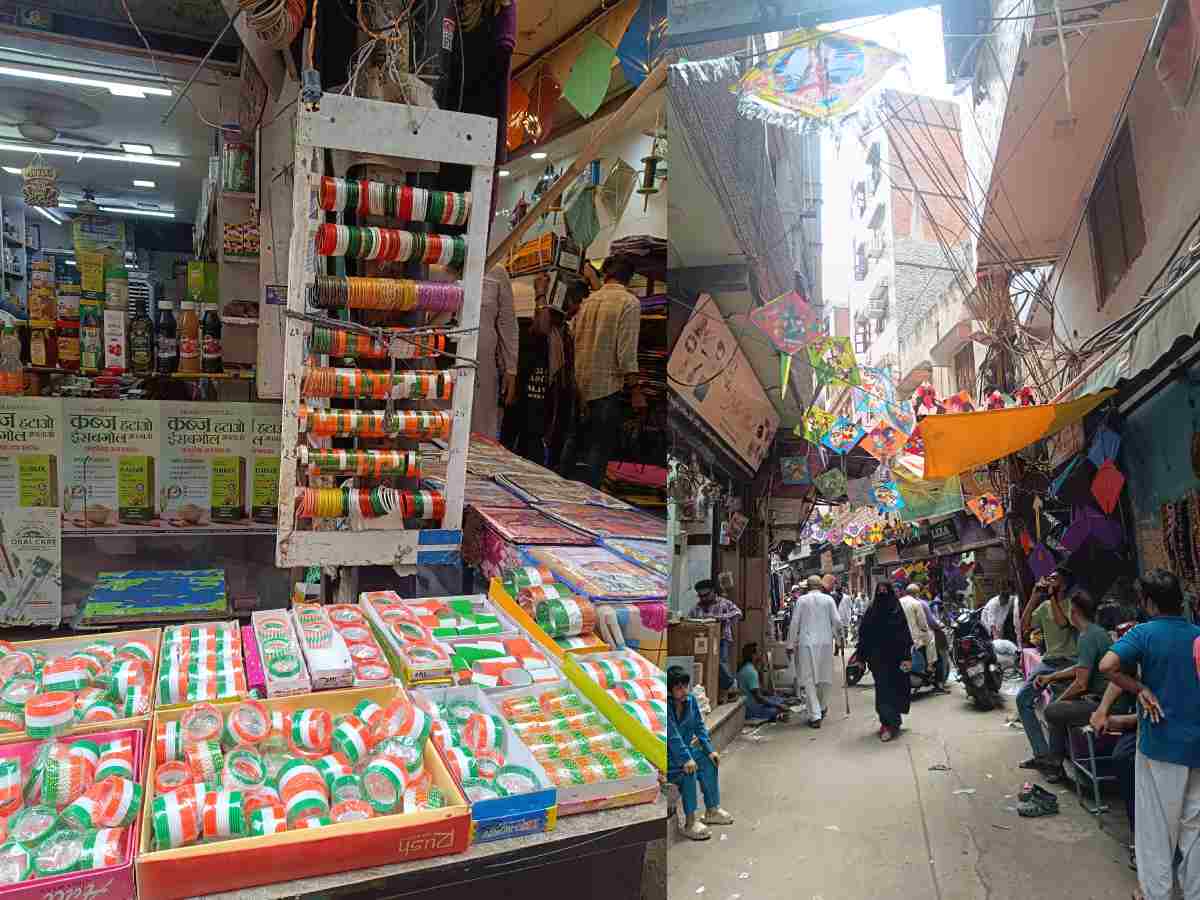
By a jewellery stall draped with Tricolour scarves, Saira Begum juggled a bag full of bangles and her young son. “My father used to bring me here when I was a girl,” she said. “Now I bring my children. We always leave with bangles, dupattas, and at least a couple of kites. Even if the kids don’t fly them, these mini kites and Tricolour things really make them happy and enthusiastic towards Independence Day celebrations.”
Arjun Sharma, a college student from Rohini, clutched a Sidhu Moosewala kite. “I don’t even fly much,” he admitted, laughing. “But if you walk through here and don’t buy a kite, you’re missing the point. The vibe is too strong — it’s like Independence Day has already started.”
As August 15 draws near, Lal Kuan once again becomes a living, breathing showcase of Delhi’s enduring love for kites. Here, Independence Day is not merely a date on the calendar — it is a burst of colours in the sky, a tangle of threads in the wind, and a marketplace determined to keep its old-world charm alive.