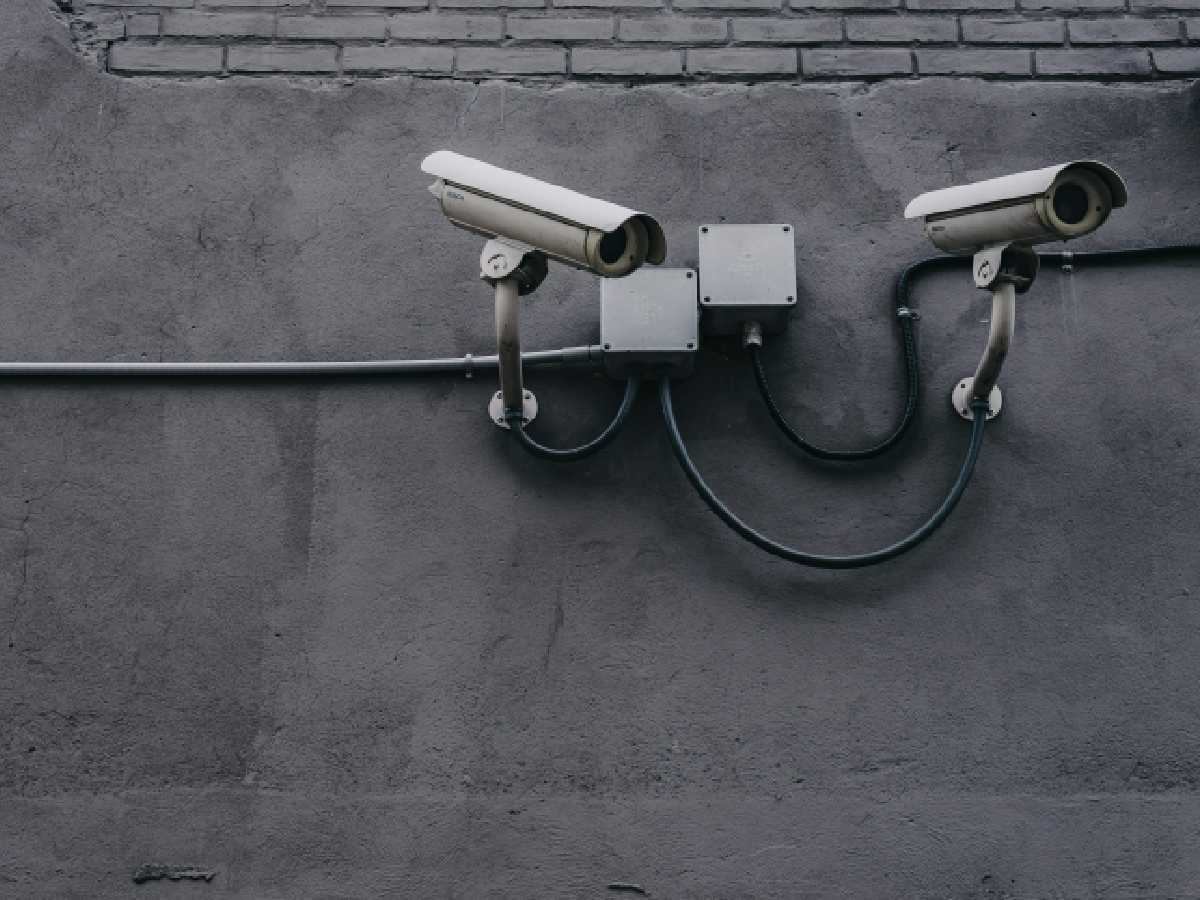
As Independence Day approaches, security measures are being intensified across the Capital. Soon, several key parts of Delhi will be equipped with facial recognition-enabled CCTV cameras under the central government-funded Safe City Project, the Ministry of Home Affairs (MHA) has confirmed in a reply to Rajya Sabha MP Saket Gokhale.
Costing around Rs 798 crore, the project aims to bolster policing and public safety—particularly for women—through advanced tools such as video analytics, artificial intelligence (AI) and facial recognition. It also includes the establishment of an Integrated Command, Control, Communication & Computer Centre (C4I).
The MHA stated that the facial recognition system (FRS) will track “suspected individuals or known criminals” in accordance with an order issued by Delhi Police on June 9, 2022.
Also read: Delhi: Lal Kuan, India’s biggest kite market, turns colourful for I-Day
Pilot deployment in North and North West districts
According to official data, the AI-based FRS has so far been deployed in two districts—North and North West—on a pilot basis, with plans to expand citywide. Much of the hardware, installed by the Centre for Development of Advanced Computing (C-DAC), is yet to be activated.
Since April 2024, North West district police have arrested at least 200 suspected criminals using the system. Arrest figures for the North district are reported to be similar. Between September and November 2024 alone, the technology helped North Delhi police arrest at least 70 individuals accused of theft and snatching.
DCP (North) Raja Banthia said AI technology is proving invaluable beyond crime detection. “It has been acting as a force multiplier for law enforcement, providing a real-time advantage in identifying people wanted for serious crimes, those subject to specific court conditions, habitual offenders, missing persons, women, and the elderly,” he said.
Police data shows that FRS helped solve 16 cases in Sarai Rohilla, 13 in Bara Hindu Rao, four in Civil Lines, and three each in Timarpur and Kotwali, with the rest spread across other police stations.
Integration into Independence Day security
Last August, 700 facial recognition CCTV cameras were installed in key areas, including around the Red Fort where Prime Minister Narendra Modi delivered his Independence Day address. These were used to monitor VIP movements and detect suspicious activity.
According to Delhi Police, nearly 25,000 CCTV cameras have already been set up under various schemes, including the Safe City Project, along with those installed by the Indian Railways and the Delhi Metro Rail Corporation. The C4I centre’s FRS database holds details of around 3.5 lakh known criminals.
“We’re installing 10,000 more CCTV cameras under the Safe City Project, all of which will be dynamic and compatible with our facial recognition software,” said a senior officer from the modernisation unit. “Even now, our C4I system can analyse live feeds from standard CCTV cameras to identify suspects.”
Businesses in Aerocity—hotels, guest houses, restaurants and petrol stations—have been ordered to install CCTV coverage for a 50-metre radius outside their premises and store footage for at least 90 days. The directive, effective until September 2, is aimed at enhancing safety in the high-footfall zone near IGI Airport.
“The facial recognition system is a game-changer for us. It helps us pinpoint high-value targets and wanted criminals, including those trying to lie low,” said Manish Kumar Agarwal, Special Commissioner of Police (Operations and Modernisation).
Inside the FRS operation
The FRS is operated by a team of five officers in Civil Lines. Two are stationed in the command room, while three work from an FRS-equipped minibus that patrols crime-prone areas. The van’s roof has four cameras capturing images of people nearby.
If a camera captures someone with a criminal record, the system triggers an alert. Local police are notified and verify the identity. The mobile unit has already identified 407 individuals with criminal histories this year.
The FRS database also contains information on around three lakh unidentified bodies. Officers say the system performs well even in poor lighting, with partial face coverings, or from blurred images. “Previously, our software relied on a time-consuming process that required clear, high-quality images. Now, even a partially visible face can produce matching results from our database, along with a percentage score indicating the likelihood of a match,” said one officer.
The system can analyse footage from over a hundred cameras at once, match one million records in 200 milliseconds, and send instant alerts. “FRS uses advanced algorithms to match images of suspects with those in a vast database. When a crime occurs, investigators can scan CCTV footage and identify potential suspects,” another officer explained.
Also Read: Crumbling Delhi: Why instances of building collapse have spiked
Concerns over misuse
Despite its effectiveness, facial recognition in policing has raised concerns over bias and accuracy. “When used responsibly and in accordance with the law, this technology has the potential to revolutionise how we tackle crime,” an investigator said.
However, instances of alleged misuse have surfaced. In the North East Delhi riots, particularly in the Ratan Lal murder case, 27 of the 29 accused were granted bail, and one was discharged.
Inspector Gurmeet Singh of the Crime Branch, the investigating officer in the case, said it was solved using tools like Amped FIVE by Amped Software and AI Vision by Innefu Labs. He confirmed that all suspects were identified through these technologies. Special Public Prosecutor Amit Prasad told the Delhi High Court that “the use of Amped software, based on digital recognition, is sufficient to confirm the identity of the correct individual.”
CCTV footage from Chand Bagh was obtained, along with three private videos from bystanders: one from a witness known as Harsh* (1 minute 48 seconds) recorded at Gym Body Fit Garage; the Skyride Video (1 minute 37 seconds); and the Yamuna Vihar Video (40 seconds).
The Delhi High Court has since asked police to provide a sustainable argument in response to a plea by one of the accused seeking discharge.