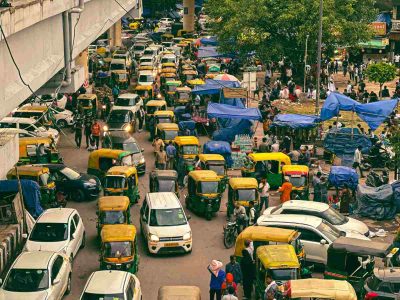
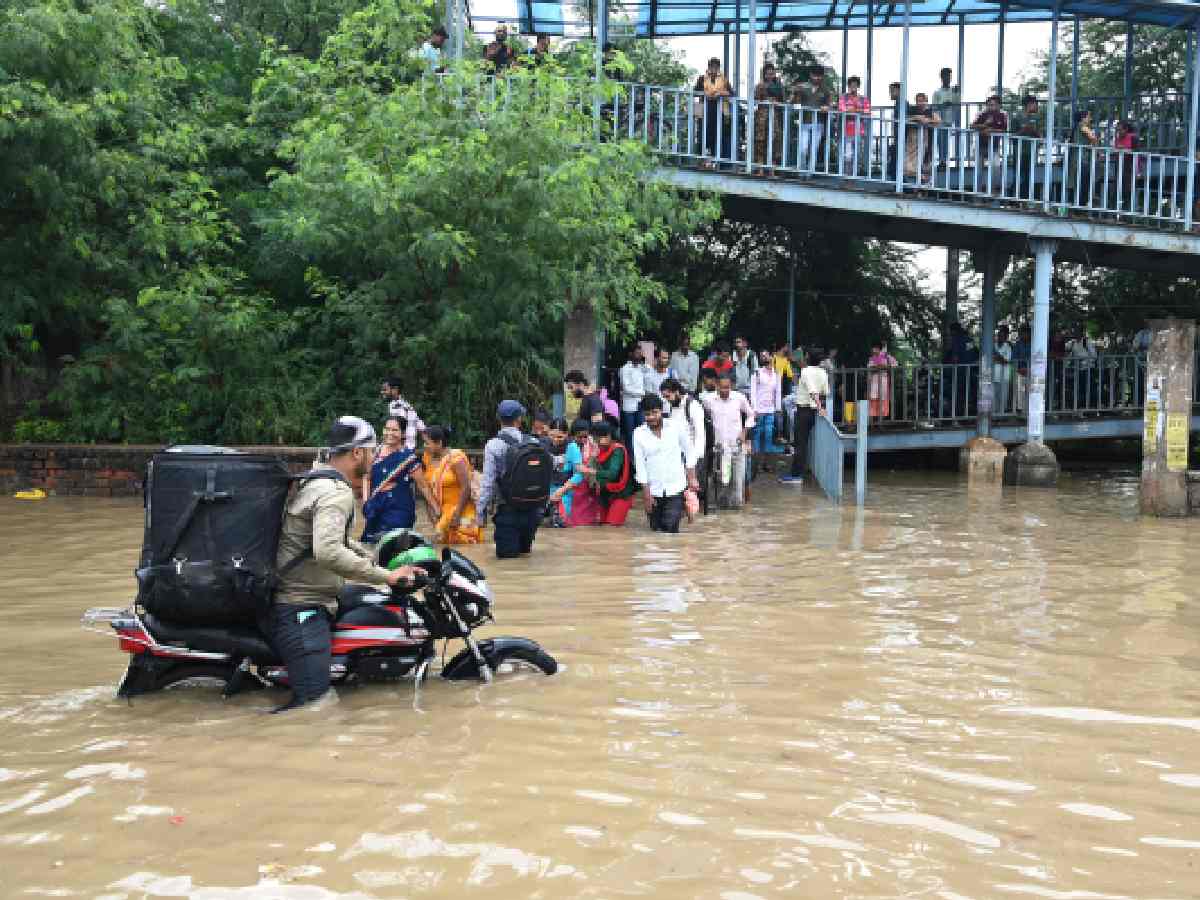
Delhi rain: Chaos in the national capital has long been a monsoon ritual, with deluge and disorder marking recent years. Within just a month, large parts of Delhi’s urban and rural landscape have been left in a state of dread and despair.
According to data from the Public Works Department (PWD), 1,709 complaints were lodged with the civic body in the first eight days of September alone. In August, 5,142 such complaints were recorded.
In September, most complaints concerned damaged roads and footpaths (731), followed by horticulture (308) and waterlogging (276). In August, 1,953 complaints were filed under “roads or footpaths,” 1,108 under “horticulture” and 818 under “street light,” with waterlogging ranked fourth at 611.
Also Read: MCD launches new system to ease licence application process for industrial units
A senior PWD official warned of a further surge: “Much of the infrastructure this time around is crumbling owing to unprecedented rainfall, for which none of the civic authorities were prepared. Moreover, this has led even newly paved roads to be affected.”
Waterlogging woes mount
Residents across Delhi continue to highlight the devastation caused by excessive rainfall. Vipul, a resident of Majnu Ka Tilla, said, “Why is there flood water only in our block, despite multiple complaints in the past? We have not been receiving electricity either.” He added that while he regularly used the PWD complaint forum, “they barely ever come here to fix our issues, and when they do, the solutions are as arbitrary as they are temporary.”
On September 8, several complaints were filed. YS Sharma reported that “a lot of damage has been caused to the roads forming potholes that has led to excessive waterlogging along Sabzi Mandi near Paharganj, specifically, near the Nehru Bazaar temple.”
A civic employee, who filed an anonymous complaint, described how a large pothole in West Delhi had filled with water and forced the closure of one side of the road. Similarly, the Jeewan Dhara Welfare Society, an NGO in GTB Nagar, said that “rainwater is still logged at Kingsway Camp chowk for the past week, despite repeated complaints.”
Trees topple, safety at risk
Complaints have also poured in about trees falling across the capital, raising concerns about public safety. Of the horticulture complaints registered in September, 38 related to trees falling—about 12% of the total.
Many of these incidents were reported from West and South Delhi. Ramesh Kumar, a resident of North Delhi, said, “There is a big banyan tree at our location, and it is tilted on the roadside. It can fall anytime, like the tree in South Delhi which toppled onto a person’s motorcycle.”
In East Delhi, M Shah raised concerns about an overgrown Indian plum vine. “A large wild ber tree has grown over the power lines and poles. Its thorns and branches are reaching my first-floor balcony. During windy weather, the electricity flickers due to the tree, making it very unsafe. We have requested the PWD to prune the shrub,” he said.
Electric shocks from streetlights
Streetlights have been reported to emit electric shocks due to waterlogging and electrical discharge in the groundwater. In August, Sanchay, a resident of Model Town in West Delhi, flagged the danger of Pole No 103116, which he said “was dissipating electricity, sending shocks.” He added that the situation had not been fixed and accused authorities of “waiting for the issues to fix themselves.”
Sanitation failures persist
Sanitation complaints have also piled up. Between January 1 and July 28, 76 sanitation-related issues remained unresolved on the PWD Seva website. Uncovered manholes, despite their dangers, were categorised under “Others.”
The Jeevan Dhara Welfare Society has repeatedly highlighted open or damaged manholes, warning of long-term risks. A PWD official acknowledged, “The issue is ever-present. Every other year, manholes sustain damage or go missing entirely. This year alone, we’ve received around three complaints about missing concrete sewer slabs. There are many thieves who steal these.”
Residents, however, accuse the PWD of negligence. Ramvilas Sharma of the Sawan Park Residents Welfare Association in Ashok Vihar said, “The drain at the Swaminarayan underpass leading to Satyavati Colony road has been either broken or stolen. We raised the issue on July 21, but there’s been no update since.”
Activist Raghuveer Singh from the Jeevan Dhara Welfare Society alleged that workers left a manhole uncovered after desilting work: “It’s been over a month since the desilting took place. Moreover, the desilting was inadequate, making it nearly impossible for water to drain effectively. It’s no surprise there are so many accidents in the capital.”
Accidents rise on Delhi’s unsafe roads
Delhi Police data paints a grim picture. Fatal accidents rose by 4.7% in 2024, with 1,504 lives lost compared to 1,432 in 2023. Pedestrians accounted for 43% of deaths, while two-wheeler riders made up 38%.
Accident-prone areas include ISBT Kashmere Gate and NH-8. While potholes worsen the situation, Joint Commissioner of Police Kime Kaming said reckless driving was the primary cause of fatalities.
Residents have criticised the PWD for substandard roadwork. Arun Chadha noted that poor-quality repairs created hazardous conditions, particularly for two-wheelers.
The PWD has introduced ECOFIX pothole repair trials and mandated inspections, but progress remains slow. By April 2025, only half of the 7,678 reported potholes had been repaired. With the monsoon in full swing, experts warn commuters remain exposed to grave risks.
Also read: Pedestrians older than 40 are at the greatest risk on roads, suggests Traffic Police data
Deadly waterlogging hotspots
The Drain Road near Dabri roundabout in West Delhi has emerged as the city’s deadliest waterlogged stretch, recording an average of 11 road accidents annually between July and September.
In 2023, 193 other waterlogging hotspots collectively recorded nearly 400 incidents, with officials identifying waterlogging as a key factor in almost every case.
Ahead of this year’s monsoon, Delhi Traffic Police shared a list of 194 high-risk locations with civic agencies, urging action. On June 20, the PWD identified 71 critical sites where water removal remains particularly challenging, despite drainage efforts by the Delhi Jal Board, Municipal Corporation of Delhi and Delhi Development Authority.