Delhi: A string of corruption cases, from railways to hospitals, is testing India’s anti-graft machinery. At the centre of it is a senior railway engineer, but his case is only one among many exposing cracks in public accountability.
Among the most striking of these recent cases is that of a senior railway engineer overseeing one of India’s most strategic infrastructure projects, who has now come under the scanner of the Central Bureau of Investigation (CBI).
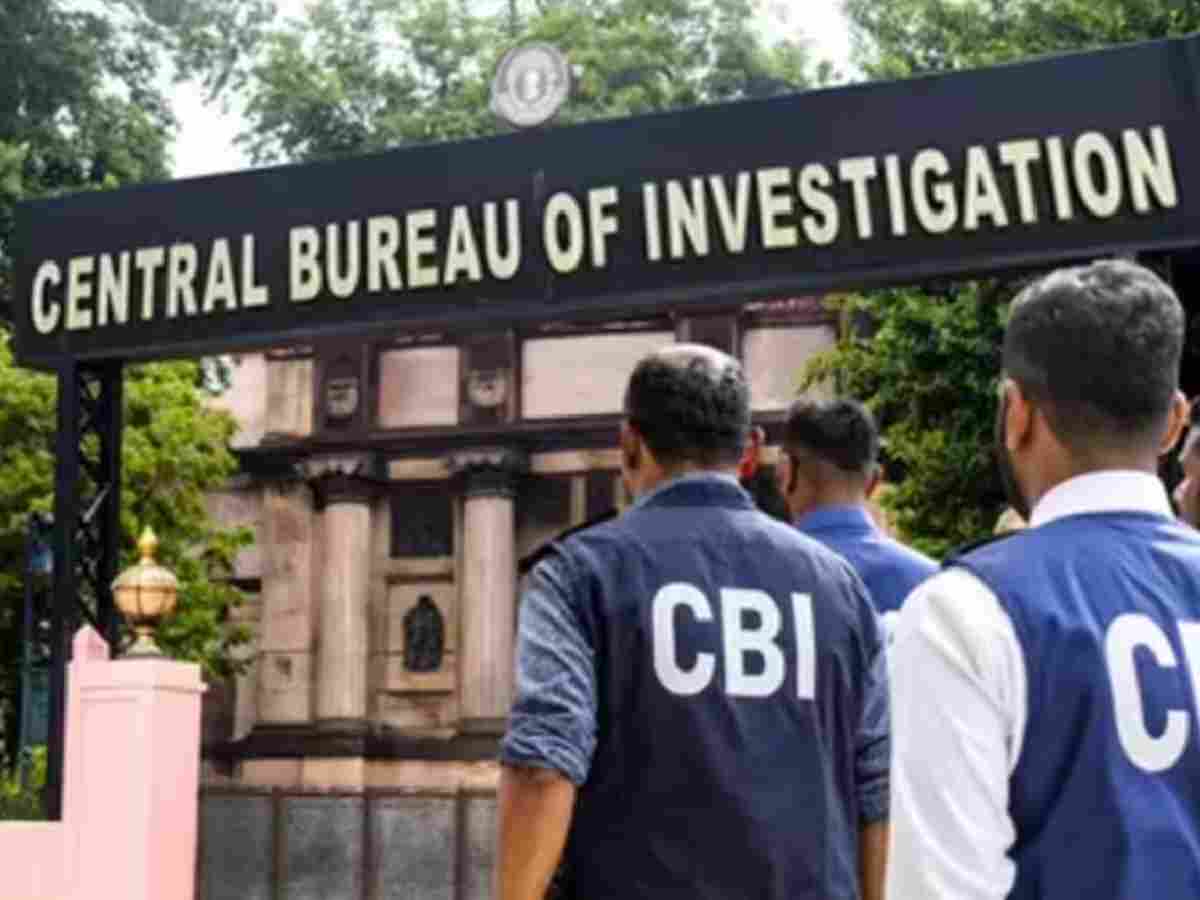
The agency’s Anti-Corruption Branch in New Delhi has registered a case against Sumeet Khajuria, Chief Engineer with the Konkan Railway Corporation Limited (KRCL), for allegedly possessing assets far beyond his known sources of income.
The FIR, filed on September 24 under the Prevention of Corruption Act, 1988, alleges that Khajuria “criminally misconducted himself” by accumulating disproportionate wealth between September 1, 2023, and February 8, 2025.
Khajuria, an officer of the Indian Railway Service of Engineers (IRSE), was on deputation to the Katra–Dharam section of the Udhampur–Srinagar–Baramulla Rail Link (USBRL) project, a vital link meant to provide all-weather rail connectivity to the Kashmir Valley.
Arrest and cash recovery
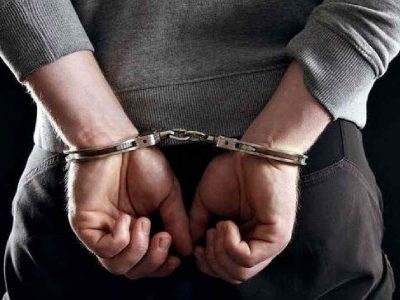
The assets probe follows Khajuria’s earlier arrest this year for allegedly accepting a bribe of Rs 9,42,500 from a director of Paras Railtech Private Limited. Investigators claim the bribe was taken to clear pending bills and revise estimates related to tunnel muck removal.
A CBI team later searched his residence and recovered Rs 73.11 lakh in cash, suspected to be proceeds of bribes collected from multiple contractors. Officials said the discovery prompted a wider investigation into his financial and property holdings, believed to exceed his legitimate income.
Both Khajuria and the co-accused contractor remain in custody after a Special Judge, Anti-Corruption Court, rejected their bail pleas. The court observed that “economic offences of such magnitude” require a stricter approach to avoid sending a wrong signal to society.
The USBRL project, often described as one of India’s toughest engineering feats, is designed to connect the Kashmir Valley with the rest of the country. Any taint of corruption in a venture of this scale has drawn sharp scrutiny from the judiciary and central agencies.
Also Read: Delhi’s missing children: trafficking, neglect and poverty fuel a deepening crisis
Officials said the CBI will now conduct a detailed assessment of Khajuria’s movable and immovable assets, including those held by family members, to determine the full extent of disproportionate holdings.
A year of rising corruption probes
Khajuria’s case is among more than a hundred corruption matters registered with the agency this year. CBI data shows 112 cases have been filed so far, with the Anti-Corruption Branch accounting for 59 of them till October 13.
Many older incidents reopened after new evidence surfaced, while some local FIRs have been transferred to the agency for further investigation.
“It is not necessary for a case to have happened that year itself. Even if the incident occurred earlier, as long as there is enough documented evidence, the investigation can proceed,” said a senior officer.
One such case, registered on July 30, stems from a preliminary enquiry initiated in September 2022.
Procurement irregularities at Lok Nayak Hospital
Among the more prominent cases is the CBI probe into alleged irregularities at Delhi’s Lok Nayak Hospital (LNH). The agency has named Dr Suresh Kumar, then Medical Director; Dr Hem Prakash, then Procurement Officer; Shri Suresh Kumar Chaudhary, Proprietor of M/s Adison Equipment Company; Mayank Parashar, Proprietor of M/s SR Surgical; and unidentified officials of the hospital.
They face charges under criminal conspiracy and breach of trust provisions of the Indian Penal Code, along with offences under the Prevention of Corruption (PC) Act, 1988 (as amended in 2018). The alleged wrongdoing occurred between 2021 and 2022.
Investigators said the enquiry revealed two major areas of corruption: equipment procurement and medicine purchases.
The first involved an extended rate contract with M/s Adison Equipment Company, valid until January 28, 2020, but repeatedly extended without justification. In January 2021, a new tender for advanced Closed Drum Macerators was cancelled the same day Adison questioned it. Soon after, citing “urgent COVID-related needs,” the hospital bought eight Open Drum Macerators from the same firm at Rs 9,96,610 per unit plus GST, even though the superior Closed Drum model was available for Rs 8,50,000 per unit plus GST.
The second area concerns large-scale procurement of branded medicines despite government policy favouring generics. Between April 7, 2021, and September 16, 2022, LNH purchased drugs worth Rs 32.23 crore from M/s SR Surgical, of which branded medicines accounted for about 80%—Rs 25.17 crore for branded and Rs 7.05 crore for generic medicines.
Dr Hem Prakash, then Procurement Officer, allegedly issued supply orders for branded medicines based on undated rate lists from the supplier, often when wards had not specified brands.
The CBI enquiry suggests M/s SR Surgical, in collusion with Dr Prakash and unidentified officials, prioritised branded medicines over generics, causing heavy losses to the government exchequer.
A ‘Regular Case’ has been registered for detailed investigation.
CGST officials caught in Faridabad
In another case, the CBI booked two senior officials of the Central Goods and Services Tax (CGST) Anti-Evasion Unit in Faridabad, Haryana, for allegedly demanding a bribe from a local businessman.
The FIR, filed on June 2, 2025, names Shri Yadav, Superintendent, and Bhagat Singh, Inspector, under Section 61(2) of the Bharatiya Nyaya Sanhita (BNS), 2023, and Section 7 of the Prevention of Corruption Act, 1988.
The complaint came from Manoj Malik, who manages his wife’s firm, UK Steel. He alleged that four CGST officials visited his factory on May 29, 2025, accusing it of forging documents and threatening to impose a GST liability of Rs 1.87 crore. According to the complaint, the officials initially demanded Rs 50 lakh to “settle” the matter, later reducing it to Rs 10 lakh.
The officials allegedly threatened to impose a GST duty of over Rs 1.50 crore if the bribe was not paid.
A verification exercise by CBI Inspector Susheel Kumar Verma and an independent witness confirmed the demand through recorded conversations. Both officials remain under investigation.
Growing concern over graft
From inflated hospital contracts to bribery in tax offices, the CBI’s expanding list of corruption cases reveals a system still struggling with entrenched graft.
Officials say that while the number of cases has risen, it also reflects greater vigilance and reporting rather than just growing corruption. Yet, as one senior investigator noted, “each arrest is only as effective as the reform that follows.”
With several high-profile cases under investigation, the months ahead will show whether India’s anti-corruption framework can match its rhetoric with results.