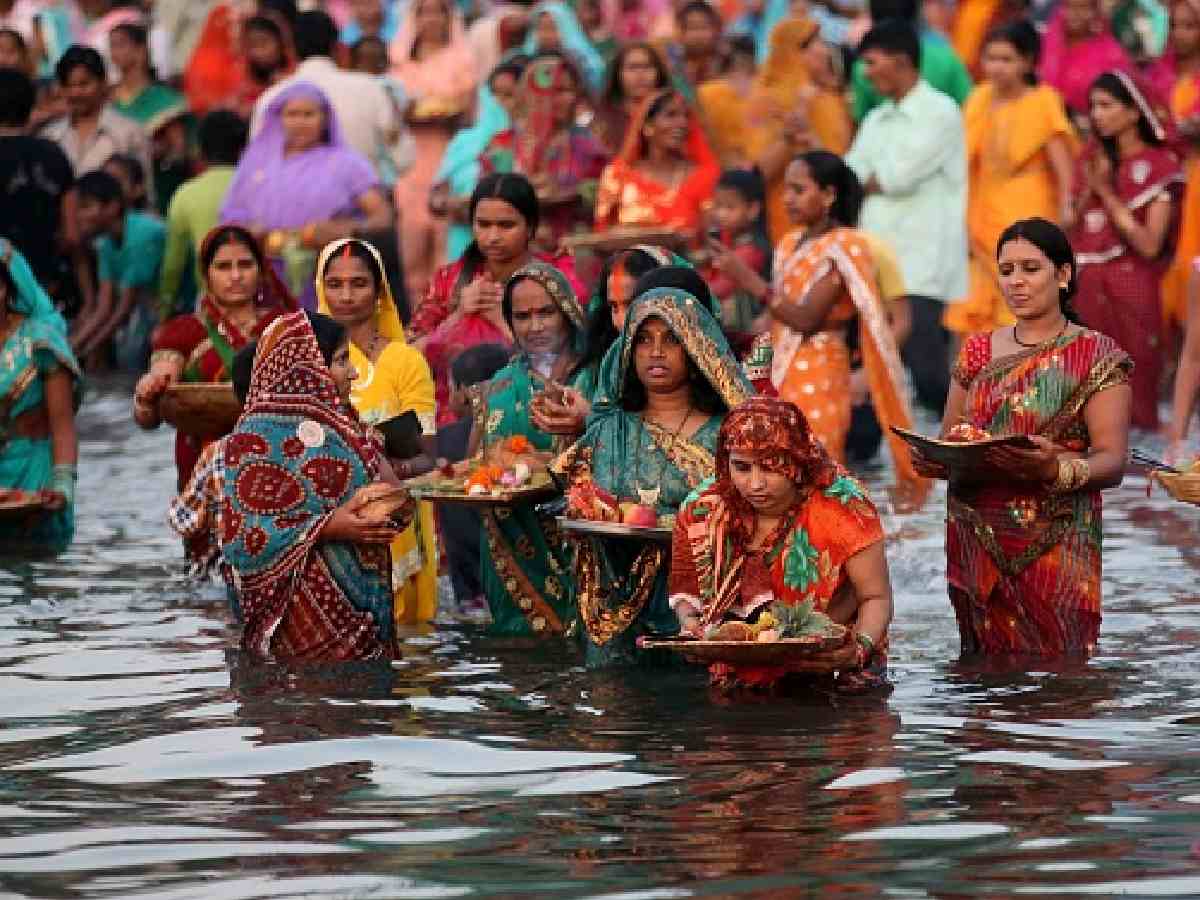
Devotees who gathered along the Yamuna River for Chhath Puja were relieved to see signs of improved water quality this year, as the usual layer of toxic foam was largely absent from its surface. However, reports and expert assessments have confirmed that the river water remains highly polluted and unsafe. Experts reiterated that the disappearance of foam should not be mistaken for a cleaner Yamuna — the pollutant load and bacterial contamination remain dangerously high, posing serious health risks to anyone coming into contact with the water.
According to the Water Quality Status of Yamuna River report released by the Delhi Pollution Control Committee (DPCC) on October 23, water samples collected from eight key locations along the Yamuna on October 9 showed that while the river met the acceptable pH range (6.5–8.5), the Biochemical Oxygen Demand (BOD) and Faecal Coliform levels at most sites were far above permissible limits.
The BOD, which indicates the amount of oxygen required by microorganisms to decompose organic matter, should ideally be 3 mg/l or less. However, the report recorded alarmingly high readings — ranging from 3 mg/l at Palla to 33 mg/l at Nizamuddin Bridge and 31 mg/l near Asgarpur — suggesting that the river water remained unsafe for human use or aquatic life.
Similarly, the Faecal Coliform count — an indicator of contamination by human or animal waste — exceeded the desirable limit of 500 MPN/100 ml (and even the maximum permissible limit of 2,500 MPN/100 ml). The DPCC found coliform levels reaching up to 21,000 MPN/100 ml at ISBT Bridge, 14,000 MPN/100 ml at Nizamuddin Bridge, and 11,000 MPN/100 ml at Asgarpur, showing severe bacterial contamination across most stretches.
The report highlighted that only the Palla stretch, where the Yamuna enters Delhi, showed relatively better water quality with a BOD of 3 mg/l, Dissolved Oxygen (DO) of 7.6 mg/l, and Faecal Coliform of 800 MPN/100 ml — still exceeding safe limits but cleaner than downstream areas.
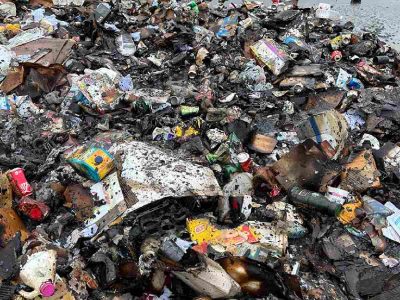
Beyond Palla, the situation worsened rapidly, particularly after the river crossed Wazirabad, where untreated domestic and industrial effluents entered through multiple drains, including Najafgarh, Shahdara, and Tughlakabad. These discharges remain largely responsible for the high pollutant and bacterial load downstream.
Also read: No rain after Delhi’s cloud seeding experiment, only more questions
Even though the toxic white foam — a recurring visual reminder of the Yamuna’s pollution — was less visible, environmental experts believe the improvement is only superficial. They attributed the apparent clarity mainly to the increased release of water from the Hathnikund Barrage.
Experts said authorities had enhanced the water flow from the Hathnikund Barrage by 15–20 percent, which diluted the concentration of pollutants, temporarily reducing the froth that typically blankets stretches of the river during the winter months. Additionally, the three flood events recorded in 2025 are believed to have naturally flushed out some contaminants, improving the water quality to a limited extent.
“It’s an unforeseen event that canal operations have been completely shut at the Hathnikund Barrage and all the available inflows are being released into the Yamuna on an hourly basis,” said Bhim Singh Rawat, Associate Coordinator, SANDRP.
“Strangely, neither the Delhi nor the Haryana government has shared any information regarding this decision. Citizens and stakeholders were neither consulted nor informed before this step was taken. It is not clear whether the governments followed due procedures, held any meetings, or what the basis and reason behind the decision actually were,” he added.
“Undoubtedly, the river is deprived of flows during the post-monsoon months and is in dire need of adequate water in the lean season. However, such a decision should be taken in a participatory, consultative, accountable, and transparent manner. Disappointingly, none of this seems to have been considered this time. This has set a dangerous precedent — tomorrow, decision-makers could adopt the same opaque and unaccountable approach to stop all flows in the river without consulting or informing stakeholders.”
“In the last two months of the monsoon, the river witnessed three flood spells that improved its hydrological functions and helped flush out pollution from the Delhi stretch. It was because of these floods that the river’s water quality showed considerable improvement during September and October. Now, the flows being discharged from the Hathnikund Barrage have started diluting pollution levels and reducing the frothing seen in the Delhi stretch.”
“For further improvement, the Haryana and Delhi governments could close major drains polluting the Yamuna and augment discharges from the Wazirabad Barrage. Nevertheless, the river water quality would still not be fit for bathing or swimming purposes.”
“Instead of facilitating mass Chhath gatherings along the Yamuna, which adversely impact both the river’s health and that of the people, it would be better to provide temporary arrangements at local levels. Worryingly, government departments have employed JCB machines to dig up and flatten the riverbanks, damaging the natural landscape and the river’s ecosystem,” he said.
Most drains still not meeting standards
Another DPCC report revealed alarming levels of pollution in several of the Capital’s major drains, with most exceeding permissible limits for key indicators such as Biochemical Oxygen Demand (BOD), Chemical Oxygen Demand (COD), and Total Suspended Solids (TSS).
According to the Waste Water Quality Status of Drains report, samples collected from 27 locations across Delhi on October 9 were compared against standard limits — BOD (30 mg/l), COD (250 mg/l) and TSS (100 mg/l) — and found widespread violations indicating high organic and chemical contamination.
The Sahibabad Drain and Molarband Drain emerged as the most polluted, recording BOD levels of 110 mg/l and 145 mg/l respectively, with COD levels of 296 mg/l and 416 mg/l — signalling severe organic and chemical waste discharge. Other drains such as SEN Nursing Home Drain (BOD 110 mg/l, COD 280 mg/l), Sarita Vihar Pool (BOD 90 mg/l, COD 200 mg/l), Tughlakabad Drain (BOD 80 mg/l, COD 192 mg/l), and the Drain near Sarita Vihar Bridge (BOD 105 mg/l, COD 248 mg/l) also reported contamination levels well above permissible standards.
In contrast, a few locations such as ISBT Drain (BOD 52 mg/l, COD 160 mg/l) and Abul Fazal Drain (BOD 40 mg/l, COD 96 mg/l) showed relatively better readings, though still higher than ideal norms for treated water. The Najafgarh Drain — one of the largest carriers of untreated wastewater into the Yamuna — recorded BOD 60 mg/l and COD 152 mg/l, showing only partial improvement compared to past reports.
“The increased water flow from the Hathnikund Barrage was merely a move by authorities to prevent toxic foam from forming on the river’s surface. The reality is that until these drains are intercepted and treated, the Yamuna cannot be cleaned even in the next hundred years,” said environmentalist Pankaj Kumar, noting that five drains in Delhi with BOD levels above 100 mg/l continue to flow directly into the river.
Also Read: Govt vehicles flout own pollution rules
Health experts warn of serious risks
Despite the warnings, scores of devotees took a holy dip in the river during Chhath Puja.
“People needed to make a choice between health and faith,” said Pankaj Kumar. “If taking a dip in the river made them unwell, they should consider safer alternatives. In many housing societies, artificial ponds are created for the rituals — and that to me is the best solution. It allows devotees to observe their faith without putting their health at risk.”
Doctors reiterated that the Yamuna continues to be heavily contaminated with industrial effluents, untreated sewage, and toxic microorganisms, making it unsafe even for brief exposure. The water contains chemical pollutants and heavy metals such as lead, arsenic, and mercury, in addition to a high load of organic waste — all of which could cause skin allergies, rashes, and eye irritation.
“The presence of chemical contaminants and harmful bacteria in the Yamuna makes the water extremely unsafe for bathing,” said Dr Tushar Tayal, Associate Director, Internal Medicine, CK Birla Hospital, Gurugram. “Even short exposure can lead to irritation of the skin or eyes. The real danger, however, comes from high bacterial and viral contamination — including E. coli, Salmonella, Shigella, and Hepatitis A viruses — that could cause gastrointestinal infections, jaundice, typhoid, and diarrhoea.”
“People with weakened immunity, diabetes, or pre-existing skin conditions like eczema face significantly higher risks of infection,” Dr Tayal warned.
Dr Pulin Gupta, Professor of Medicine at Ram Manohar Lohia Hospital, added, “During festivals like Chhath Puja, thousands gather near the Yamuna, often spending long hours exposed to polluted air and water. The toxic fumes and vapours rising from such contaminated water are equally harmful. Inhaling these vapours can irritate the airways and aggravate respiratory problems such as asthma, bronchitis, or allergic rhinitis.”
“Those with weak immunity or pre-existing lung diseases are particularly vulnerable. The water itself contains harmful gases and microbes — so even without direct contact, proximity to the river can cause throat infections, coughing, or shortness of breath. The danger increases when people enter the water; pollutants like ammonia, heavy metals, and suspended solids can react with the skin, triggering allergies, itching, or dermatitis,” he said.
“If someone has a small cut or wound, it can become an easy gateway for bacteria to enter the bloodstream, leading to serious infections. It is important for devotees to understand that faith and health must go hand in hand — ritual purity should not come at the cost of physical safety,” he concluded.