Delhi: The national capital’s roads continue to claim lives with frightening regularity. In two recent incidents, a 60-year-old woman and a 13-year-old boy were killed in separate hit-and-run cases, underlining how dangerous Delhi’s streets remain despite official claims of improved safety.
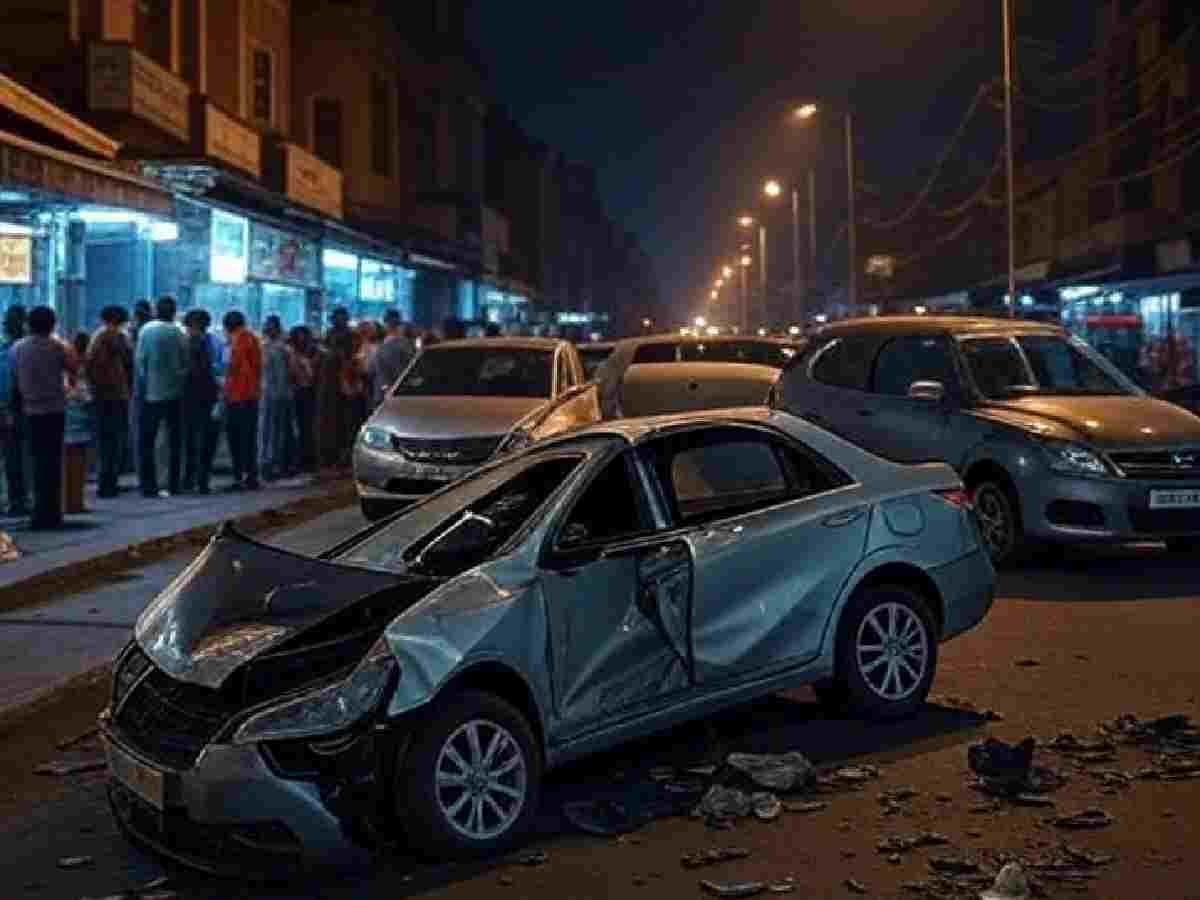
On October 26, Neema Devi, 60, was fatally hit by a black Scorpio SUV near the Nangloi flower market while crossing the road. The driver fled the scene, and bystanders failed to note the registration number. She was rushed to Sanjay Gandhi Memorial Hospital but succumbed to her injuries. Police later registered a case of reckless driving and causing death by negligence.
Just days earlier, on October 15, Murshid, a 13-year-old boy from Dalit Ekta Camp, was run over by a Thar near Vasant Kunj. Eyewitnesses alleged the SUV driver hit the boy and then reversed over him before speeding away.
Police said the Class VIII student was cycling near a petrol pump in Sector C when the vehicle struck him from behind, leaving his bicycle mangled.
‘He wanted to be an army officer’
According to Murshid’s family, the incident occurred around 4:30 PM when he went out to buy snacks on Mehrauli-Mahipalpur Road, a narrow, congested stretch lined with jhuggis and shops.
“I heard a loud crash and saw a car speeding away,” recalled Ganesh Mathur, 45, who works at a nearby petrol pump. Murada, a 50-year-old vendor, said, “Children were screaming ‘gala kat gaya, gala kat gaya’ (the throat is cut). I thought it was a snatching. When I ran there, I saw the boy lying face down in a pool of blood.”
Mahesh Chand, a security guard, added, “We later learnt the car had driven over him twice.” Some local boys reportedly chased the car to try to note its number.
Murshid’s mother, Johana, 35, said she was home when neighbours told her about the accident. “His face and neck were drenched in blood,” she said. With help from locals, she took him to hospital in an auto-rickshaw. Holding her son’s blue T-shirt, Johana whispered, “We may live in a jhuggi, but his dreams were far greater. He wanted to be an Army officer.”
Her husband left the family a year ago, forcing Johana to stop working as a domestic helper due to poor health. She now earns a modest income by renting out a few jhuggis for ₹5,000 a month. Murshid supplemented this by helping at local sweet shops or delivering groceries.
“He would massage my legs whenever my health worsened,” she said. His sister Tarana, 18, recalled, “He had just returned from his Hindi exam. He wanted samosas and went out to buy them. He never came back.”
Neighbours described Murshid as a quiet, polite boy. “He was bright and kind,” said Ajmeri, 39, a neighbour. Tarana, who hopes to become an IPS officer, lamented, “People were just recording videos, but no one helped.”
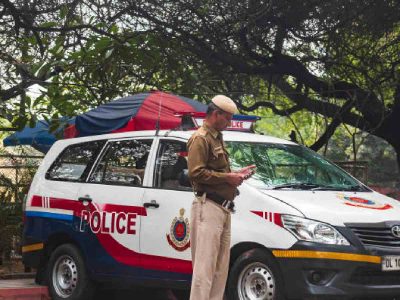
Police have charged a woman in connection with the incident, but she was later released on bail.
Declining fatalities, persistent dangers
Despite such incidents, Delhi has recorded a 2.5% fall in road accident fatalities between January and September 2025 compared to the same period last year. Fatal crashes have dipped by 2.9%—from 1,178 deaths in 2024 to 1,149 this year.
According to the Delhi Traffic Police, this marginal improvement reflects a sustained, data-driven effort rather than one-off enforcement drives.
The department’s Crash Research Cell analyses accident trends to identify blackspots across the city, following which its Engineering Cell recommends corrective measures like improved road design, signage, and speed controls. The annual Accident Report in Delhi has also been renamed Crash Report to emphasise that these deaths are preventable, not inevitable.
“This shift in thinking has made interventions more targeted,” said a senior traffic police official. The department has flagged 143 high-risk locations for road redesign and 30 school and hospital zones for new pedestrian crossings and speed breakers.
Around 3,600 police personnel have also been trained in modern traffic management and crash prevention techniques in collaboration with road safety experts.
However, the 2023 Crash Report showed that the city remains perilous. Fatal crashes rose by 4.7% in 2024, claiming 1,504 lives compared to 1,432 the previous year. Pedestrians accounted for 43% of the victims, and two-wheeler riders 38%.
Overspeeding, drink-driving, and non-compliance with traffic rules remain the biggest killers. “Most fatal two-wheeler crashes involve riders without helmets,” an official said, adding that large vehicle drivers often speed or ignore road humps, putting pedestrians at risk.
PWD under fire for ignoring repair pleas
The Public Works Department (PWD) has been repeatedly criticised for failing to act on the Traffic Police’s warnings about dangerous roads.
Records show that on March 20, police requested urgent repairs to the Janakpuri District Centre Road—still pending months later. Similar complaints about a damaged footpath near Peeragarhi’s pillar 263 and potholes at Peeragarhi Chowk also remain unresolved.
Between February and May, at least ten such complaints were left unaddressed, including one about an illegal passageway in Sarita Vihar allowing wrong-way traffic.
PWD officials allegedly act only upon direct government orders, delaying repairs and endangering commuters. The department’s Engineer-in-Chief declined to comment, though officials claimed work is underway to patch potholes before the monsoon.
Outer North most dangerous
The East Zone reported the highest number of potholes (3,213), followed by North Zone (2,310) and South Zone (2,155).
Fatal accidents citywide dropped from 764 in the first half of 2024 to 677 in 2025, while fatalities fell by 10%, from 778 to 700. Central Delhi recorded the sharpest decline, with fatal crashes halving thanks to stricter enforcement and protective road grilles.
Yet, Outer North Delhi remains the deadliest region, with 97 fatal crashes and 103 deaths this year—largely due to speeding lorries and persistent traffic violations.
While South West and West Delhi saw modest improvements, fatality rates in the outer and southern districts rose. Injuries across the city also climbed slightly—from 2,566 in 2024 to 2,617 this year—reflecting continued vulnerability among road users.
Delhi’s deteriorating infrastructure—marked by potholes, broken pavements, and civic neglect—continues to turn ordinary commutes into fatal journeys. Without accountability and systemic reform, the capital’s roads will remain as perilous as they are indispensable.