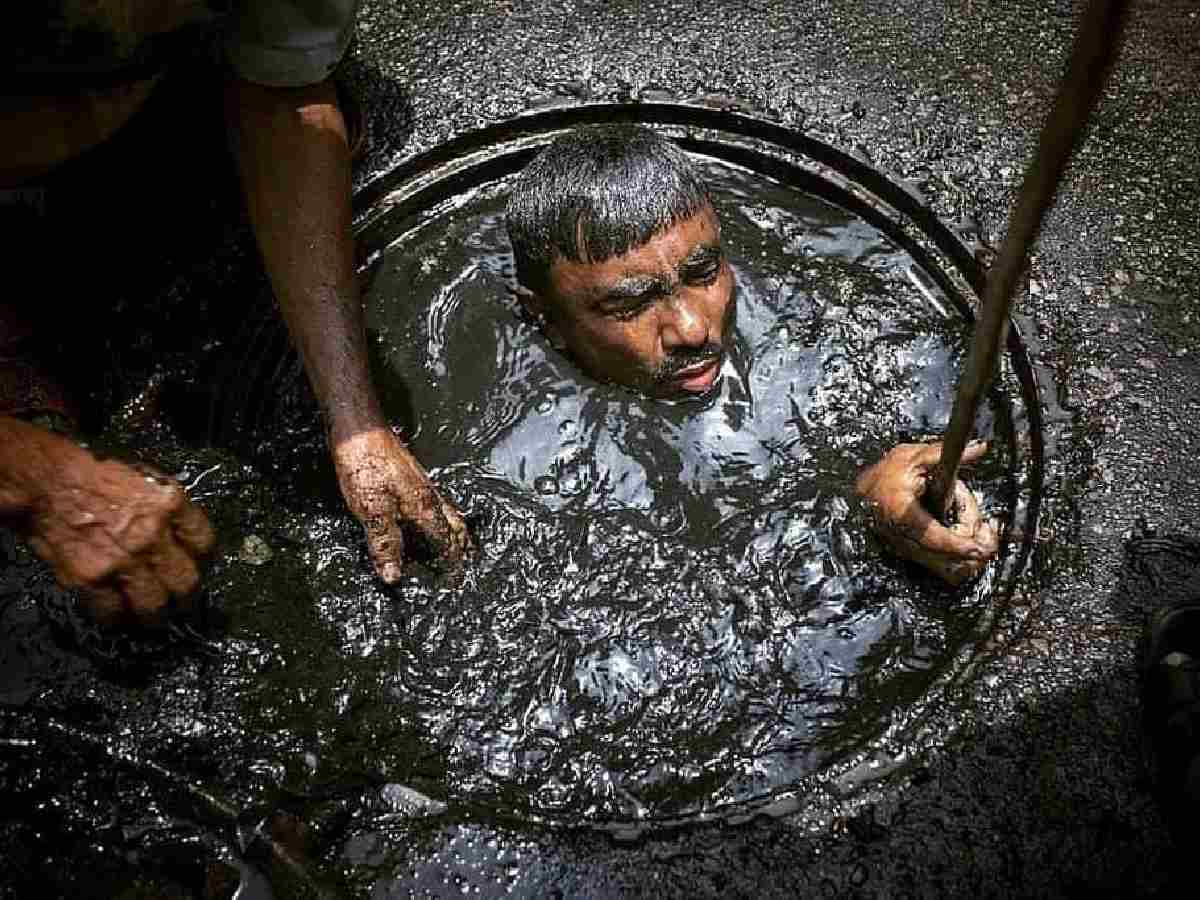
The question of compensation for families of manual scavengers has long remained a source of anger and distress among next of kin. Although manual scavenging has been repeatedly declared illegal by Indian courts, the practice continues, often with fatal consequences. In the absence of sustained surveillance and enforcement, workers continue to be sent into hazardous spaces, where exposure to toxic gases frequently proves deadly.
According to data from the National Commission for Safai Karamcharis (NCSK), of five recorded deaths of manual scavengers, compensation was provided to the family of only one victim, amounting to Rs 30 lakh. The remaining four families received no financial support. A similar pattern emerged in 2024. Between January 1, 2024, and December 31, 2024, seven manual scavengers died while on duty. Of these, only two families received compensation of Rs 30 lakh each, while the remaining five were left without any government assistance.
Deaths in Sarojini Nagar
On October 8, 2024, three sanitation workers died while cleaning a sewer in Sarojini Nagar. Babundra Kumar, Ramasrey and Srinath Soren were engaged in the operation when the incident occurred. Kumar and Ramasrey died the same day, while Soren, who had entered the sewer to rescue the others as they began to drown, succumbed on October 17. None of the three could be saved.
More than a year after their deaths, their families are yet to receive compensation.
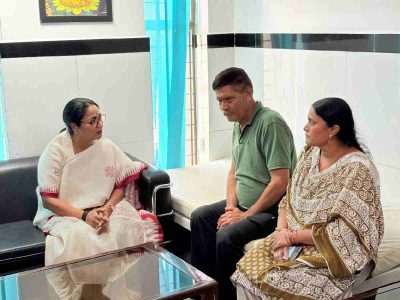
All three were migrant workers, with families living in Bihar, Uttar Pradesh and West Bengal respectively. Even in the settlement near Kusumpur Pahari, where they had lived, their presence has largely faded from collective memory. One resident, Rita Devi, 34, recalled the hardship faced by Kumar’s family.
“Babundra had his wife here and after his death, she left as well. She had said that it would get increasingly more difficult to stay in Delhi when there is no work,” she said. “Even both of their salaries combined had posed as a problem for staying in Delhi, especially since manual scavenging is not a real full time job. He would also drive an e-rickshaw but he had only started out. Even the government did not help him out.”
Soren’s story follows a similar trajectory. Living alone, he had formed close ties with neighbours. “He was a charming person. He had told me that he wanted to get out of sanitation work, and work someplace else,” said Raj Kumar (name changed). “We were looking by ourselves for some work for him but it had only been a couple of days. Then, he died. Even his family members had come to pick his body up, but now they are also one breadwinner less. Without the compensation, it has been getting difficult.”
Pressure from advocacy groups
In November 2024, the advocacy group Dalit Adivasi Shakti Adhikar Manch (DASAM) demanded justice and systemic reforms following the Sarojini Nagar deaths, where three workers were exposed to toxic gases while cleaning a disused sewer at a construction site without safety equipment. The group pointed out that the incident violated the Prohibition of Employment as Manual Scavengers and Their Rehabilitation Act, 2013.
DASAM’s probe flagged delays in registering a first information report and alleged reluctance on the part of authorities to share information, both of which, it said, hindered compensation for the affected families.
The group called for sweeping reforms in Delhi Jal Board (DJB) procedures, including fair employment practices, improved safety protocols and stricter oversight of private contractors. It also demanded Rs 30 lakh compensation for each family, in line with Supreme Court directives, and stronger enforcement of laws banning manual scavenging.
Despite sustained pressure, the families continue to live on the margins, with little institutional support.
Working without protection
For Baldev Rajsahi, a resident of Ghazipur who is frequently called upon to clear local drains with a friend, safety equipment has rarely been provided. While he works primarily as a plumber, sanitation work for the Public Works Department (PWD), the Municipal Corporation of Delhi (MCD) and the DJB supplements his income.
“It’s illegal, but I cannot help but work,” he said. “It’s my compulsion. Safety and precaution — these are afterthoughts. I have raised concerns, but there has to be someone willing to listen.”
Across Delhi and other cities, sanitation workers continue to face the risk of asphyxiation from gases such as methane and hydrogen sulphide. Despite the 2013 law, sewers in the capital remain hazardous workplaces.
The Act defines a manual scavenger as anyone “engaged or employed… for manually cleaning, carrying, disposing of, or otherwise handling… human excreta” in insanitary latrines, open drains, pits or similar spaces before decomposition. It mandates the abolition of the practice and the rehabilitation of workers.
Yet the Delhi Government maintains that manual scavenging no longer exists, a claim contradicted by recurring deaths. Civic agencies such as the MCD and the DJB routinely outsource sewer cleaning to private contractors, awarding tenders to the lowest bidders. “They haven’t hired permanent sanitation workers in over two decades. Everything goes through these private agencies,” said Azad Mehra, DJB field assistant and member of the Centre of Indian Trade Unions.
In March, the DJB listed 99 open tenders for sewer management and repair across Delhi. Even where mechanised options exist, reliance on manual labour persists. In August 2023, the DJB acknowledged that 189 contractors supplying sewer-cleaning machines were in “critical condition” due to unpaid bills, undermining mechanisation. When machines fail, workers are sent in instead.
A senior DJB official rejected allegations of employing manual scavengers. “We do not employ manual scavengers or companies supplying them. We only float tenders for the deployment and utilisation of pumps and machinery for sewer cleaning,” the official said, citing Supreme Court orders and the 2013 Act.
On January 29 this year, the Supreme Court ordered a complete ban on manual sewer cleaning in six metropolitan cities — Delhi, Mumbai, Chennai, Kolkata, Bengaluru and Hyderabad — and directed civic chiefs to submit affidavits by February 13. No further action has been made public.
Informal hiring, high risks
The recruitment process remains informal. “There are no forms. Somebody comes to the jhuggi, asks if we want work, tells us what to do, and we show up at the site,” said Rahmat Ali, a Ghazipur resident. “Sometimes there’s no work for days, even months. We scrounge for anything — cleaning drains or dry waste at least gives me steady employment.”
Another worker, Jony, described the dangers. “Each time, it feels like I’m risking my life. Sometimes an agency gives me a helmet, boots and gloves, but never a harness. Often, there’s nothing.”
Mehra said civic bodies treat workers as disposable. “These workers aren’t trained. Agencies treat them as expendable. To earn a wage, they stop caring about the risks and go in unprotected.”
Official figures further highlight the scale of the issue. The Social Justice and Empowerment Ministry identified 58,098 manual scavengers in 2021, while the Safai Karmachari Andolan estimates the number to be over 7.7 lakh.
“Workers, mostly from disadvantaged castes, go down into these pits. They become their graves, and no one raises a finger,” Mehra said. “Unreported cases are written off as accidents.”
A systemic failure
The persistence of manual scavenging in Delhi reflects a systemic failure rooted in bureaucratic denial, economic exploitation and social indifference. While the 2013 Act promised rehabilitation and dignity, enforcement remains weak and mechanisation inconsistent.
On September 18, the Supreme Court fined the PWD Rs 5 lakh after labourers were found manually cleaning sewers outside the court complex without protective gear. A minor was also involved. A Bench of Justices Aravind Kumar and NV Anjaria warned that repeat violations would invite criminal proceedings against officials. The fine was ordered to be deposited with the National Safai Karamchari Commission within four weeks.
The case came to light after senior advocate K Parameshwara submitted a video showing workers manually cleaning a sewer outside Gate F of the Supreme Court, with photographs confirming the absence of safety equipment.