A fall into an open pit in Janakpuri in West Delhi led to the death of Kamal Dhyani, a 25-year-old call centre employee, on February 5, Thursday morning. A resident of Palam in Uttarakhand, Dhyani worked at a private bank’s call centre in Rohini.
On the intervening night, he left his office around 11:00 pm and last spoke to his family at 11:50 pm, assuring them he was nearby and would be home within ten minutes. When he failed to arrive and stopped answering his phone, his family and friends launched an overnight search across several neighbourhoods, including Janakpuri and Paschim Vihar.
The search ended around 7:00 am the following morning when police answered Dhyani’s phone to inform his family that his body and motorcycle had been found inside an open pit on Joginder Singh Marg. The excavation, reportedly dug by the Delhi Jal Board (DJB), measured 20 feet long, 14 feet deep and 13 feet wide, dimensions large enough to swallow a vehicle. Despite wearing a helmet, the fall proved fatal.
An FIR has since been registered under Section 105 of the Bharatiya Nyaya Sanhita (BNS) for culpable homicide against the contractor and concerned officials.
Delhi’s multiple sources of death
While the Janakpuri incident drew public attention and prompted action from authorities, including the Department of Urban Development of the Delhi Government, similar cases continue to surface across the city.
Between November 1, 2025, and February 10, 2026, there were over 10 instances of unidentified dead bodies (UIDBs) being recovered from ditches, drains and other hazardous locations, particularly in areas away from main roads.
Water treatment plants and murder
Several such recoveries have taken place at DJB water treatment plants (WTPs). On December 4, 2025, an unidentified body was recovered from the Yamuna barrage near the Wazirabad WTP. The deceased was found with a tattoo on his forearm.
According to the FIR, the person’s hands and feet were tied with cloth, and his mouth was gagged with a similar piece of fabric. Apart from a water bottle found near the body, no other evidence was recovered. With no significant breakthrough in the investigation, the case remains unresolved.
Civic infrastructural lapses
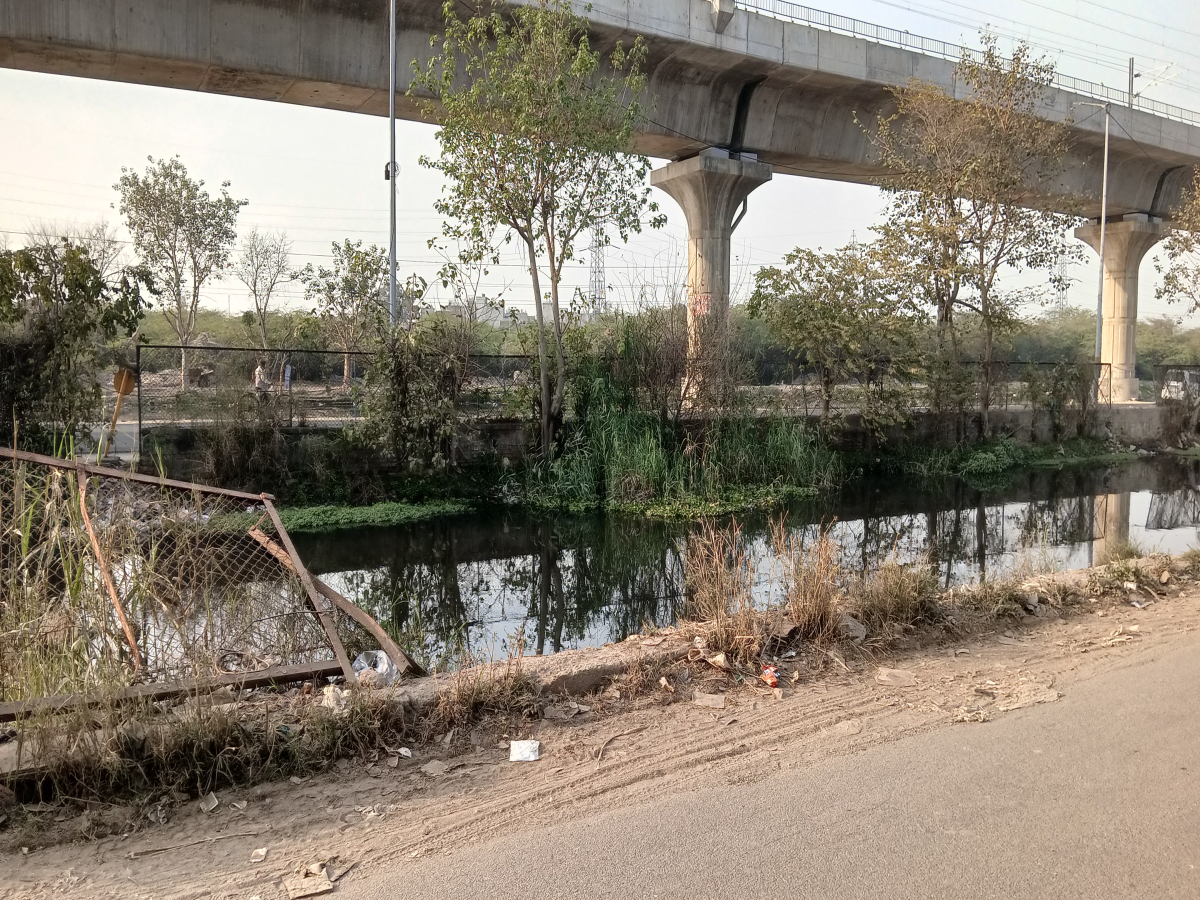
In other instances, UIDBs have pointed to apparent civic negligence rather than criminal activity. At Dallupura in East Delhi, a body was recovered from a stretch of drain long flagged by residents as accident-prone.
According to the Zonal Integrated Police Network (ZIPNET), the area has a history of mishaps. Residents have repeatedly complained about the East Delhi–Noida stretch of the drain, citing poor sanitary conditions and the lack of safety barriers.
Earlier in January, another UIDB was recovered from a nearly two-kilometre-long uncovered section of the drain. While the body showed no signs of bloating or decomposition, the absence of identification meant the person remained unknown.
“The drain runs alongside both a motorable road and a residential area, but neither is properly barricaded,” said Iftekhar Ali, a local resident. “There are parts where the fencing has broken off. Nobody comes to help us because it is not a well-to-do area. We have complained many times. People have fallen into the drain repeatedly. Many have died, some have been saved.”
In 2017, soon after the road was constructed, a car reportedly veered off and fell into the same drain.
Also Read: How bootlegging continues to thrive in Delhi’s shadows
Lack of FIR even under strange circumstances
In several cases, the absence of an FIR has stalled investigations altogether. In December 2025, an unidentified woman was found inside a septic tank in a forested area under the New Delhi police district. In another case, the body of an unidentified woman was recovered from a garbage disposal site.
With no FIRs registered in either case, there has been little information about the circumstances surrounding the deaths.
Govt discloses number of deaths
Data from Delhi’s revenue department show that 89 people died after falling into open drains, canals or waterlogged underpasses during the calendar years 2024 and 2025, an average of nearly four deaths a month.
The figures were disclosed in the Vidhan Sabha during the Winter Session. These deaths formed part of 239 fatalities recorded between January 1, 2024, and December 28, 2025, attributed to civic apathy or calamities such as building and wall collapses, fires and electrocution.
Drowning accounted for the highest number of deaths at 89, followed by fires at 53, rain-related building collapses at 46 and electrocution at three. Another 48 deaths were attributed to other causes. Many of the victims were children and daily commuters, ranging from toddlers playing outside their homes to people attempting to cross flooded underpasses.
A wider regional problem
The issue extends beyond Delhi. In Noida, the death of Yuvraj Mehta renewed concerns over urban safety in the Delhi-NCR region. Mehta was killed after his car skidded in dense fog, broke through a drain boundary and plunged into a deep, waterlogged pit meant for the basement of an under-construction commercial complex.
Delhi’s own records show that such dangers have existed for years. In July 2025, a four-year-old boy died after falling into an open drain in Mahindra Park, prompting police to register negligence proceedings against the responsible civic body. In August 2025, a two-and-a-half-year-old boy died after falling into an open sewer in the Khera Khurd area.
Despite repeated deaths and official data acknowledging the scale of the problem, enforcement of civic safety measures on the ground remains elusive, with accountability still largely absent.
Read More: Delhi court seeks detailed status report in Janakpuri biker death probe