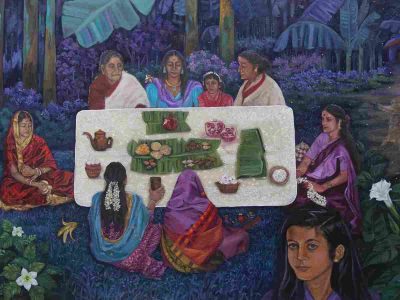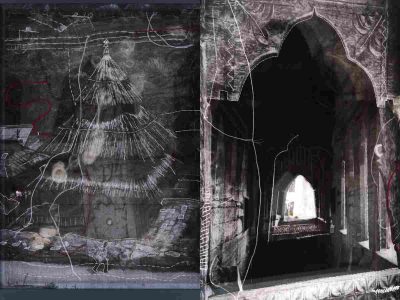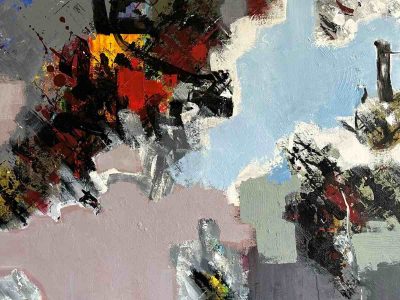
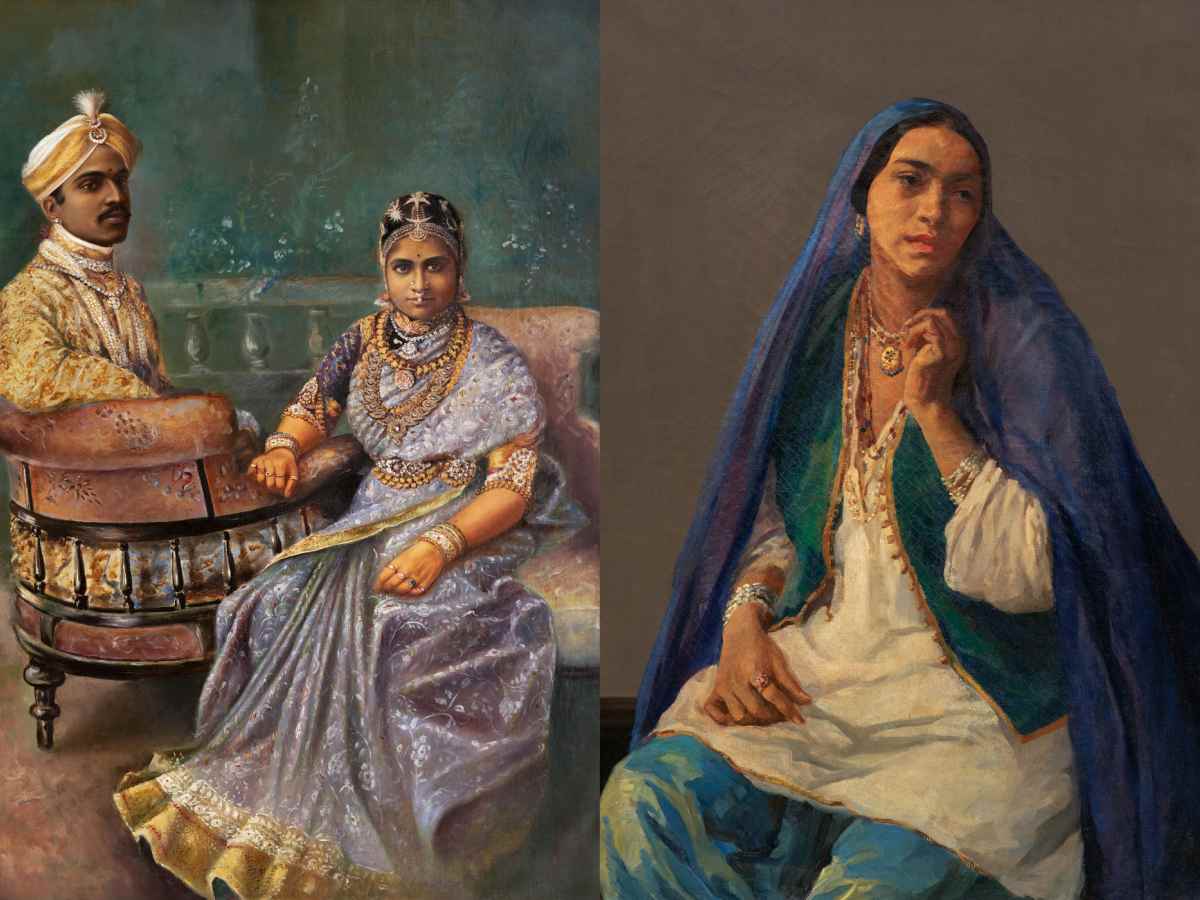
A group exhibition titled Portraits in Time: Power, Presence, and Identity Across Centuries, curated by Sonali Batra, is on view at Bikaner House from April 8 to 15. Presented by Great Banyan Art, the exhibition brings together around fifty works spanning centuries and geographies, exploring portraiture as an evolving inquiry into identity, power and representation.
Installed chronologically, the exhibition traces the development of portraiture from early European academic realism to modernist and contemporary interpretations. It reflects a shift from formal depiction and outward likeness to psychological depth and conceptual exploration, highlighting how ideas of the self have transformed over time.
Historically, portraiture functioned as both record and symbol. In India, court ateliers under Mughal and regional kingdoms produced portraits that reinforced authority and documented lineage, often restricted to elite audiences. Across Europe, academic traditions shaped portraiture through artists such as Jean François Portaels, Hugues Merle and Rose Bonheur, where posture, gesture and gaze conveyed dignity and status. In India, artists like Raja Ravi Varma, Abalal Rahiman and Hemendranath Mazumdar adapted these conventions within a changing colonial and cultural landscape.
By the mid-twentieth century, artists including FN Souza, Krishen Khanna and Anjolie Ela Menon moved beyond likeness towards emotional and psychological expression. Distortion, colour and line became tools to explore inner states, shifting portraiture from documentation to interpretation.
Later works by artists such as Rabin Mondal and Maniklal Banerjee reflect themes of modernity, displacement and existential anxiety, while contemporary practitioners including Shobha Broota and Tom Vattakuzhy revisit portraiture through lenses of memory, migration and cultural hybridity.
The exhibition also includes works by unknown and attributed artists, drawing attention to differing traditions of authorship. While many Indian court painters remained anonymous, European portraitists increasingly gained recognition, complicating ideas of visibility and artistic identity.
Through its cross-century and cross-cultural approach, Portraits in Time presents portraiture not merely as representation, but as a reflection of shifting social, cultural and personal narratives.
When: April 8 to 15; 11 AM to 7 PM
Where: LTC, Bikaner House, Pandara Road, New Delhi