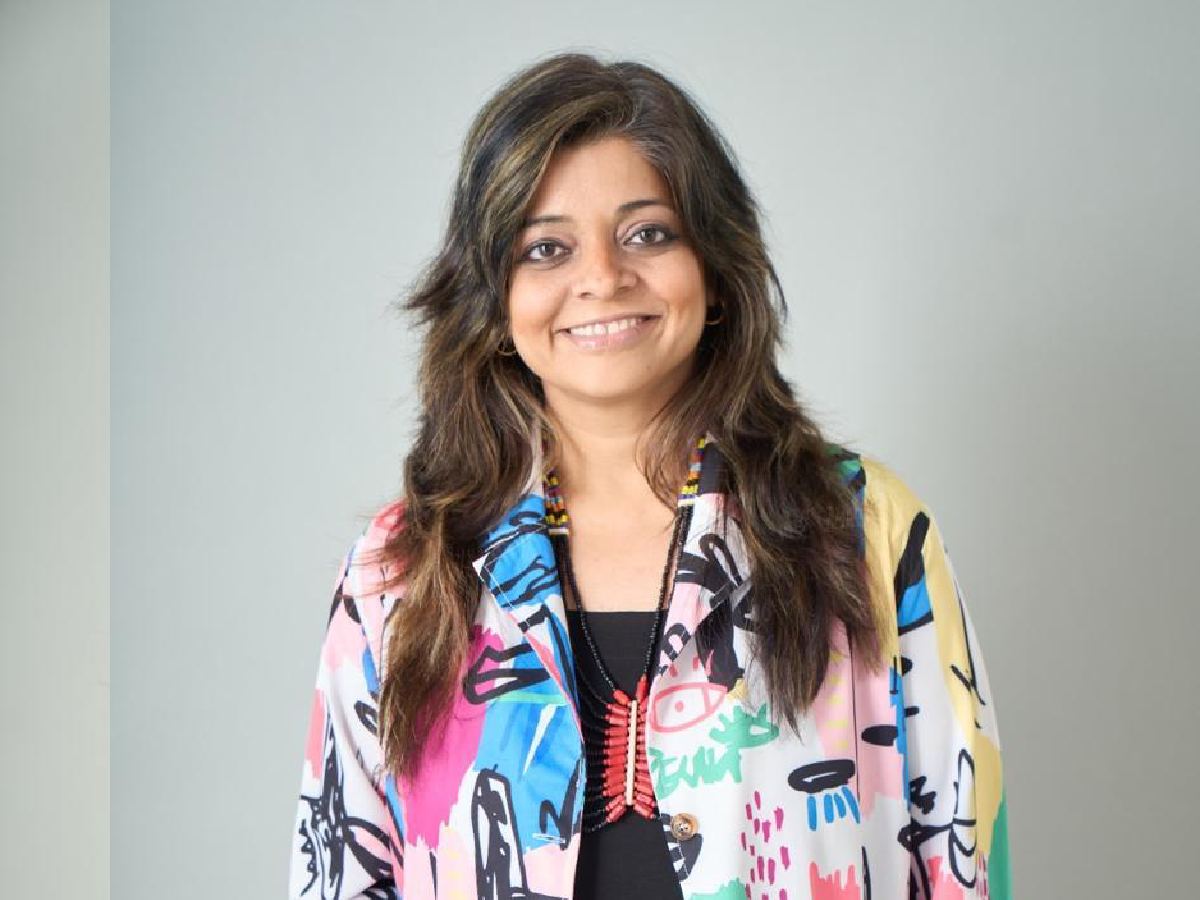
In an industry defined by constant reinvention, Nivedita Basu has spent over two decades navigating change, sometimes shaping it, often adapting to it, but always staying rooted in the core idea of storytelling that connects. From the high-volume era of Indian daily soaps to the fragmented, fast-evolving OTT landscape, her journey mirrors the evolution of the medium itself.
“Television happened by chance,” Basu says. “But once I entered the space, I knew this is where I belonged.”
That sense of belonging, however, was not preordained. Born in New Delhi, Basu’s early life was far removed from the world of media. The daughter of an ex-Army officer and a national-level sportsperson, discipline and structure were constants. A career in engineering seemed more likely than one in entertainment.
“I was actually studying to be an engineer,” she recalls. “Then I did my bachelor’s in advertising from Delhi University and almost randomly landed up at Symbiosis for mass communication. That one decision changed everything.”
It was an entry into the unknown, but one that would eventually place her at the heart of one of Indian television’s most defining eras.
The era that built Indian television
Basu joined Balaji Telefilms in 2000, a time when Indian television was undergoing a seismic shift. Within a few years, she rose to become Deputy Creative Director, working closely with Ekta Kapoor, a collaboration that would prove formative.
The early 2000s marked the dominance of long-running family dramas such as Kyunki Saas Bhi Kabhi Bahu Thi and Kasautii Zindagii Kay. Basu was deeply involved in shaping these narratives, contributing to the emotional arcs and character journeys that millions of viewers followed daily.
“That era was honestly a whirlwind,” she says. “We were creating content at a pace and scale that’s hard to imagine today. But more importantly, we were entering people’s homes every single day.”
Unlike today’s binge-watching culture, television back then was ritualistic. Families gathered at fixed hours, storylines unfolded gradually, and characters became part of everyday conversations.
“Those shows weren’t just watched, they were lived,” Basu says, adding that “that emotional connection is something Indian television still thrives on.”
Learning conviction
Working alongside Ekta Kapoor came with its own set of lessons, less about technique and more about instinct.
“The biggest lesson I learnt from Ekta is conviction,” Basu says. “She knows her audience and she trusts that instinct unapologetically.”
In an industry often swayed by trends and numbers, this clarity stood out. It shaped Basu’s own approach to storytelling, one that prioritises connection over approval.
“You may agree or disagree with the content,” she says, “but you can’t ignore the clarity. That stayed with me. Don’t create to impress, create to connect.”
Stories that mirror life
Ask Basu what makes a story resonate across India’s diverse audience, and her answer is immediate: relatability.
“India may be diverse, but emotionally we’re very similar,” she says. “Family, love, power, struggle, these themes don’t change. Only the treatment does.”
Whether it is a daily soap or an OTT series, the core remains the same. Audiences look for reflections of their own lives, their conflicts, aspirations and relationships.
This understanding, honed over years of working on multiple shows, continues to guide her choices even today. The format may have evolved, but the emotional grammar of storytelling remains intact.
From creative head to producer
After nearly a decade at Balaji, Basu stepped away in 2009 during a restructuring phase. It marked the beginning of a new chapter, one that would expand her role beyond creative decisions.
The transition from creative director to producer, she admits, was both challenging and transformative.
“As a creative director, you’re focused on storytelling,” she says. “As a producer, you’re responsible for everything, budgets, timelines, people, risk.”
It was a shift from imagination to accountability. Creativity, suddenly, was tied to financial decisions and logistical realities.
“It’s a reality check,” she says. “But it also gives you control. You’re not just telling a story, you’re building a business around it.”
In 2015, she launched her own production house, House of Originals, and began developing content on her own terms. Projects like Meri Awaaz Hi Pehchaan Hai reflect both nostalgia and contemporary sensibilities.
Reinventing in the OTT era
If the early 2000s were about scale, the current landscape is about fragmentation. With the rise of digital platforms, storytelling has undergone another transformation, one that Basu has actively engaged with through her roles at platforms such as Atrangii, Ullu and Hari Om.
“We’ve moved from format-driven content to authenticity-driven content,” she says. “Earlier, there were set templates. Now there’s freedom, but also a lot of noise.”
The audience, she notes, has changed significantly. Exposure to global content has raised expectations, making it imperative for creators to strike a balance between rooted storytelling and global standards of execution.
“Your storytelling has to be real,” she says, “but it also has to compete with what people are watching worldwide.”
The business of balance
One of the enduring challenges in the entertainment industry is the tension between creativity and commerce. For Basu, however, the two are not necessarily at odds.
“I don’t see quality and commerce as opposites,” she says. “If you understand your audience well, good content can be commercial.”
The problem arises, she believes, when creators begin chasing trends rather than telling stories they believe in.
“That’s when content starts losing authenticity,” she says.
Her approach, therefore, remains grounded in instinct, an extension of the lesson she learnt early in her career: trust the audience, but also trust your voice.
The unseen cost of storytelling
Behind the glamour of the entertainment industry lies a less visible reality, one of pressure, deadlines and constant scrutiny. Basu has been vocal about the need to address mental health within the industry.
“This industry runs on pressure,” she says. “People see the glamour, but not the emotional cost.”
Long hours, unpredictable schedules and the demand for continuous output often take a toll on creative professionals. For Basu, acknowledging this is the first step towards change.
“If we don’t start addressing mental health seriously,” she says, “we risk losing not just talent, but also the passion that drives creativity.”
Delhi as a creative space
Though her career has largely been shaped in Mumbai, Basu maintains a nuanced view of Delhi’s potential as a creative hub.
“Delhi has incredible stories and talent,” she says. “But Mumbai still has the ecosystem.”
However, the rise of OTT platforms is gradually decentralising content creation. Geography, once a limiting factor, is becoming less relevant.
“Delhi can definitely emerge as a strong content hub,” she says, “especially for rooted, real stories.”
For Basu, the city represents a layered narrative space, one filled with contrasts and complexities.
“Delhi has power, politics, old money, new ambition, chaos,” she says. “It’s a city full of contrasts.”
Stories she wants to tell
If given the opportunity, Basu is clear about the kind of stories she wants to explore, narratives that delve into power dynamics within families, communities and social structures.
“I’m especially interested in stories around power,” she says. “There’s a rawness to Delhi that can translate into very compelling storytelling.”
It is this rawness, the interplay of control, vulnerability and ambition, that continues to intrigue her as a creator.
Looking ahead
Having worked across television, film and digital platforms, Basu’s journey reflects both continuity and change. The mediums have evolved, the audience has transformed, and the industry has expanded, but the essence of storytelling, she believes, remains unchanged.
At its core, it is still about connection.
“Don’t create to impress,” she reiterates. “Create to connect.”