
Education is often associated with classrooms, examinations and report cards. Yet many of the lessons that shape people are learnt after the school bell rings, and many of their most influential teachers never follow a formal lesson plan.
Mentorship is not confined to a profession. A neighbourhood tutor may support a student through turmoil at home. A teacher’s empathy may restore a bullied child’s confidence or help a first-generation medical student find his path. An institutional leader’s encouragement may help a young woman recognise her own ability to lead.
Friends, pets, parents and younger siblings can also become teachers. Their lessons may be informal, but they often influence how people understand themselves and relate to the world around them.
The tutor who became family
For many students, private tutoring is an after-school routine devoted to homework and examinations. For Nupur (name changed), however, her tutor Shelly Ma’am became a source of stability as she grew up.
Nupur, now a 21-year-old, did not initially take to her teacher’s strict, no-nonsense approach. In Class 7, however, their relationship changed after Shelly Ma’am reprimanded her in front of the study group for memorising mathematical formulae instead of understanding the concepts behind them.
The criticism stung, but it also changed the way Nupur approached problems.
“She wasn’t just checking my work; she was teaching me how to look at a problem, break it down and solve it without panic, both in my studies and in my life,” she said.
As the years passed, their relationship extended beyond the study room. When Nupur had to navigate university admissions and competitive examinations, Shelly Ma’am was the first person she approached. The bond became even more important when Nupur faced difficulties at home and her tutor became an emotional anchor.
Towards the end of her second year at university, Nupur came out to her mentor. Shelly Ma’am responded without shock or hesitation: “I already knew.”
For Nupur, that calm acceptance mattered as much as any lesson her tutor had taught her.
Lessons in compassion
Animals, too, can change how people see the world. For Vanya, her relationship with them shaped her ideas about affection, patience and compassion.
The change began with Goofy, her partner’s dog. Caring for him taught her about patience and unconditional affection.
“Animals teach you so much, and they are so beautiful,” Vanya said. “My partner’s dog Goofy opened my heart to all animals.”

Her affection for Goofy gradually extended to stray animals. “I loved him so much that I started to love the strays just as deeply, because I thought, ‘What crimes have the strays committed?’ They deserve love and affection equally,” the 20-year-old said.
Vanya began feeding and caring for animals in her neighbourhood. The experience encouraged her to pause before judging others and consider their circumstances. She eventually adopted vegetarianism out of respect for other forms of life.
Animals, she believes, taught her that intelligence can also be measured by a person’s capacity for compassion.
Support during difficult years
Some teachers support students in ways that go far beyond lessons and examinations.
Riddhima recalled how a teacher helped her when she was being bullied in Class 8.
“Even though we’re no longer in touch, I’ve always wanted to tell you how much you meant to me. Back in eighth grade, when I was being severely bullied, you taught me how to stand up for myself, believe in who I am and understand that I am enough just as I am,” the 19-year-old said.
Sachin, a medical student, similarly credits his teachers Sabita Varun and Satyaprakash with helping him understand himself and communicate with confidence.
“Thank you not only for teaching me, but also for helping me understand who I am. Today, I am studying at a medical college and can communicate confidently because of you,” he said.
Now in medical college, Sachin said the patience and support of his childhood teachers continue to influence how he communicates with others.
A teacher at home
For many people, their most important teacher sits beside them at the kitchen table. For Anisha, that person was her mother.
Some of Anisha’s fondest childhood memories are of her mother returning home and sitting down to teach her.
“She’s my mother, but she’s also an incredible teacher. She can make everything seem so simple. She is intelligent, funny and an amazing person without even trying,” Anisha, now in her early twenties, said.
Anisha said she learnt to be punctual from her mother and inherited her caring nature. She also learnt from her to look for the good in people.
Her mother created a calm and accepting home, allowing Anisha to choose her own path without pressure.
A namesake who taught leadership
College leaders, too, can influence how students understand authority and leadership.
Khushi’s first encounter with a mentor who shared her name was an embarrassing one. During a college trip, one of her classmates made funny faces behind Khushi’s teacher’s back, causing the younger Khushi to burst out laughing. Unaware of the classmate’s actions, her mentor reprimanded her.
Despite the awkward beginning, Khushi did not come to fear her mentor. Over time, Khushi noticed how her teacher encouraged students whenever they hesitated or doubted themselves.
She would often tell them, “Try karne mein kuch nahi jaata (There is no harm in trying).”
The advice changed Khushi’s understanding of leadership. She realised that authority did not have to intimidate people; it could be used to encourage them.
Now a 22-year-old, Khushi adopted the same approach in her own life. Whenever a classmate hesitated before a presentation or competition, she repeated her mentor’s advice to ease their anxiety.
Learning from a younger brother
Meenal had only known what it meant to be the younger sibling. Accustomed to running errands and being ordered around, she had long wanted to know what it was like to be an elder sister.
Her younger brother was born during the COVID-19 pandemic, when Meenal was going through an emotionally difficult period. Holding him for the first time marked a turning point in her life.
Over the six years since his birth, being an elder sister has become an education in itself. Adults usually expect to teach children, but Meenal found that her brother was also changing the way she viewed the world.
“He has taught me patience. I used to be a very impatient person, but being around a child requires a lot of patience,” she said.
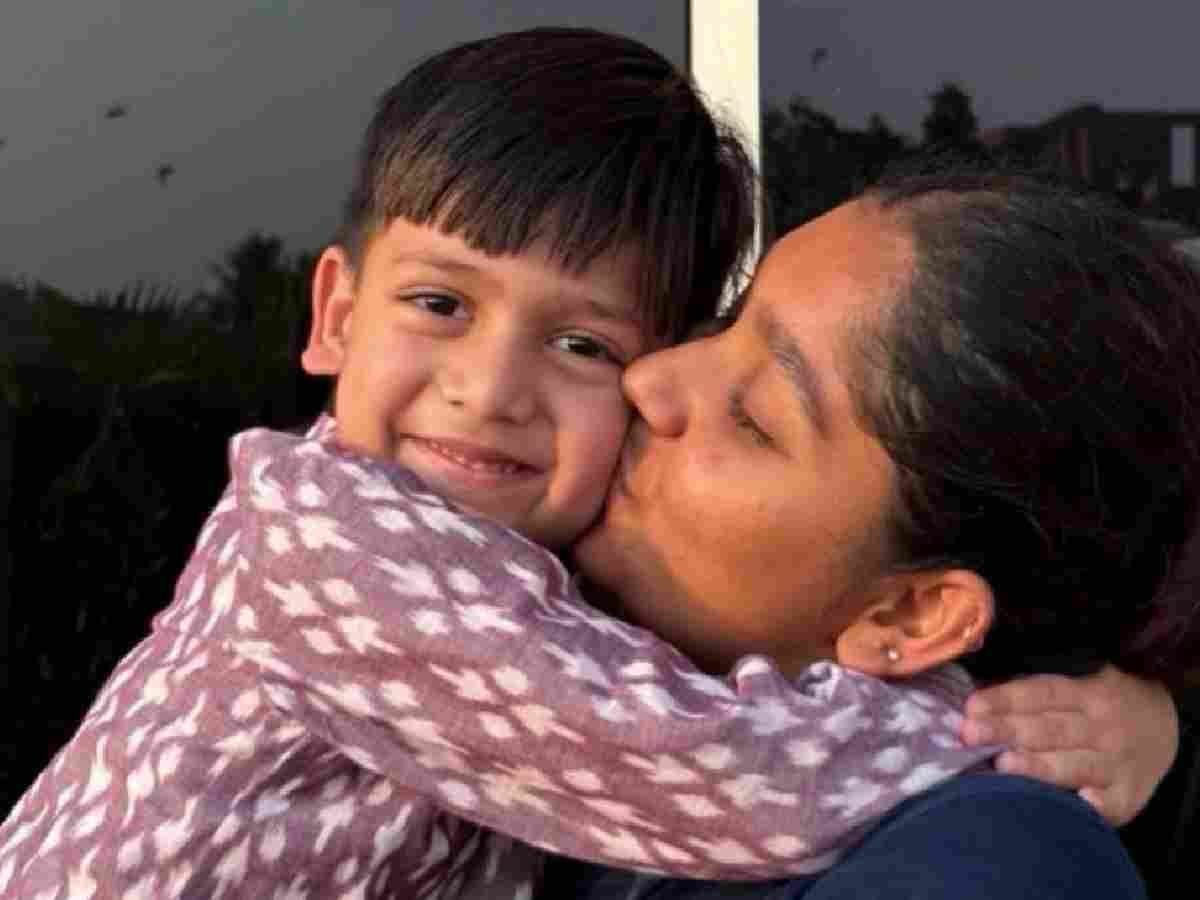
After almost six years as an elder sister, Meenal said she genuinely felt more patient than before. “So, in a lot of ways, I feel like while I have been watching him grow up, I have also been growing as a person alongside him,” she said.
Her brother also taught her the value of simplicity. Adults often worry about routines and the future, but a packet of chips or a piece of chocolate could brighten his entire afternoon.
Meenal, now in her early twenties, recalled breaking down in tears after an overwhelming day. Her brother rushed to bring her his favourite toys and a glass of water. He repeatedly offered her snacks and invited her to play games, doing everything within his power to make her feel better.
When she later discussed the possibility of moving abroad to pursue her master’s degree, his tears and pleas for visits conveyed an affection that needed no elaborate words.
These accounts broaden the meaning of a teacher. A mentor may be someone who helps another person approach a problem differently, regain confidence or respond to the world with greater care.
Such lessons rarely appear on a report card, but often last much longer.