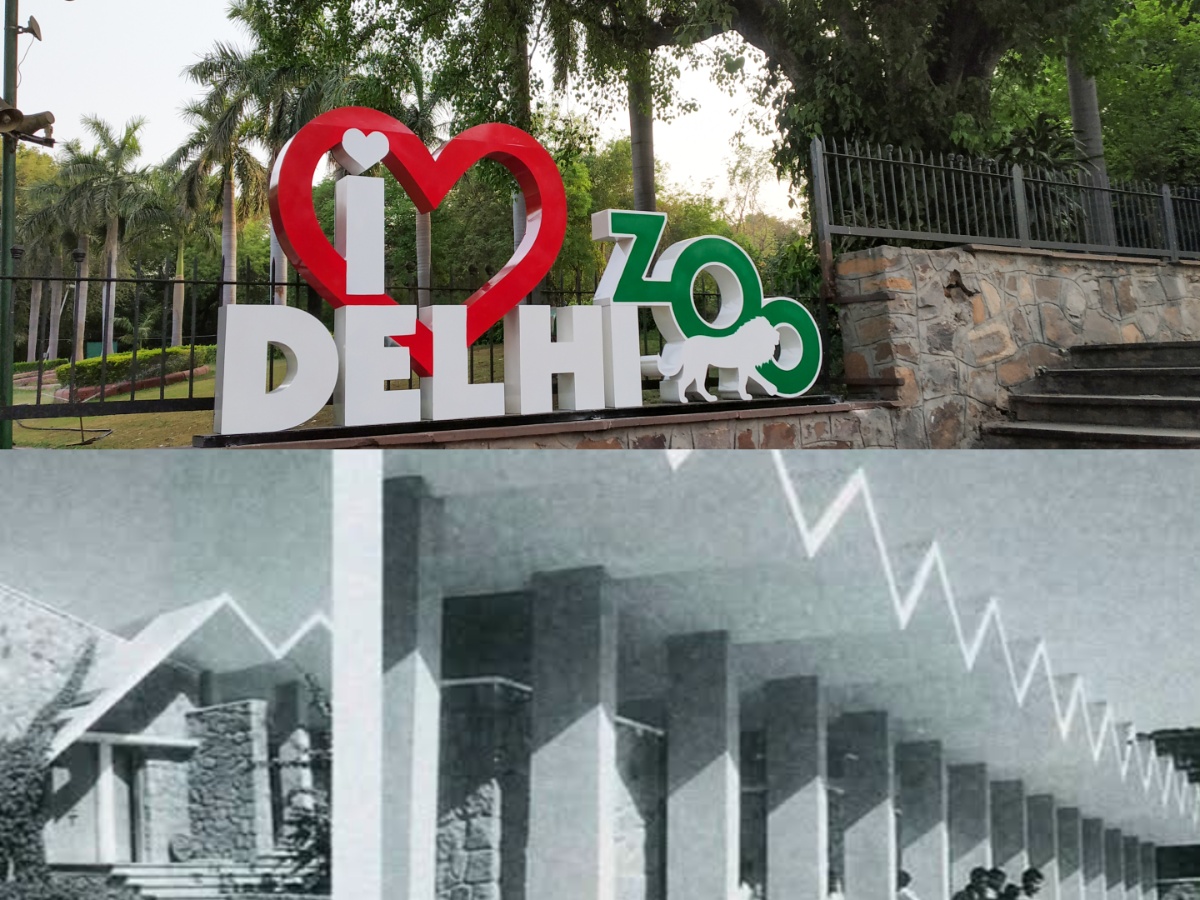
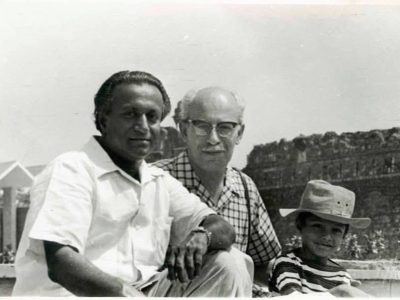
Painter Ram Rahman was saddened when he read that the Delhi Zoological Park is to get a new entrance. Tenders have already been issued, and once the new gate is built, the rest of the campus will be redeveloped with new roads, parking and a cafeteria. The old foundation, it has been said, will remain. But for Ram, that is not quite the same thing. The zoo his father, Habib Rahman, designed will survive in parts, even as the place he knew gradually becomes a memory.
Habib Rahman was not only an architect but also one of the many who helped shape the public architecture of independent India. In 1951, the Indian Board for Wildlife was formed, and a year later the idea of establishing a zoo in the capital began to take shape. A committee was constituted, with Indira Gandhi among its members.
Preserving the past
In 1953, a site was chosen on the stretch of land between the Purana Qila and Humayun’s Tomb, and the Central Public Works Department entrusted Habib Rahman with its design. He designed the entrance and the administrative offices.
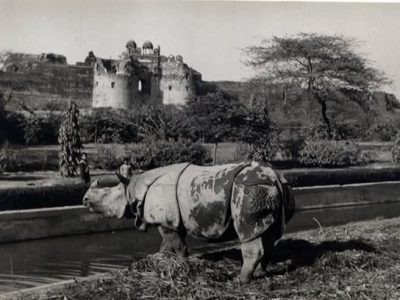
“Habib Rahman refused to erase the ruins. Fragments of older buildings remained where they were. Animals and history would share the same ground,” says Qayyum Abbasi, who lives inside the Matka Pir Dargah and heard stories of the zoo’s early years from his father.
That approach was characteristic of Rahman’s work. He had already designed several important buildings in Delhi, including the AGCR building at ITO, the UGC building, Vikas Minar and the Posts and Telegraphs building on Parliament Street. His architecture was modern without being detached from its surroundings, and at the zoo he followed the same principle, leaving the Kos Minar in place.
A 16th-century relic
Anyone walking through the zoo today can still see it: a roughly 30-foot tower of brick and lime plaster that once marked a kos, or a unit of distance of about two miles. During his reign from 1540 to 1545, Sher Shah Suri had these minars erected along the Grand Trunk Road, which ran from Delhi through Karnal, Panipat, Kurukshetra, Ambala, Ludhiana and Amritsar to Peshawar, as well as along the Delhi-Agra road. They served as markers of distance and were also associated with the postal system.
The zoo thus occupies a fragment of an older imperial landscape. Habib Rahman could have had the Kos Minar removed to make way for the new complex, but instead incorporated it into the design, allowing a sixteenth-century monument to remain alongside an institution created in the first decade of independent India.
A different kind of zoo
The zoo formally opened on November 1, 1959, with Union minister Panjabrao Deshmukh inaugurating it. Animals began arriving from state governments and private citizens: tigers, leopards, bears, foxes, deer and birds, among them rare species. At a time when some families still kept animals privately, the zoo also provided a public home for some of them. The park eventually spread across 176 acres in the heart of the city.
Sunder Nagar was still sparsely populated then, and children from the few houses that had come up in the neighbourhood would often make their way to the zoo during school holidays. Older residents still remember those days. The children cycled or walked across, played around the enclosures and watched the animals, treating the zoo almost as an extension of their neighbourhood. Few residential colonies had yet developed around it. It was not the destination of weekend outings, with tickets and queues; it was simply part of the landscape, much like the Kos Minar that stood within it.
The new entrance will presumably be more convenient for visitors, and the redeveloped complex will bring new roads, parking and other facilities. But the old entrance — the one Habib Rahman designed — will then become part of the zoo’s history, surviving perhaps in photographs and archives.
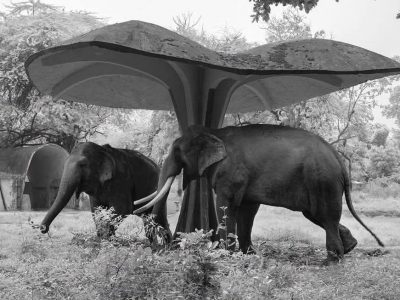
What the redevelopment leaves behind
The tender documents are already public, and the redevelopment will rise on the same foundation that Habib Rahman laid. The foundation may remain, but much of what stood upon it will change: the arrangement of spaces, the relationship between the buildings and the surviving ruins, and the quiet presence of a Mughal-era road marker within a zoo created in a newly independent India.
The story will survive in the historical record. It will still be possible to say that Habib Rahman designed the original entrance and offices, that he retained the ruins and the Kos Minar, that the zoo opened in 1959, and that children from Sunder Nagar once spent their holidays there. What is harder to preserve is the experience of entering through that particular gate and encountering that particular combination of architecture, landscape and history.
Delhi around the zoo has changed considerably since then. Sunder Nagar is no longer sparsely populated, and the Grand Trunk Road of Sher Shah Suri survives largely beneath the modern city. The Kos Minar, however, still stands within the zoo, quietly marking a much older understanding of distance and time.
The zoo will continue, and the animals will remain. The history, too, will remain in some form. But as the entrance changes and the campus is redeveloped, a small part of the way Delhi once brought its past into the present will disappear.
Also Read: Delhi zoo to replenish shrinking animal collection; plans afoot to acquire 109 new species