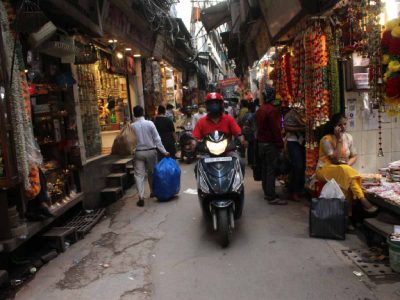
Sweet makers and dried-fruit traders in Old Delhi are entering the festive season amid rising input costs and signs of weaker demand. Several shopkeepers said customers bought smaller quantities during Raksha Bandhan, even as the cost of making sweets continued to climb.
With Ganesh Chaturthi approaching on September 14, shops are preparing for another round of festive demand. Dussehra and Diwali will follow, traditionally bringing some of the year’s highest demand for mithai and dried fruits.
In Old Delhi’s crowded lanes, dried-fruit shops have filled their counters with almonds, cashews and pistachios, while grocery stores have sacks of sugar stacked outside. This year, however, shopkeepers are watching the price of sugar closely.
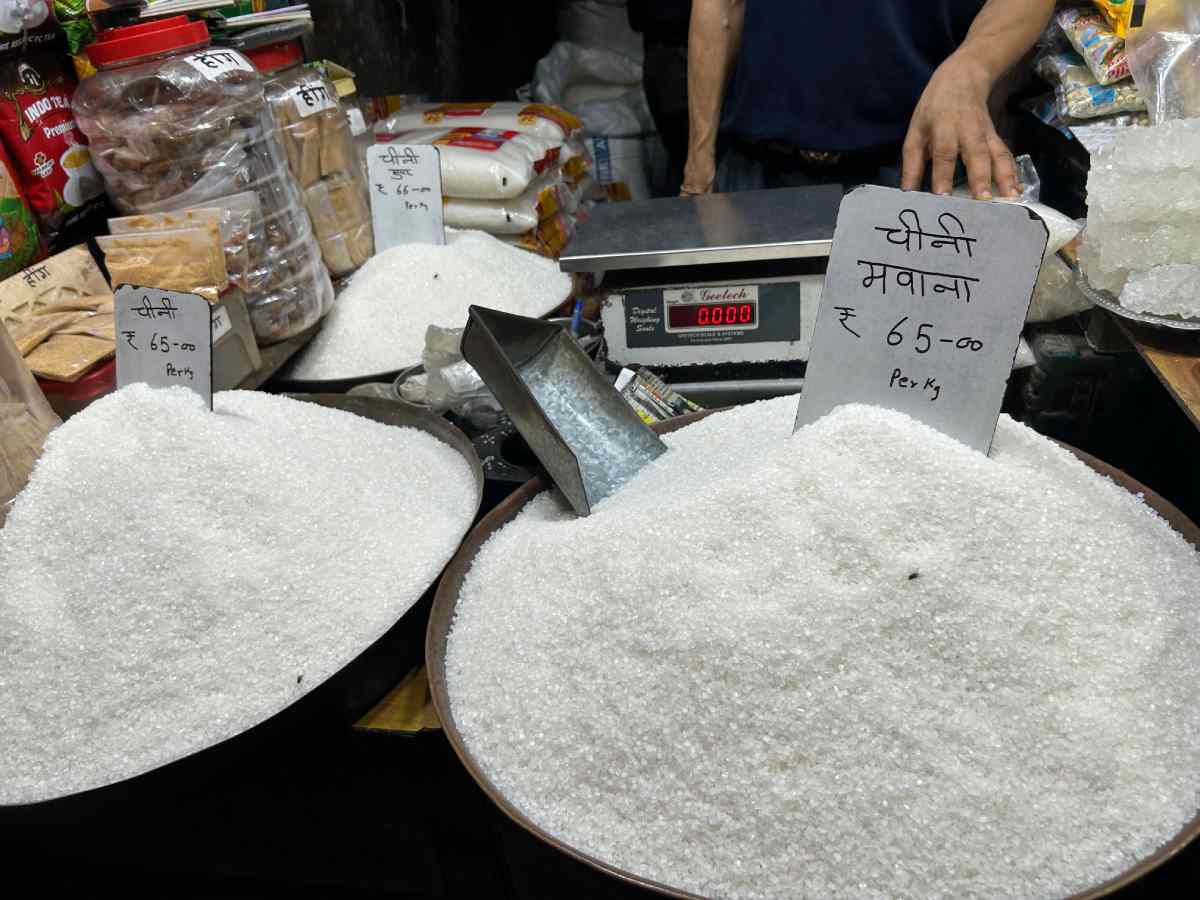
Sugar was selling for Rs 65–66 a kg at one shop during Patriot’s visit. While an increase of a few rupees may have a limited effect on a household, it can add substantially to production costs for a sweet shop buying hundreds of kilograms.
According to the Department of Consumer Affairs’ Price Monitoring Division, the average retail price of sugar rose from Rs 48.18 a kg on July 20 to Rs 55.70 on August 20. By August 25, it had reached Rs 63.97, while the modal retail price (the price recorded most frequently) stood at around Rs 65. On August 30, the national average remained above Rs 64 a kg.
The Ministry of Consumer Affairs, Food and Public Distribution has attributed the rise to several factors, including lower-than-expected production, damage to sugarcane crops caused by adverse weather, higher festive demand and tighter global supplies. It has also cited speculation and hoarding as possible drivers of the increase.
Sweet prices rise as margins shrink
Subodh (name changed), who runs a small mithai and namkeen shop in the wholesale market, said the higher cost of sugar had forced him to revise prices.
“Ghevar was Rs 200 a kg last year. Because of sugar, we have increased it to Rs 240 a kg this year,” he said. “It is the same story with gujiya: Rs 160 a kg last year and Rs 200 a kg now. It applies to almost everything else in the shop.”
For Subodh, sugar is only one part of a longer list of rising expenses.
“It is not just the price of sugar going up. There is inflation everywhere. Gas prices have been high for the last six months,” he said.
He is paying more for nearly every input, Subodh added, while customers expect prices to remain unchanged. “Tell me, how can we do that? There are workers under us, and we have to pay them too.”
The more sugar a business uses, the harder it becomes to absorb even a small increase without raising prices or reducing margins. Sugar is also not the only ingredient worrying shopkeepers: Milk and dried-fruit prices have risen as well.
Milk and dried fruits add to costs
Milk, the base of many traditional Indian sweets, has also become more expensive. Jamaluddin, who runs a 140-year-old kheer shop in Bazar Sirkiwalan, Hauz Qazi, said, “Buffalo milk is Rs 85 a litre now.” The richer, higher-fat variety is commonly used in kheer, khoya and other milk-based sweets.
Mother Dairy raised the price of full-cream milk from Rs 70 to Rs 72 a litre in May and that of toned milk from Rs 58 to Rs 60, citing higher procurement costs.
Dried fruits, other key ingredients in several traditional sweets, have also become costlier. At Khari Baoli, counters are piled with almonds, cashews, raisins and pistachios. Handwritten boards display prices running into hundreds of rupees and, for some varieties, more than Rs 1,000 a kg.
During Patriot’s visit, almonds and cashews were selling at sharply different prices depending on their quality and variety. Some were priced between Rs 1,080 and Rs 1,200 a kg, while cheaper grades were available at lower rates.
Khari Baoli trader Shyam Hare Lal said wholesale prices had been rising for months.
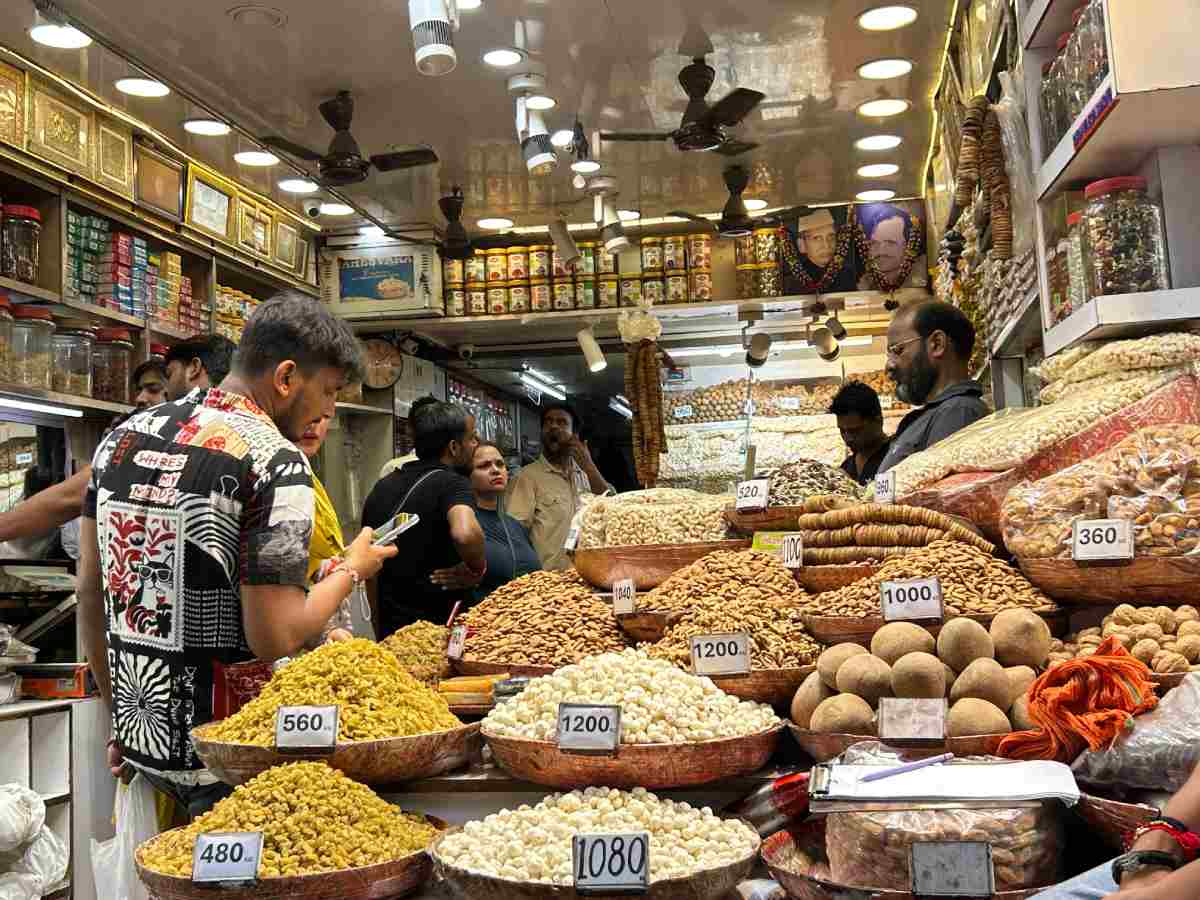
“It was lower last year. Now it has surged by up to 30% in the wholesale market. Almonds were around Rs 800 a kg; now they are Rs 1,080 a kg,” Lal said. “Different types of almonds have different price ranges. Pistachio rates have gone up too, and cardamom is up to Rs 4,000 a kg.”
Customers cut quantities
Lal said the increase had not stopped people from buying but had changed how much they purchased.
“People are buying, but in smaller quantities. Everything comes straight from Iran and Afghanistan, and because of the war, the supply is lower,” he said.
His claim about the effect of the war on supplies could not be independently verified. Lal also said sales during Raksha Bandhan were lower than usual.
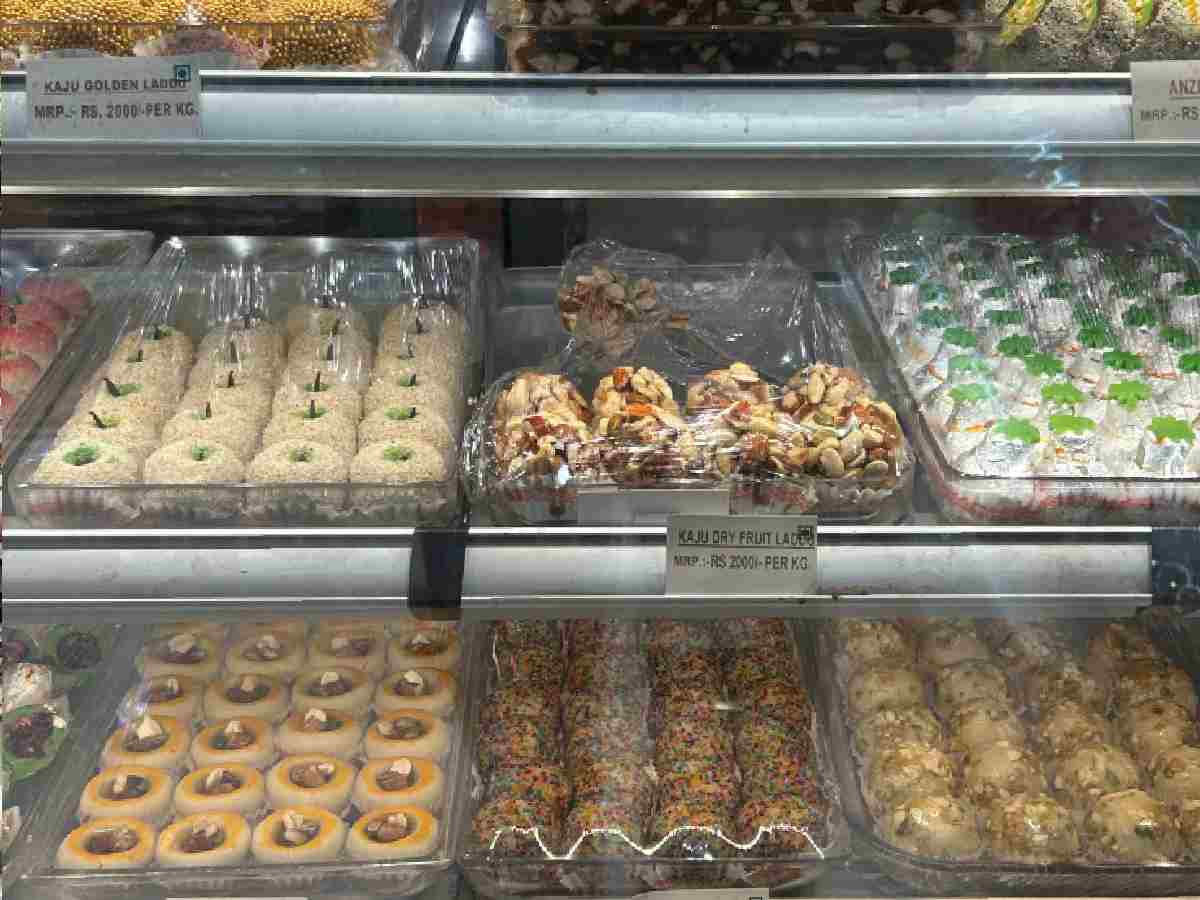
Dried fruits are among the most expensive ingredients used by sweet makers. When almond and cashew prices rise, so does the cost of producing kaju barfi, badam sweets and dried-fruit laddus.
Shopkeepers said customers who previously bought a kilogram were now opting for half a kilogram. Those buying dried fruits as gifts were choosing smaller boxes or cheaper varieties.
One shopkeeper said footfall had not necessarily declined, but customers were buying smaller quantities. He also cited the growing popularity of online shopping as another source of pressure on traditional stores.
Another sweet-shop owner in the area described the Raksha Bandhan season as one of the quietest he had seen.
“The market was almost dead for me this time. There are already multiple mithai shops here, so the competition is high anyway,” he said. “If prices suddenly go up on top of that, either we bear the loss or raise our mithai prices. This time, we raised them by just Rs 10.”
Larger businesses feel the pressure
The impact of rising costs varies across businesses, although larger establishments are also beginning to feel the pressure.
Kashish Gupta of Nathu’s Sweets said rising input costs were affecting the business. Speaking at its outlet in Bengali Market, Gupta said, “Milk prices had increased from around Rs 60 to Rs 70–71 a litre over the past few months. Almonds, pistachios and other dried fruits had also become more expensive.”
Gupta linked part of the rise in input and transportation costs to disruptions in international trade and the situation around the Strait of Hormuz, which he said was affecting shipments and fuel costs.
However, he said gas prices were a bigger concern than either sugar or dried fruits. He said the price of commercial liquefied petroleum gas used by the business has risen substantially.
“Gas has become very expensive. Other things do have an impact, but the way gas prices have increased has a very big impact,” Gupta said.
He called for government intervention to reduce liquefied petroleum gas and fuel prices, saying this would provide food businesses with greater relief than measures targeting sugar prices alone.
Nathu’s has so far kept its prices and portion sizes unchanged. Gupta, however, said the business might eventually have to raise prices if input costs continued to climb.
“Margins have reduced, definitely, but we are keeping the price and portion intact as of now,” he said.
While an established business may be able to absorb the additional cost temporarily, smaller shops operating on thinner margins have less room to do so.
Retail relief yet to arrive
The Centre has introduced measures to curb the rise in sugar prices ahead of the festive season. From August 1, the Department of Food and Public Distribution imposed stock limits on sugar dealers. The restrictions will remain in place until November 30.
From September 1, bulk consumers have been prohibited from holding sugar stocks exceeding 15 days’ consumption under a separate notification. The government has also approved the duty-free import of 10 lakh tonnes of raw sugar to increase domestic supply.
The measures appear to have begun lowering wholesale prices. On August 28, the Ministry of Consumer Affairs, Food and Public Distribution said ex-mill sugar prices had fallen by about 20%, with retail prices beginning to decline.
Patriot reached out to the National Restaurant Association of India for comment on the impact of rising sugar, milk, fuel and other input costs on food businesses, but had not received a response at the time of publication.
The fall, however, had not fully reached consumers by August 30. Data from the Department of Consumer Affairs’ Price Monitoring Division showed that the average retail price of sugar across India remained at Rs 64.24 a kg, with prices in most retail markets still above Rs 60.
Old Delhi’s traders are now watching the gap between falling ex-mill prices and what they pay their suppliers. For them, relief will come only when lower wholesale prices translate into cheaper sacks of sugar delivered to their shops.