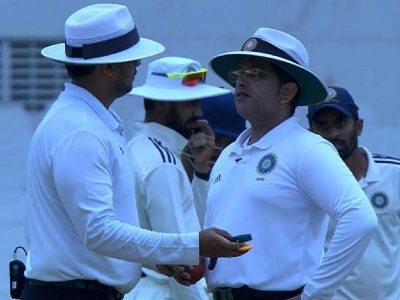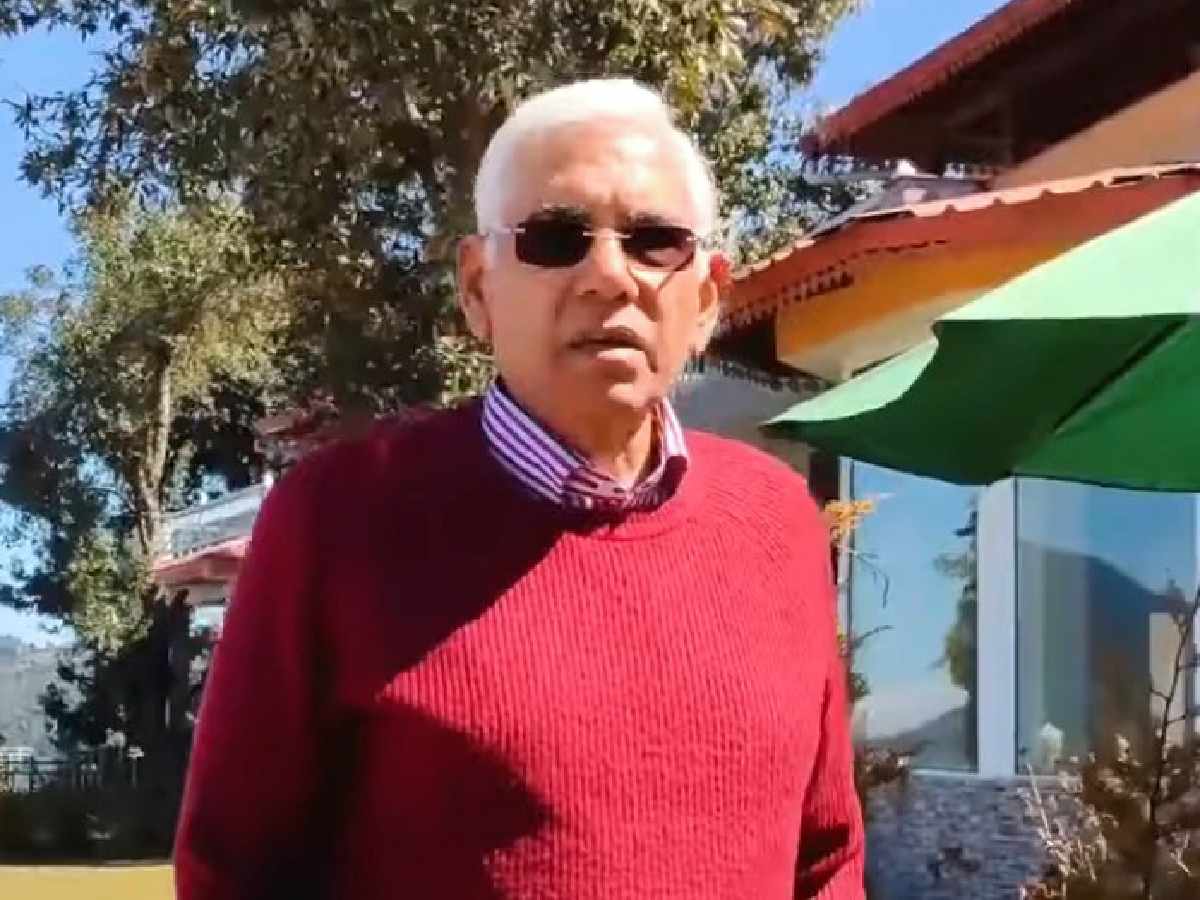
The Supreme Court appointed a four-member Committee of Administrators (CoA), headed by former Comptroller and Auditor General Vinod Rai, in January 2017, for reforms in cricket administration. The CoA gave a pay hike to umpires in April 2018, the last time their match fee was raised.
Excerpts from an exclusive interview:
The CoA gave all match officials and curators a raise in 2017-18.
I remember some talk, more about players, team managers and umpires. I then started asking questions, and I don’t know whether it was Saba Karim [then BCCI General Manager-Operations] or Rahul Johri [then BCCI CEO], or somebody else, who told us about umpires.
How do you react to the fact that since 2017-18 umpires have received no salary hike?
I find it very strange. I think it is a travesty of justice, because in my scheme of things, I consider an umpire to be a professional, in the sense that we expect them to be professionally competent vis-à-vis rules, norms, regulations, etc. Also, they stand there on the ground the whole day. And the fact that today, even if in certain matches the DRS is not available, their proficiency is now being tested. So, to that extent their competence has to be razor-sharp. I don’t think that the relevance of umpires to cricket is any less than any curator or a video specialist or a commentator or even a coach, because the playing eleven or a 16-member squad is a different ball game.
An umpire can go up to 60 years whereas a player can play barely up to 40. That’s why I’m drawing the distinction between players and any other category that comprises team management or team support staff or a commentator. Why I call it a travesty of justice is because anybody who has passed all those milestones — passing the exam etc to qualify for the job — and attained a certain competence, there is no reason why he is not compensated, depending upon his professional competence.
Has any umpire or an umpires’ body approached you to put in a word with the BCCI between October 2019, when the CoA handed over charge of the BCCI to an elected body, and now?
No umpires’ body has approached me, though lots of other support staff, maybe an umpire from the Chandigarh side, if I remember correctly, have. But my philosophy has been that if I leave an appointment in an institution or any assignment that I’ve done, I cut my umbilical cord with it. So, I may not have taken up any of the causes.
What did they want from you?
I think all that they mentioned to me was the unfair treatment, the biases and prejudices that they were hearing about.
Was it also about their salaries or fees?
In treatment and in fees, both, such as regional favouritism. They maintained that we [CoA] had not done that because as far as we were concerned, everybody was equal to us. At least I had no legacy issues or any background about anything. I carried no baggage. We treated everybody equally. These people [who approached me] were feeling that there were some biases and prejudices — South, North, East, West, all the time, especially people from the North East. This all happened after the pandemic.
So, what, according to you, is the solution for this issue? What can the BCCI do?
I don’t see any reason why the recommendation for compensation should go to an umpires’ committee because they are there more for technical reasons. They analyse umpires’ decisions made over the domestic season, and they recommend umpires for promotion or demotion. A compensation package is an HR issue whereas the other is a technical issue. So, I would look at them in two different silos. We [CoA] also had a technical committee, the Cricket Advisory Committee, which did the technical evaluation and interviewed candidates for appointing the India coach, and the compensation package was decided by the HR side of the institution [BCCI]. That’s why I don’t see a relevance of a recommendation through the umpires’ committee for compensation package.