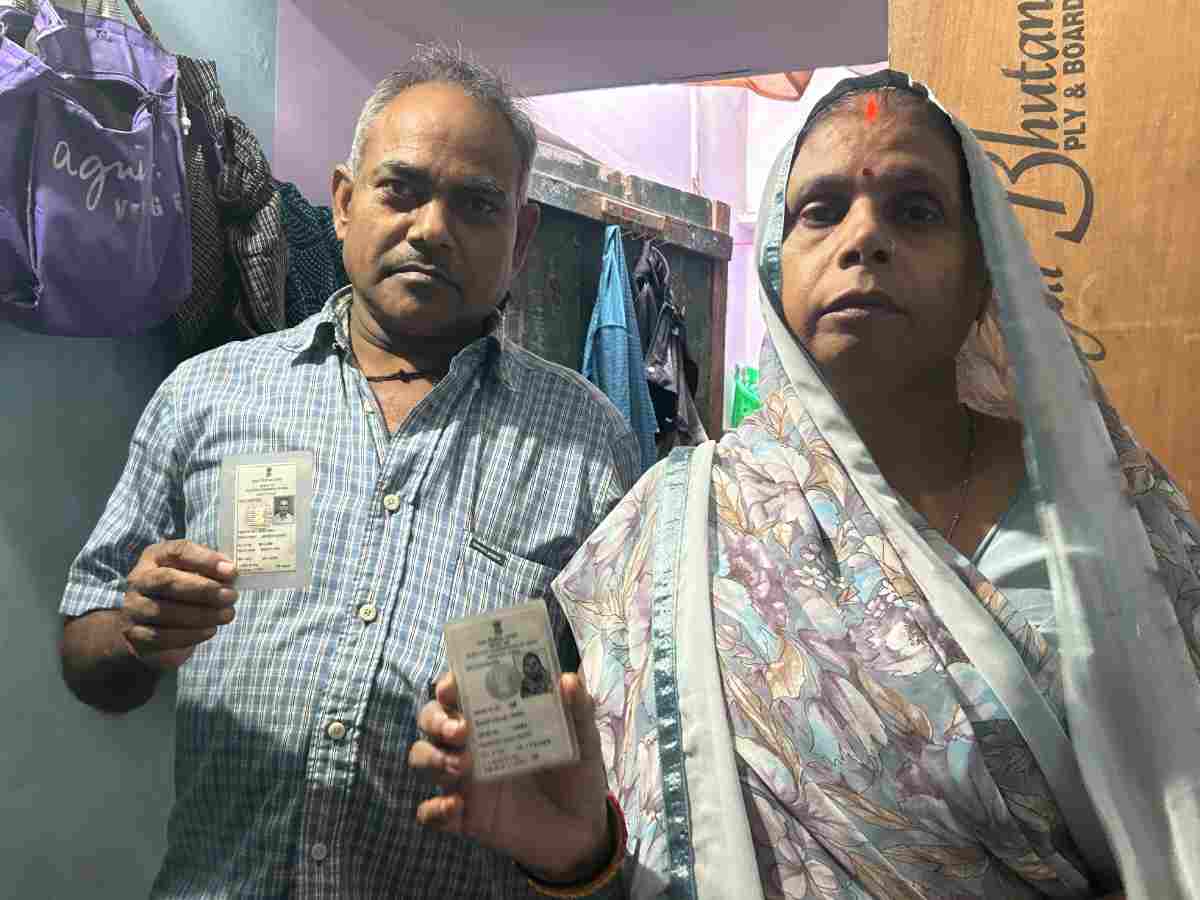
More than 47 lakh electors have been kept out of Delhi’s draft electoral roll after their enumeration forms were classified as uncollectable under the categories of Absent, Shifted, Dead, or Duplicate (ASDD) during the ongoing Special Intensive Revision (SIR) drive. A study by the Sabar Institute and Voter Adhikar Manch, based on Election Commission and Delhi Chief Electoral Officer data, found that the number of such electors exceeded the winning margin in 68 of Delhi’s 70 Assembly constituencies in the 2025 election.
The study counted electors under the ASDD categories, of which 31,59,223 were listed as permanently shifted, 11,73,552 as untraceable or absent, 2,82,412 as dead and 1,41,535 as duplicate or enrolled elsewhere. The official draft roll data separately records 47,56,722 enumeration forms that could not be collected during the house-to-house exercise.
The figures became the focus of a public hearing organised by the Voter Adhikar Manch in Delhi on September 8, where psephologist-activist Yogendra Yadav described the exclusions as part of a “much larger concern” over the country’s electoral rolls.
“There are 15 crore missing voters in this country—missing persons who should be on the voter list but aren’t. Such a big fraud has never happened anywhere in the history of democracy in the world,” Yadav said at the hearing.
He also questioned the deletion of more than 11 lakh names from Delhi’s electoral rolls before the SIR began, saying the normal process for deleting an elector should involve notice, an opportunity to object, a hearing and a written order.
The study found that 11,03,701 electors were deleted from January 2025 to June 30, 2026, before the current SIR exercise began. It recorded 3,39,509 deletions in April 2026 alone.
The concerns raised at the hearing are now being echoed by voters in Delhi’s neighbourhoods, some of whom say they have continued to live at their addresses and voted in previous elections but have nevertheless found their names removed or classified under ASDD.
Questions for BLOs
Among them are Sunder Dev Prasad, Guddi, Jagdish Kumar and Rameshwar, who are now asking their Booth Level Officers (BLOs) and the electoral authorities a similar question: on what basis were their names removed, shifted or excluded?
Prasad, 57, says he has lived in Delhi since childhood and has been voting from Okhla Phase-II.
He previously lived in JJR Camp, Okhla Phase-II, and now lives in Sanjay Colony in the same neighbourhood. He says his name was removed after the address change.
“The BLO told me that I was not staying there and that my name had been cut because of the JJR Camp and then the Sanjay Colony address,” Prasad said.
Prasad says he also worked as a worker for a national party and helped the area BLO understand the local topography, including its voters and the neighbourhood map.
“I have helped the BLO understand the area and the voters. I know the people and the houses here. So I want to know how my own name was removed,” he said.
He discovered the problem when he went to vote in the 2025 Delhi Assembly election.
“I went to vote last year and was told that my name was not on the list. They said my vote had been cancelled,” he said.
The omission was particularly difficult for Prasad because he says he had voted in Delhi before.
“I voted in 2002. I have been in Delhi since childhood. Not even once did I miss my vote. If I could vote then, why was I not able to vote last year?” he asked.
He says he visited the concerned office two or three times after discovering the problem.
“I went there two or three times and tried to speak to people, but nobody gave me a proper answer,” he said.
Prasad now wants the authorities to explain why moving between two locations in the same part of Okhla should have affected his electoral record.
“If I have moved from JJR Camp to Sanjay Colony, both in Okhla Phase-II, why should that mean that I have disappeared from the electoral roll?” he asked.
Okhla recorded one of the highest exclusion rates in the Sabar Institute-Voter Adhikar Manch analysis, at 45.16%, behind Tughlakabad’s 47.83%.
‘We haven’t shifted’
Guddi, 46, says her family has lived at Jagdamba Camp in Malviya Nagar since 2007 but has now found its name removed from the roll.
“We have been living here since 2007. We are still here. Why has our name been put on the ASDD list?” she asked.
Her husband, Jagdish Kumar, 47, says his name has been classified as having shifted even though the family has remained at the same address. “We have never shifted from Jagdamba Camp,” he said.
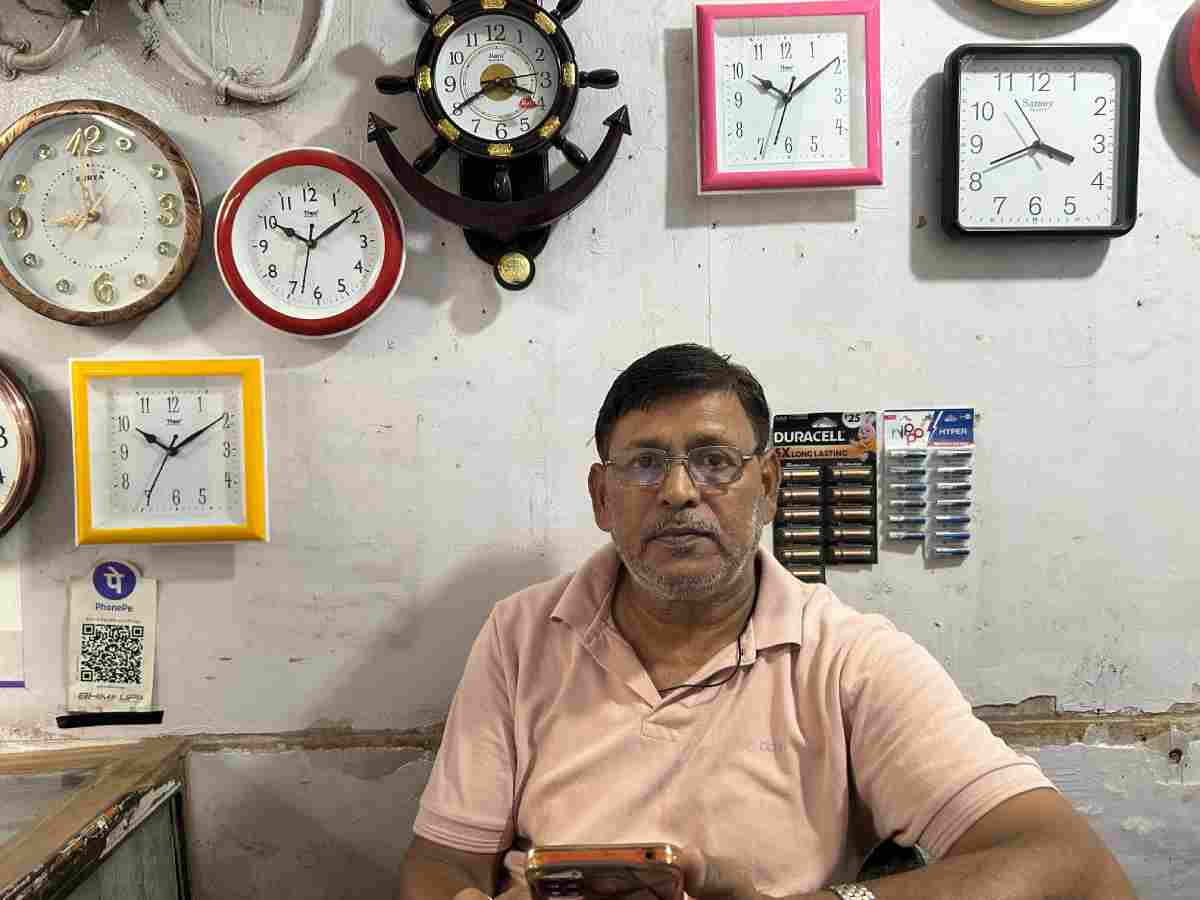
Jagdish says the family voted in the 2025 Delhi Assembly election and had also voted in the Lok Sabha election.
“We have been living here for years, and we have voted from here. Then how can they put my name on the list of people who have permanently shifted?” he asked.
The family now wants to know what verification was carried out before the classification.
“Did they come to our house and check? Did they ask us? If they say we have shifted, I want to know when we shifted and where we went,” Jagdish said.
Everyday reality
For Guddi, the classification does not match the family’s everyday reality.
“If we are sitting in our house and living here, how can the record say that we are not here?” she asked.
“Our children are living here with us. If the family has not shifted, why are their names also being removed?” he asked.
The family is particularly concerned about the description of them as “permanently shifted”.
“Put yourself in our place. You are living in the same house, and someone sitting somewhere writes that you have permanently moved. How will you prove that you are here?” Jagdish asked.
‘Where’s my name’
Rameshwar, 53, originally from Amethi, came to Delhi in 1994.
His electoral history includes voting in Uttar Pradesh in 2002 and 2012 and later voting in Delhi, including in the 2025 Assembly election.
He now says he cannot find his name in either the draft electoral roll or the ASDD list.
“My name is not on the (electoral) list, and it is not even in ASDD list. I want to know where my name has gone,” Rameshwar said.
Rameshwar says there has also been an issue involving a duplicate voter ID, which he believes may be connected to the confusion surrounding his electoral record.
“If there is a duplicate ID, tell me what is wrong with it. If my name has been deleted, tell me when and why it was deleted,” he said.
His previous voting history, he says, should make his electoral record traceable.
“I came to Delhi in 1994. I voted in UP before that and then voted in Delhi. I also voted in 2025. So I want to know why my name is missing now,” he said.
Unlike voters placed in the ASDD categories, Rameshwar says he does not know what classification has been applied to his record.
“At least if my name were in ASDD, I would know that there was some reason given for it. But my name is not there at all. What am I supposed to understand from that?” he asked.
Clarify before final roll
The concerns emerging from Okhla Phase-II and Jagdamba Camp are not isolated. A similar pattern has also been reported from Mangolpuri, where a citizen led verification exercise found discrepancies between the draft electoral roll and voters living at the addresses recorded against their names. The Mangolpuri findings point to the same issue raised by residents in these areas: whether the status recorded against a voter’s name matches the person’s actual presence at the address.
But at Jagdamba Camp, the issue has taken another turn. During the reporting of this story, families said that some people whose names had earlier appeared in the records as dead have now been taken up for revision again. Their family members have applied for the names to be reconsidered, and the process is currently underway with the local BLOs.
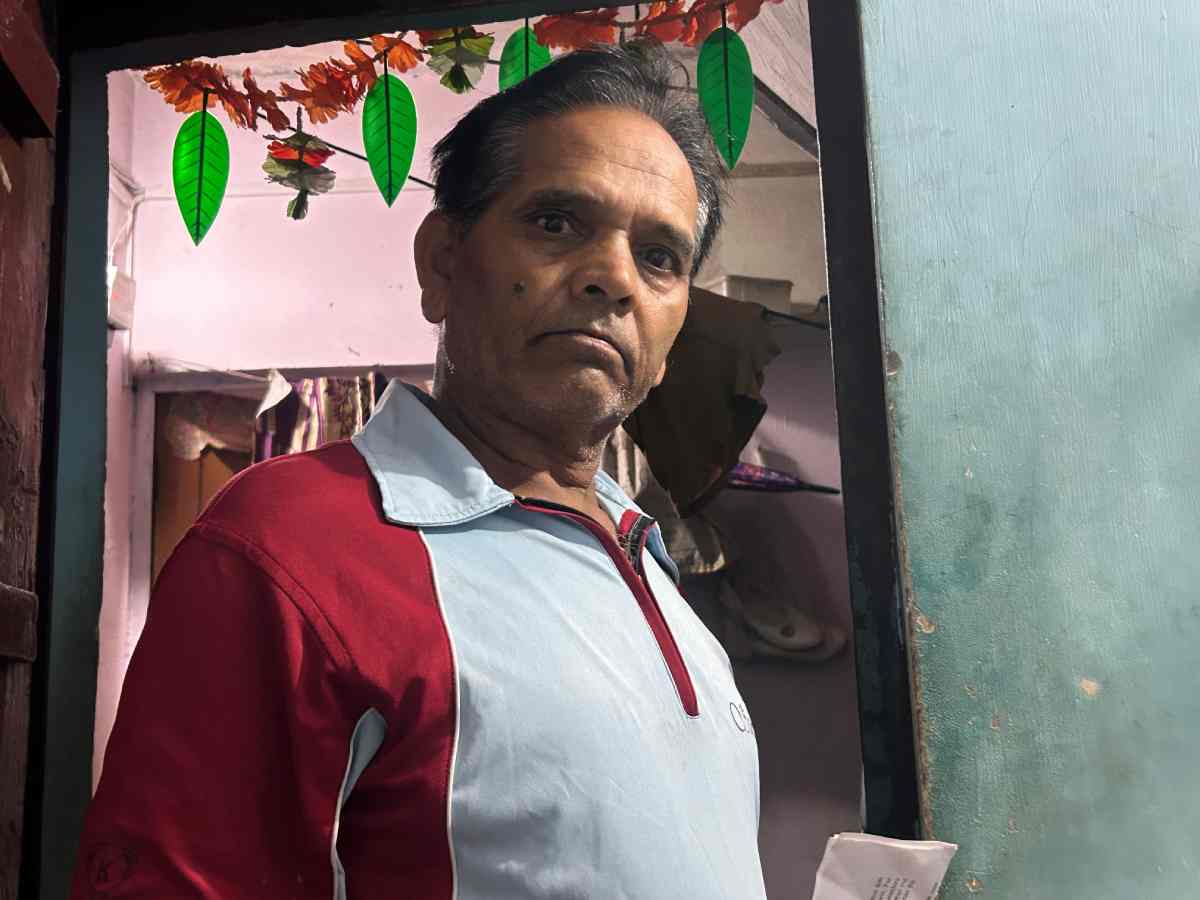
For the families, the concern is not only about getting the names back on the electoral roll. They also want to understand how the names came to be classified as dead when the people were still alive and living in the area.
The claims-and-objections process is now the route available to voters whose names are missing from the draft. The Delhi Chief Electoral Officer has said eligible electors can submit Form 6 with the prescribed declaration and supporting documents by September 30. The final electoral roll is scheduled for publication on November 4.
With the deadline approaching, residents in Okhla Phase-II and Jagdamba Camp are now trying to get their records checked and corrected. For them, the next stage of the SIR will determine whether these names are restored and whether the discrepancies flagged on the ground are addressed before the final roll is published.