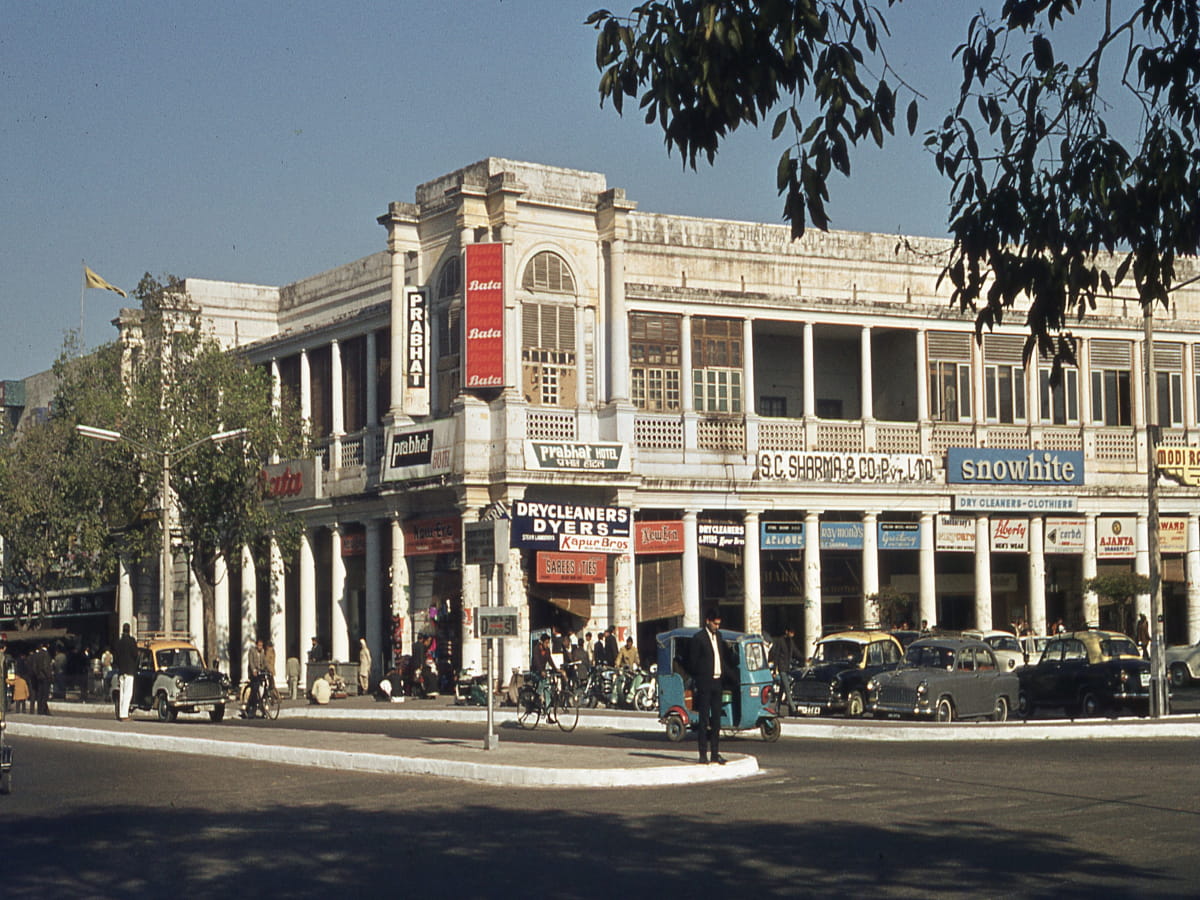
In the 1980s, Robert Tor Russell’s Connaught Place was a quieter place than it is now. People would visit the lush green Central Park to take a break from shopping, pause at shop windows to look at toys, or, after a film, wander around for some window shopping, in no hurry to return home. The era of guards opening the gates of a showroom for each customer had not yet arrived, and there were few fully air-conditioned showrooms.
That was Connaught Place then.
With shops on the ground floor and offices and a few homes above, the market was woven into the everyday life of the city rather than treated as a destination for a special outing. Office workers came down for lunch, families bought shoes, books, toys and clothes, and students drifted into the area after college. People walked there as a matter of habit.
An evening at the movies
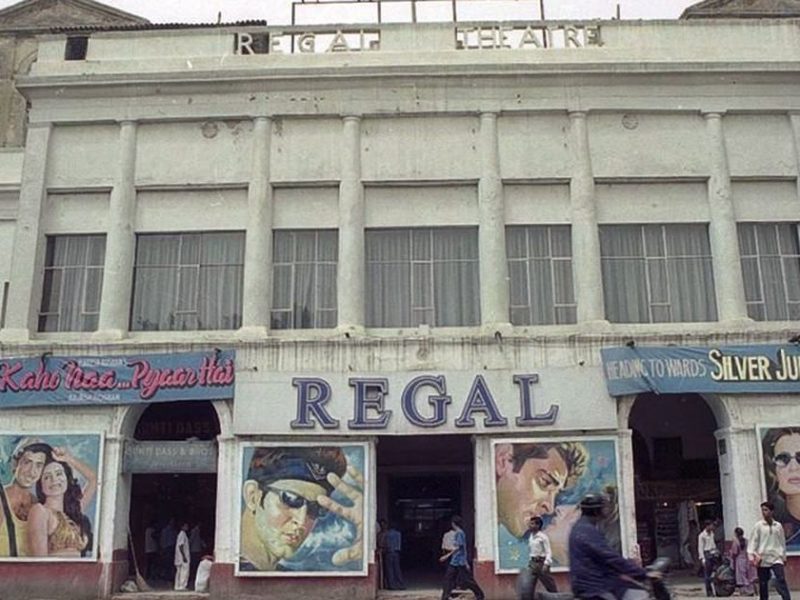
Four cinema halls — Regal, Plaza, Rivoli and Odeon — gave the area its evening pulse. On Friday and Saturday nights, queues stretched out and tickets were sold in the side lanes. “A house-full board was a common sight. Buying a ticket from a blackiya was very common then. I remember these blackiyas selling tickets of hit movies at a premium. Young couples coming to watch the movie were their favourite prey,” recalls businessman Sandy Garg, who lived near Connaught Place in the 1980s.
United Coffee House, Embassy and Kwality were well known, but they were part of a larger dining circuit that has largely disappeared. Madras Hotel, Standard, Volga and Narula were popular places for a meal or a long sitting, belonging to a time when an evening out meant a familiar table and, often, a waiter who knew the regulars.
Photo studios occupied a similar place in the city’s memory. “Mahatta and Kinsey were names people trusted for family portraits, official pictures and the record of public life. Both have shut. Their closure, like that of the old restaurants, removed a piece of the market’s everyday character,” says Chartered Accountant Rajan Dhawan, who had his office in the Inner Circle until recently.
Knowing where to go
Shopping, too, had a settled map, with each establishment serving a particular purpose and often a particular generation. Ram Chander and Sons sold toys to children whose parents had shopped there before them. “Galgotia sold books. Novex cleaned clothes. Dhoomimal showed art. Vaish stitched near Rivoli. Snowhite sold garments. The Central News Agency sold newspapers and magazines. Palika Bazaar, opened in the late 1970s underground, already felt established. Super Bazar served as a large cooperative store. Booksellers sat on the Janpath pavement. The corridors were crowded, but they had not yet been swallowed by carts,” says Atul Bhargava, president of the New Delhi Traders Association.
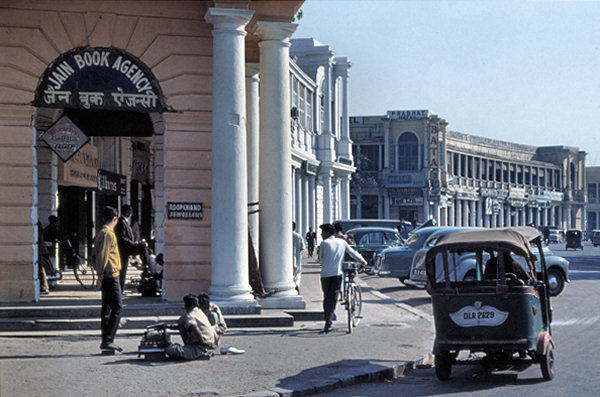
There was also a certain ease to life in Connaught Place that became harder to find later. Before Operation Blue Star in 1984 and the killing of Indira Gandhi in October that year, political leaders moved through the market without the heavy security that subsequently became normal. Chandrashekhar, HKL Bhagat and Chaudhary Brahm Prakash were among those seen walking the colonnades, meeting people, stopping at shops or sitting in restaurants. The market was public in a simple sense: politics, shopping and idle conversation shared the same pavement.
The year 1984 left a mark. After Mrs Gandhi’s death, Sikh-owned shops were looted and burnt, but the market opened again, and buses continued to bring people from different parts of Delhi. Offices had begun to replace homes on the upper floors, yet the old mix of shoppers, workers and film-goers remained.
The malls arrive
The more fundamental changes came in stages. After 1991, companies that had once kept offices in Connaught Place moved to Gurugram in search of more space, while shoppers followed them into the new air-conditioned malls. Single-screen cinema halls struggled to compete with multiplexes. Regal closed in 2017 after 85 years; Odeon became a multiplex and later faded from regular use; Rivoli has stood closed for long stretches; and Plaza continues in a changed form.
The old shopping and eating landmarks disappeared in much the same way. Gaylord shut, followed by Standard, Volga, Narula and Madras Hotel. Family shops that could neither absorb rising rents nor turn themselves into franchise outlets closed one by one. Snowhite shut, as did the Central News Agency, while Super Bazar closed in the early 2000s.
Then came the metro, which changed the relationship between Connaught Place and the rest of Delhi. Rajiv Chowk, the station beneath the Inner Circle, brought large numbers of people into the market, but the younger crowd that arrived did not necessarily regard Connaught Place as the centre of the city in the way earlier generations had. It was one stop in a larger city. Global clothing, jewellery and food chains filled many of the old shop fronts, while bars and cafés multiplied at night.
The verandas became another point of contention. From time to time, the civic body cleared hawkers from them, and during major international meetings the corridors could look wide and open again, briefly resembling the Connaught Place of the 1980s. Traders noticed the difference. Then the vendors returned.
The survivors
Not everything old has gone. The Khadi showroom still draws buyers looking for handloom and simple cloth, while Wenger’s continues to sell cakes and pastries from its long-held corner. Together, they remain among the best-known survivors of an older Connaught Place.
Ram Chander and Sons continues, United Coffee House is open, and Palika Bazaar still functions as an underground arcade. The buildings have been painted and repaired, but the circle still organises the heart of the city. Even the Mucchad paan shop outside Odeon remains, although a mucchad — a person with a big moustache — is hardly to be found there now.
Still Connaught Place
Connaught Place remains busy. The white colonnades still catch the sun, and the park still sits in the middle, but the nature of the crowd has changed. In the 1980s, the market was a place people inhabited as much as visited; today, it is a destination they pass through, connected by the metro, filled with brands and marked by the absence of the cinema halls, studios, restaurants and family shops that once made up an ordinary day there.
Connaught Place has changed repeatedly since the 1980s, as the city around it has changed. What remains is less the old collection of shops and establishments than the quality that made them matter in the first place: the sense that something is always happening there. The energy of Connaught Place is still there.