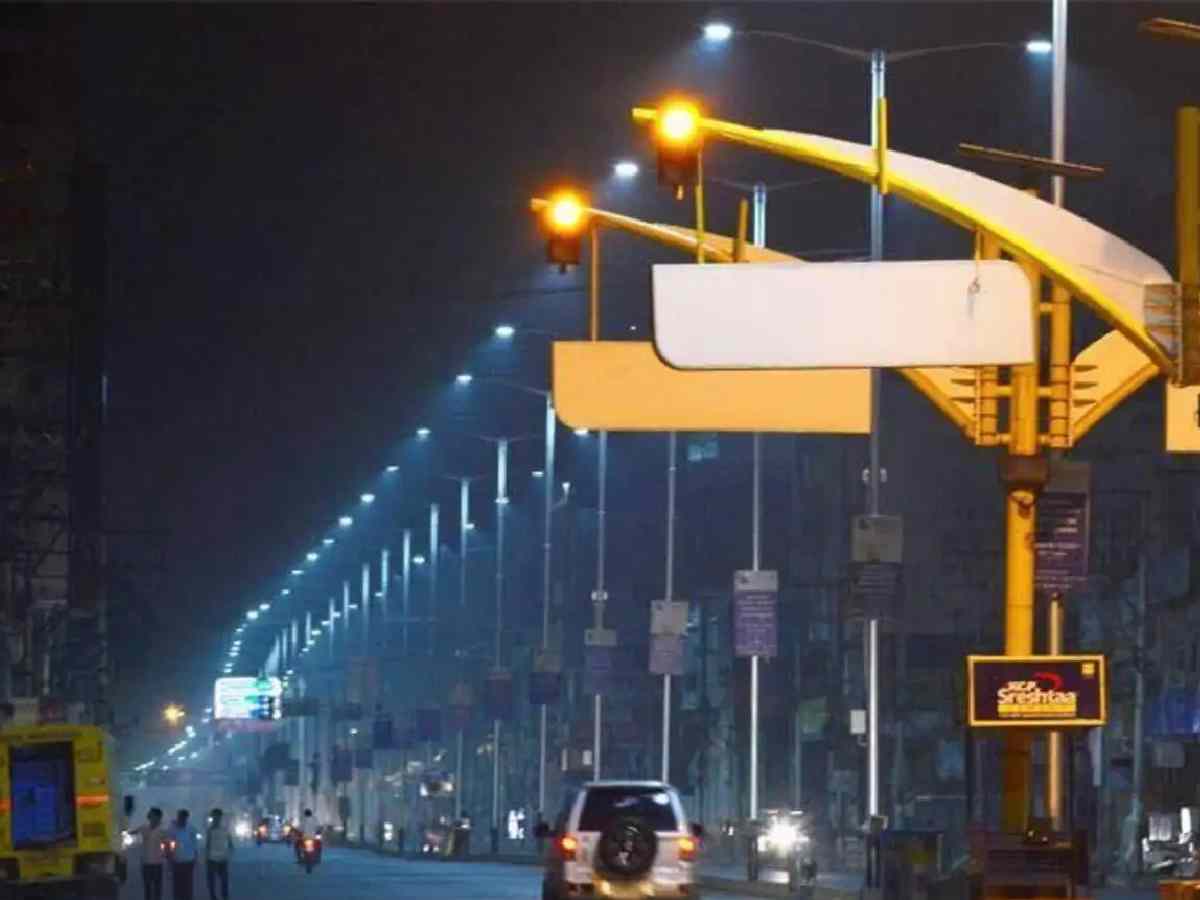
By Diwali, Delhi government has targeted to replace 20,000 old street lights with smart LED lights, Public Works Department (PWD) Minister Parvesh Sahib Singh said on Thursday.
Under the smart street light project, the PWD has planned to change 96,000 old and dysfunctional lights and add 5,000 more street lights by January next year.
Lack of proper lighting in public roads has been part of the news recently after the gangrape of a 17-year-old girl in Astha Kunj Park near Kalkaji Temple after dark on Monday. Students from nearby Lady Shri Ram College (LSR) took out a solidarity march demanding better safety for women.
Three accused in the case have been arrested and police and other agencies in Delhi have ordered improved facilities and safety measures.
“By Diwali we have a target to replace 20,000 old street lights with smart lights across the city. The biggest feature of the new system will be its centralised Command and Control Centre. Through this, every street light can be monitored in real time. Any malfunctioning light will be identified immediately and can also be controlled remotely,” Singh said.
As per the plan, all new lights will be real-time monitored through a control room setup at PWD headquarters.
The total estimated cost of the project is around is around Rs 473 crore, with five years of operation and maintenance and seven year warranty on lighting fixtures.
According to officials, switching from old sodium lights to smart lights will also save the government around Rs 30 crore annually in electricity and maintenance cost.
The minister said many locations remained dark spots for long periods due to dysfunctional lights.
“Since there was no facility for real-time monitoring of street lights, information about faulty lights was received only after complaints were made,” he said.
“Under this framework, the private company installing the lights will receive monthly payments only after the lights are fully operational, ensuring that the company remains responsible for upkeep, performance and timely maintenance,” Singh said.