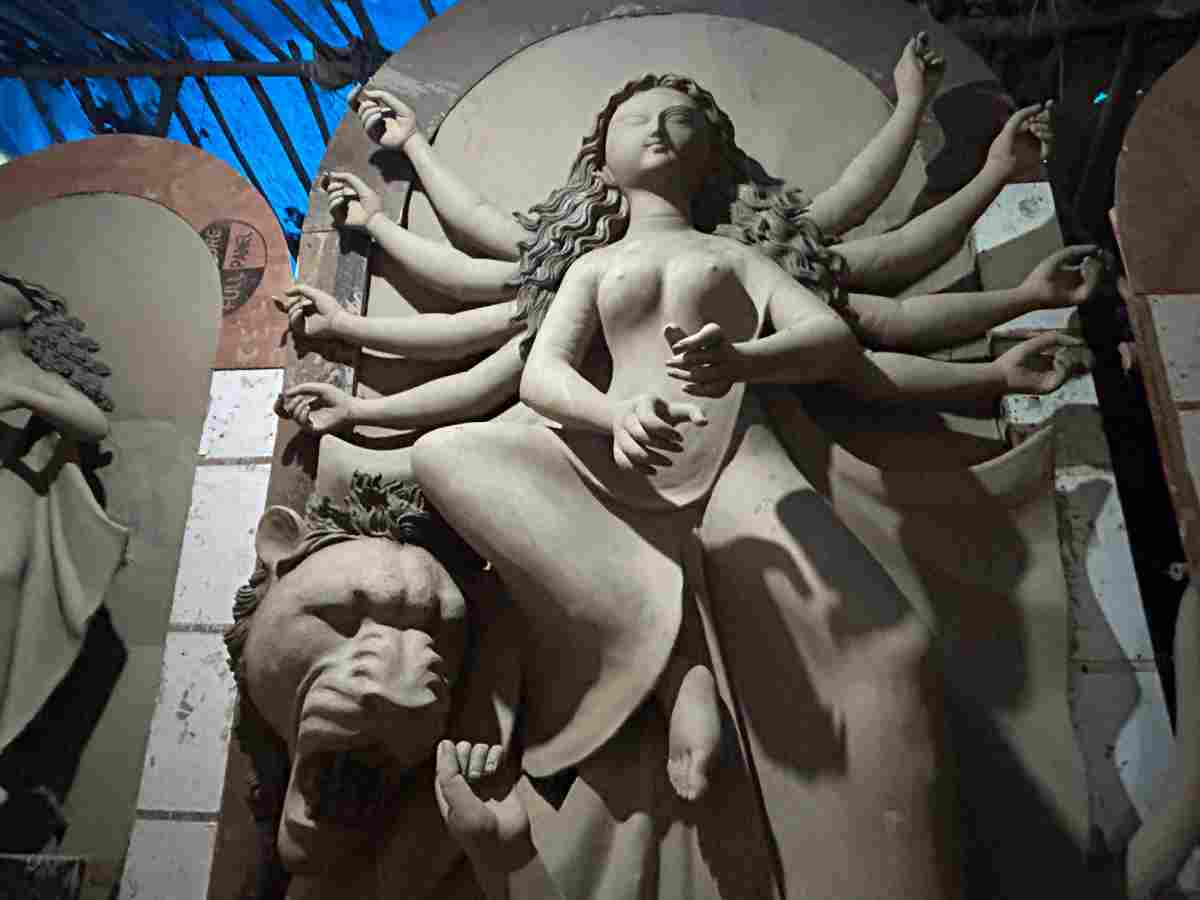
With about two weeks left before Durga Puja, artisans at workshops near Kali Mandir in Delhi’s CR Park are racing to finish dozens of idols while grappling with rising material costs, long working hours and modest increases in wages.
Clay is still being pressed into cracks, surfaces smoothed and half-finished faces painted. Some idols have taken shape but require repairs before they can leave the workshops.
“There is still a lot of work left,” says 55-year-old idol maker Manik Pal, who has been in the profession for nearly 35 years. “Many of the idols are ready, but the clay is cracking. We have to repair them again and then start the painting. A lot of the painting is still pending.”
At Pal’s workshop on the Chandralok Cinema Hall premises, around 80 Durga idols are being made this season. Each installation includes not only Durga but also Ganesha, Kartik, Lakshmi and Saraswati, along with their respective vahaansor companions.
Pal has brought around 16–17 artisans from Krishnanagar in West Bengal’s Nadia district to Delhi for the work.
“Durga Puja feels like a bigger responsibility than my daughters’ wedding. Eventually, Maa [Referring to Goddess Durga] is Bengal’s own daughter too,” he says.
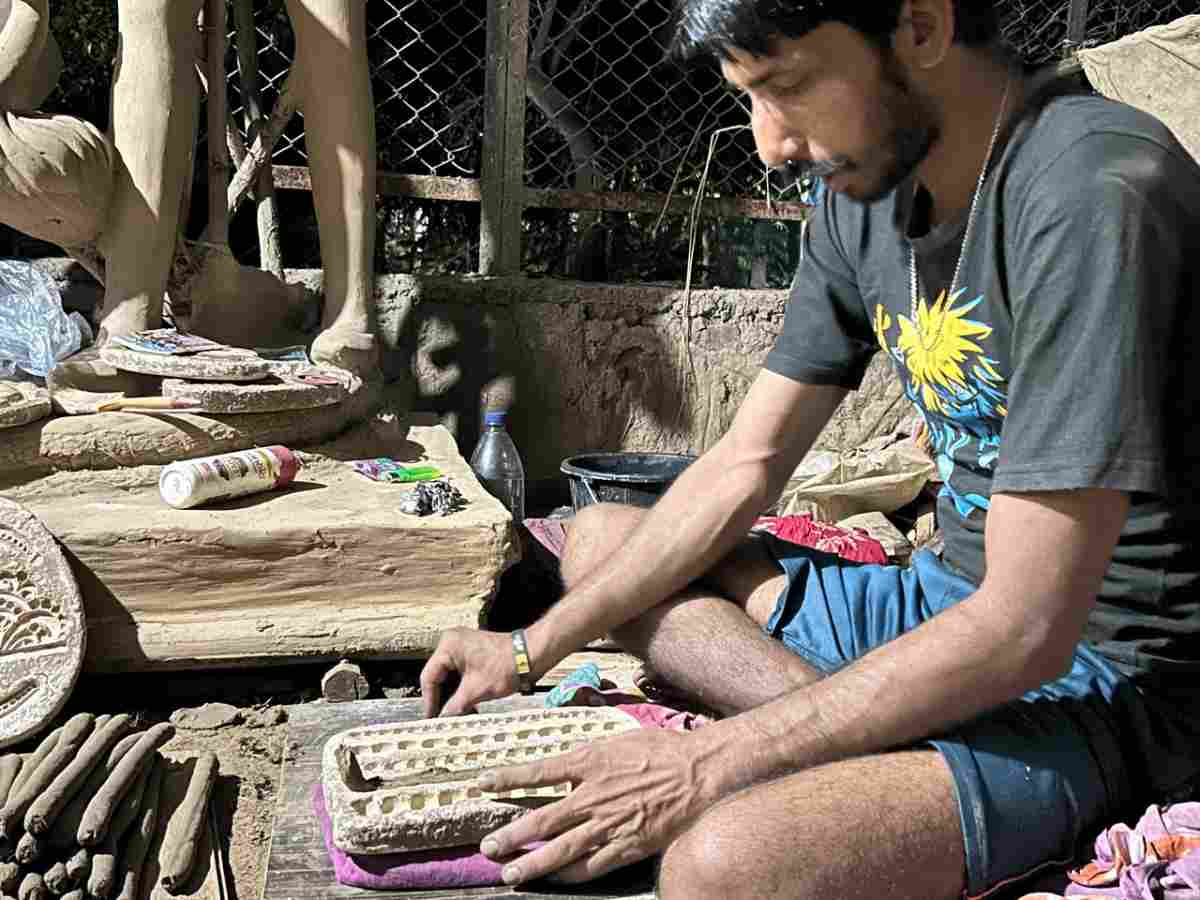
Work began around Boishakh, in April. Some of the artisans have spent nearly five months in Delhi, while others arrived later depending on the stage at which their skills were required.
With the festival drawing closer, working days have now stretched beyond 12 hours.
“It is not that we don’t pay anything extra,” Pal says. “But the extra amount is not very high.”
Depending on their work and additional hours, workers may receive an extra Rs 500 to Rs 2,000.
Rising costs, limited wage increases
For the artisans, higher living and production costs are increasingly difficult to absorb.
Kartik Sadhra, 37, who is working in Delhi for the first time after previously working in Krishnanagar, earns around Rs 800 a day.
Workers say the prices of food, clay, colours and decorative materials have all risen.
According to Pal, clay that cost around Rs 10,000–Rs 12,000 for a particular quantity last year now costs approximately Rs 15,000–Rs 20,000.
“The price of the materials has gone up,” he says. “Clay has become more expensive. Colours have become more expensive. The smaller things we need for the idols have also become more expensive.”
Other expenses include chandmala (jewellery), brushes, colours, abir powder and specialised finishing material brought from Kolkata.
At the same time, workshop owners say customers are not always willing to pay substantially more for the finished idols, leaving them caught between higher production costs and expectations of prices similar to those of previous years.
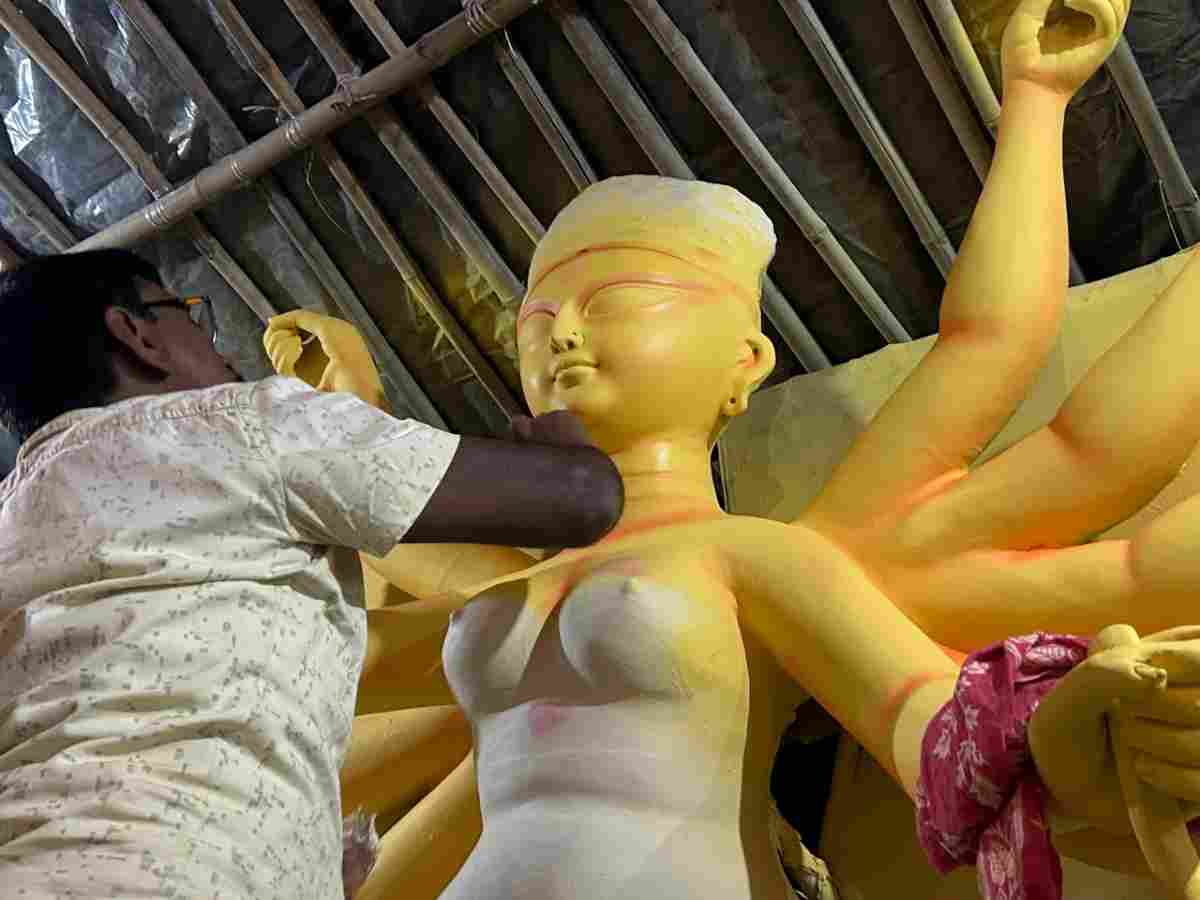
Different stages of idol-making also require artisans with different skills. Some create the basic structure with straw, while others tie the framework, apply clay, smooth the surface or repair cracks. More experienced artisans generally handle the finishing and painting.
Sudip Pal, 32, works with clay and also paints the idols.
“Not everyone can do the painting,” the workers explain. “The finishing depends on the hand of the artist.”
Sudip earned around Rs 19,000 last year and is expected to earn around Rs 20,000 this year.
Nearby, 36-year-old Binod Majhi earns around Rs 400–Rs 500 a day. He received approximately Rs 10,000–Rs 12,000 for the season last year and is expected to earn around Rs 15,000 this year.
While the wages have increased, workers say the rise has to be viewed against the higher cost of living.
Pal provides food and accommodation to the migrant artisans, who stay at or near the place where the idols are being made. This allows them to avoid separate expenses on rent and daily meals while in Delhi.
Similar pressures at another workshop
At another workshop near Kali Mandir, 42-year-old Gobindo is overseeing a smaller operation where around 40 Durga idols are expected to be sold this season.
The team is attempting to incorporate some of the elaborate thematic elements associated with Kolkata’s Durga Puja.
“We want to make something like the kind of Durga Puja you see in Kolkata,” Gobindo says.
The work includes paper craft, thematic decoration, costumes and a larger visual presentation around the idol, requiring additional specialised workers.
Pankaj Sarkar, 48, works on paper craft and thematic elements. When he works two shifts, he earns around Rs 1,500. He arrived in Delhi around one-and-a-half months ago.
Tarun Naskar, 35, arrived about two-and-a-half months ago. He earned around Rs 800 last year, while his wage for this year is still being discussed.
Workers arrive at different points in the production process depending on when their particular skills are required. With the deadline approaching, however, all of them are now working towards completing the idols in time.
For 48-year-old Ananda Dhara, who supports a family of six or seven people back home, the concern is whether wages can keep pace with household expenses.
He currently earns around Rs 15,000 and hopes to receive Rs 16,000–Rs 17,000 this year.
“I don’t know what will happen next. If inflation keeps rising, what happens if the salary remains low?” he says.
For workers supporting large families, an additional Rs 1,000 or Rs 2,000 can quickly be absorbed by everyday expenses.
Rather than discussing inflation in percentages, the artisans speak about the price of food, the amount they can send home and how much remains after meeting household expenses.
Tailors and other specialists
Some garments and decorative materials for the idols are brought from Kolkata, while Delhi-based tailors are employed to stitch and finish them according to individual requirements.
Their daily pay is higher than that of many idol makers because they are local specialists and the work requires precision.
Depending on the workload, they can earn around Rs 1,700–Rs 1,800 a day.
“It depends on the work,” the organisers explain. “It is not always the same every day.”
Their final earnings therefore depend on the amount of work available during the season.
Buyers resist higher prices
The price of a finished idol varies widely depending on its size, design and level of finishing.
Prices can begin at around Rs 50,000 and rise to Rs 1 lakh, Rs 2.5 lakh, Rs 3 lakh, Rs 4 lakh, Rs 5 lakh or even Rs 6 lakh. International orders can cost more.
“We occasionally get orders from Dubai, the United States and London, but those prices must include transportation and shipping,” Pal says.
Despite the range in prices, workshop owners say the central problem is the same: Production costs have increased while many buyers still expect prices comparable to those of the previous year.
“The cost of making an idol has gone up, but people still expect to pay the same price as last year, which is becoming increasingly difficult for workshop owners,” Gobindo says.
He says organisers bargain extensively and often compare quoted prices with those of the previous year.
“Sometimes we have to adjust because Puja comes only once a year, and it is about our Puja and our Maa. We have been in this for decades and generations, and over the years we have built strong relationships with the organisers. So, at times, we compromise and make it work,” he says.
Workshop owners must balance the rising cost of clay, colours and other material with wages that need to be paid on time.
There is also the responsibility of sending the artisans home soon after the work is completed, as many want to return to their families in Bengal during the festive period.
Pal and Gobindo provide food and accommodation, reducing some of the workers’ expenses during their stay in Delhi. But many artisans spend months away from their families while working long shifts.
By the time the completed idols reach the Puja pandals, visitors will see the colours, ornaments, clothes and the final expressions on the deities’ faces.
Behind that finished work are days stretching beyond 12 hours, repeated repairs when clay cracks, negotiations over prices and workers calculating whether earnings of Rs 15,000 or Rs 17,000 will be enough for families living hundreds of kilometres away.
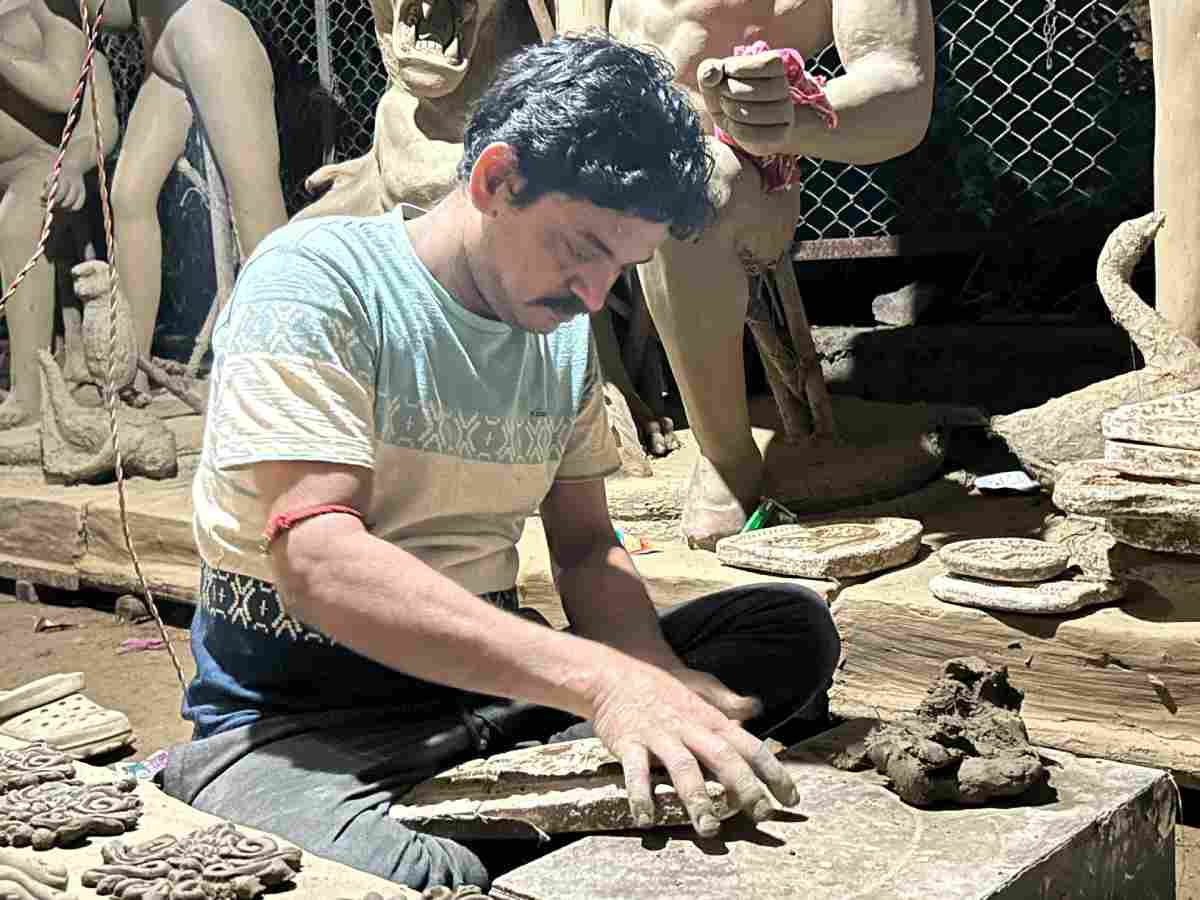 For the artisans who travel from Bengal to Delhi each year, Durga Puja is both devotion and livelihood. Their months of work end when the idols leave the workshops for the city’s celebrations, while many of the workers prepare to return home to their own families.