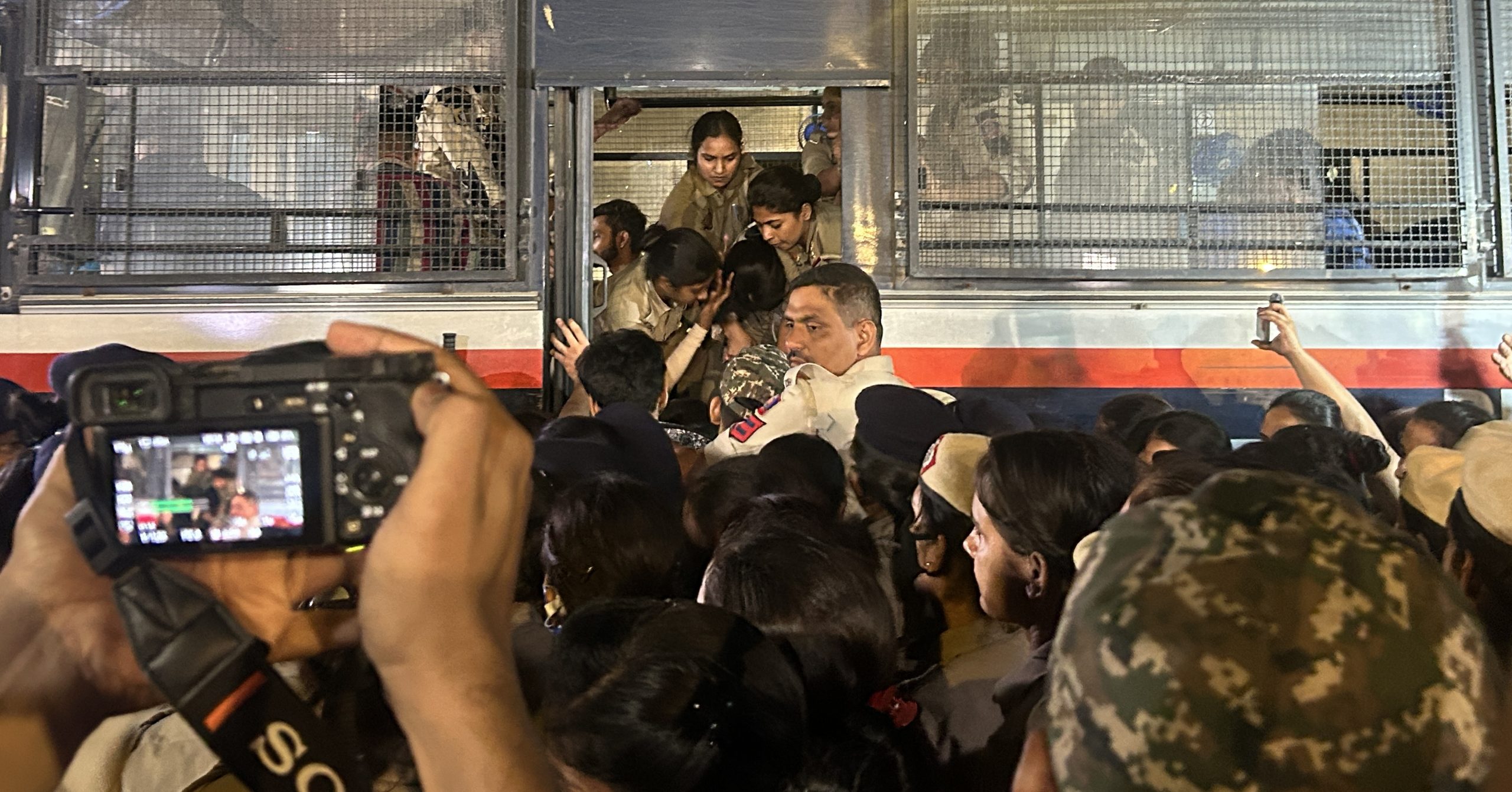
For several women detained during the October 11 protests against Chief Election Commissioner Gyanesh Kumar, the uncertainty continued long after police took them for detention. Friends struggled to find out where they had been taken; some detainees were reportedly held on the outskirts of Delhi, and several people, including female protesters, were released late at night.
The detention of women has also raised concerns about their treatment in custody. Supreme Court advocate Abhishek Panwar alleged that several young women detained during the October 11 protest near RK Ashram Marg were denied access to washrooms for seven to eight hours. He said some of the women were menstruating at the time.
According to Panwar, the women were released at around 11 pm and reached home close to 12:50 am. He said police personnel dropped the detainees near Najafgarh Road, leaving advocates to help them with their onward journeys.
Speaking to Patriot, Panwar said, “Delhi Police is not following the Supreme Court’s directions. Despite the court’s clear instructions, female protesters continue to be detained, including after sunset. The police cannot act arbitrarily or disregard the court’s directions. This is not the first time that its orders have been ignored.”
He also raised concerns about the treatment of women in custody, saying, “Several young women, including those who were menstruating, were allegedly denied access to washrooms for seven to eight hours. They were released at around 11 PM and reached home close to 12:50 AM. Lawyers had to help them travel, and police personnel dropped them near Najafgarh Road. The basic needs, dignity and safety of women must be taken into account during detention.”
Barricades at Supreme Court
Panwar also alleged that the police had put up barricades near the Supreme Court despite the court’s directions. He said members of the Supreme Court Bar and the wider legal fraternity had to intervene to get the barricades removed.
“Barricades were also put up in front of the Supreme Court. Members of the advocate fraternity had to go there and make considerable efforts before the barricades were removed. Even lawyers are being asked to show their identity cards while carrying out their work. These actions raise concerns about the arbitrary exercise of police authority,” he said.
Panwar alleged that journalists and lawyers were detained while performing their professional duties.
“Journalists and advocates were also detained, even though they were there to do their work. On the night of October 11, when I went to help the detainees leave, I was threatened. Lawyers should be able to assist people in custody without facing intimidation,” he said.
Worried over detained friends
For women at the protest, the concern extended beyond their own safety to friends whose whereabouts remained unknown. Speaking to Patriot, one woman said they were worried about friends detained after sunset and were trying to establish where the police had taken them.
“We are worried about our friends who have been detained after sunset. We have heard that some of them have been taken far outside central Delhi, but we don’t know exactly where they are. We are trying to find out where they have been taken and how they will get back home,” she said.
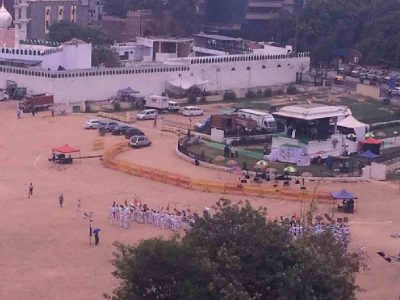
Accounts of Sunday’s detentions identified three locations: Chhawla Police Station in Najafgarh, Nagar Nigam Primary School in Pandwala Khurd and Shahabad Daulatpur Community Centre.
At Chhawla, detainees were reportedly released between 11 PM and midnight. Nagar Nigam Primary School in Pandwala Khurd, around 45-50 kilometres from central Delhi, was another reported holding location. All India Students’ Association President Neha Bora was reportedly detained and released around 9 PM from the Shahabad Daulatpur Community Centre.
The distance from central Delhi made the circumstances of release particularly important. Women leaving custody late at night could face difficulties arranging transport, contacting family members or reaching their homes safely.
Pawar said lawyers helped some of the women travel after their release, a practical challenge detainees may face even after police allow them to leave.
Caught up in police action
The police action also affected people who said they were not participating in the protest.
A couple visiting Connaught Place said their outing took an unexpected turn when police personnel chased them and attempted to detain them, apparently mistaking them for protesters.
“We had come to Connaught Place for a date when the police suddenly started chasing us and tried to detain us, apparently mistaking us for protesters. I was angry because we were out together and had nothing to do with the protest. The police needed to understand that we were walking peacefully and had not raised any slogans,” the couple said.
In a separate incident, Prince, a resident of Rohini, was reportedly detained while walking through Connaught Place after visiting a Hanuman temple with his friend.
His friend, who requested anonymity, said he did not know where Prince had been taken. During a phone call, Prince reportedly shared his live location, which appeared to place him near Dwarka.
“I am worried because I don’t know where exactly he is being taken and how he will return; it’s almost 9:30 PM,” his friend said.
The incidents illustrate the confusion people faced trying to locate those taken away. For women whose friends were detained, the uncertainty also meant worrying about their safety and their ability to return home.
Questions over detention
The detentions took place amid Supreme Court proceedings concerning restrictions imposed ahead of the protests.
On October 11, the court directed that peaceful, unarmed protesters should not be detained except in accordance with the procedure established by law, particularly outside areas covered by prohibitory orders under Section 163 of the Bharatiya Nagarik Suraksha Sanhita (BNSS).
The court also addressed public movement and the operation of transport services, directing authorities to ensure that metro and railway services operated normally and that people could move freely, subject to lawful restrictions.
The proceedings followed allegations of mass detentions and non-compliance with earlier directions. The court issued notices to the authorities seeking their responses. The notices do not constitute a final finding that the police violated their orders.
The legality of each detention depends on the circumstances and the applicable law. However, the allegations about women’s access to basic facilities and the arrangements made for their release raise questions about how detainees were treated during custody.
Pawar also raised concerns about the detention of students, who were not provided food properly, arguing that such actions could create fear and discourage people from exercising their rights.
Police decline comment
Patriot reached out to Delhi Police for their response to the reported detentions, the locations where protesters were held, the allegations concerning women’s access to washrooms and the late-night detentions and releases. The police declined a response, with officers saying they could not share any information.
The allegations concerning the treatment of women detainees, including the reported denial of washroom access during menstruation, remain attributed to the individuals who raised them. Details of the number of people detained at each location, the grounds for their detention and the arrangements made for their release were not available at the time of publication.