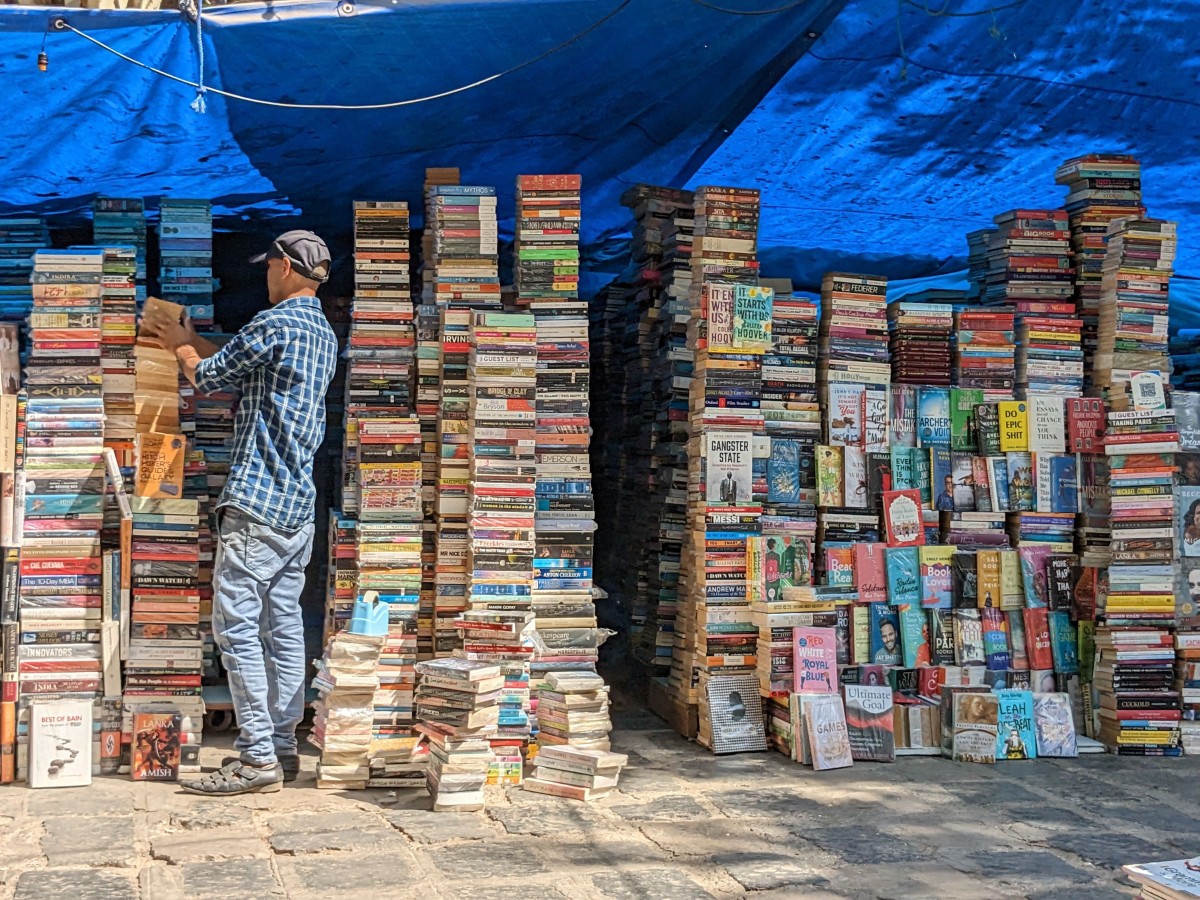
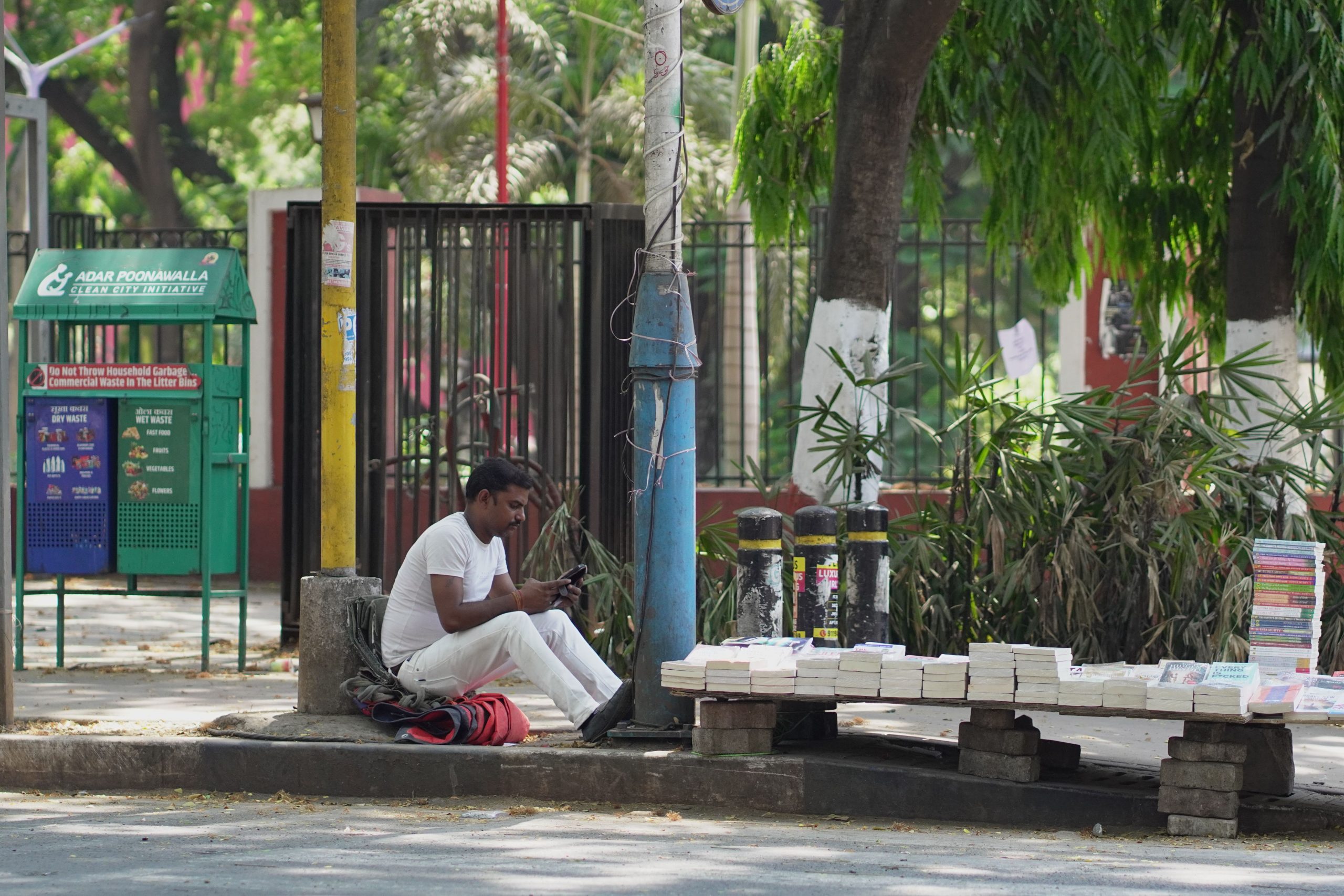
On a bustling Sunday morning in Daryaganj’s Mahila Haat, you can always expect to find a crowd of young readers and students milling about book stalls, looking for a good deal. Vendors and hawkers announcing discounts, vibrant book covers on display, and budget-friendly stationery are all common scenes in Delhi’s most popular book market. Book sets worth Rs 2300 being bargained and sold for mere Rs 600 sounds like the perfect deal, and such are the deals that make this market more popular.
So if you find yourself at such book markets on any given weekend, you are not just looking at local tradition, you’re witnessing a parallel cultural landscape.
Credence Research, in collaboration with IMARC, a market research partner, found in 2022 that such book markets in India have grown into a $780 million industry.
While many vendors at the market sell legitimate, second-hand copies of original novels, a considerable number still sell pirated novels. These novels are not difficult to identify. When you open a pirated copy, it often has lower-quality paper, mismatched page alignment and printing and spelling errors. However, people still buy them because they are more affordable. While an original book costs around Rs 500 to Rs 600, a pirated copy sells for around Rs 200.
This poses a striking paradox at the centre of Delhi’s reading culture: the contrast between the simple human pleasure of reading and the price tag on books. Since the beginning of the literary tradition, reading has been accessible only to the elite. While times and circumstances have changed, are we still making literature inaccessible to the common person? In that light, piracy starts to look less like a deliberate crime and more like common people trying to access something beyond their budget.
Financial strain on students
Vaibhav Sharma, a student of Indraprastha University, says, “As a student, I don’t think that book piracy exists in a vacuum. It’s easy to call it out on moral and legal grounds because, of course, the authors, publishing houses and everyone involved deserve to be compensated for the effort that goes into putting a piece of literature together. But when books are priced as they are, it starts to look like luxury for a large group of people.”
Rhea Biswas, a Delhi University student preparing for the Common Admission Test (CAT), a national-level management entrance exam, said, “As a commerce student preparing for CAT, relying on pirated books and PDFs is practically a necessity. When you have already paid upwards of Rs 50,000 on coaching and an additional Rs 5,000 on study material, it heavily pinches the pockets.” They also said that while they knew piracy is wrong and discourages authors, the massive price gap between original and pirated copies pushed them toward cheaper alternatives. “I know it’s ethically in a gray area and discourages authors, but when art and literature begin to feel like an exclusive privilege meant only for a certain socioeconomic class, they lose their essence.”
Historical echoes of piracy
These markets, thriving on pavements, are not a glitch of modernity but a repeat of centuries-old stories. History shows that when formal systems restrict access, parallel networks inevitably come into play. Ann Susan Aleyas, a Professor of English literature at Delhi University, traced such events in history.
“During the eighteenth century, many of Voltaire’s works were printed outside France and smuggled back into the country because censorship and publishing restrictions limited their circulation. That history reminds us that when legitimate access to books is constrained, alternative networks often emerge. Well, this is not to legitimise piracy, but to sort of prompt us to ask why this happens and how we, as a society, can find alternatives that both make literature more accessible. At the same time, also respect the rights of authors and publishers,” she said.
She also highlighted that from the very beginning, literature and reading have not been a shared social right. She elaborated that who could read, who had access to reading materials, and who had the time and resources to cultivate reading habits have always been shaped by social and economic hierarchies, in India and elsewhere.
Face of privilege
Christel Devadawson, Professor in the Department of English at Delhi University, spoke about how the effect of piracy seems to diminish at higher levels of education. Referencing her own master’s students, she said, “The centrality of book piracy in Delhi has diminished for this set of students, at least.”
On the other hand, she also said that the availability of resources and books online has taken the edge off privilege. “The democratisation of access to reading material through the internet. Even if one may express concern as to how this access is applied, it has taken the edge off ‘privilege’, which is all to the good.”
Prof Aleyas said reading has become the habit of a select few. “Reading remains an everyday habit of a relatively small section of society in India. In that context, market-driven publishing policies can further alienate large numbers of people. How many people in Delhi, for
instance, can casually walk into a bookstore in Greater Kailash and buy books freely? Not many.”
Markets as democratic spaces
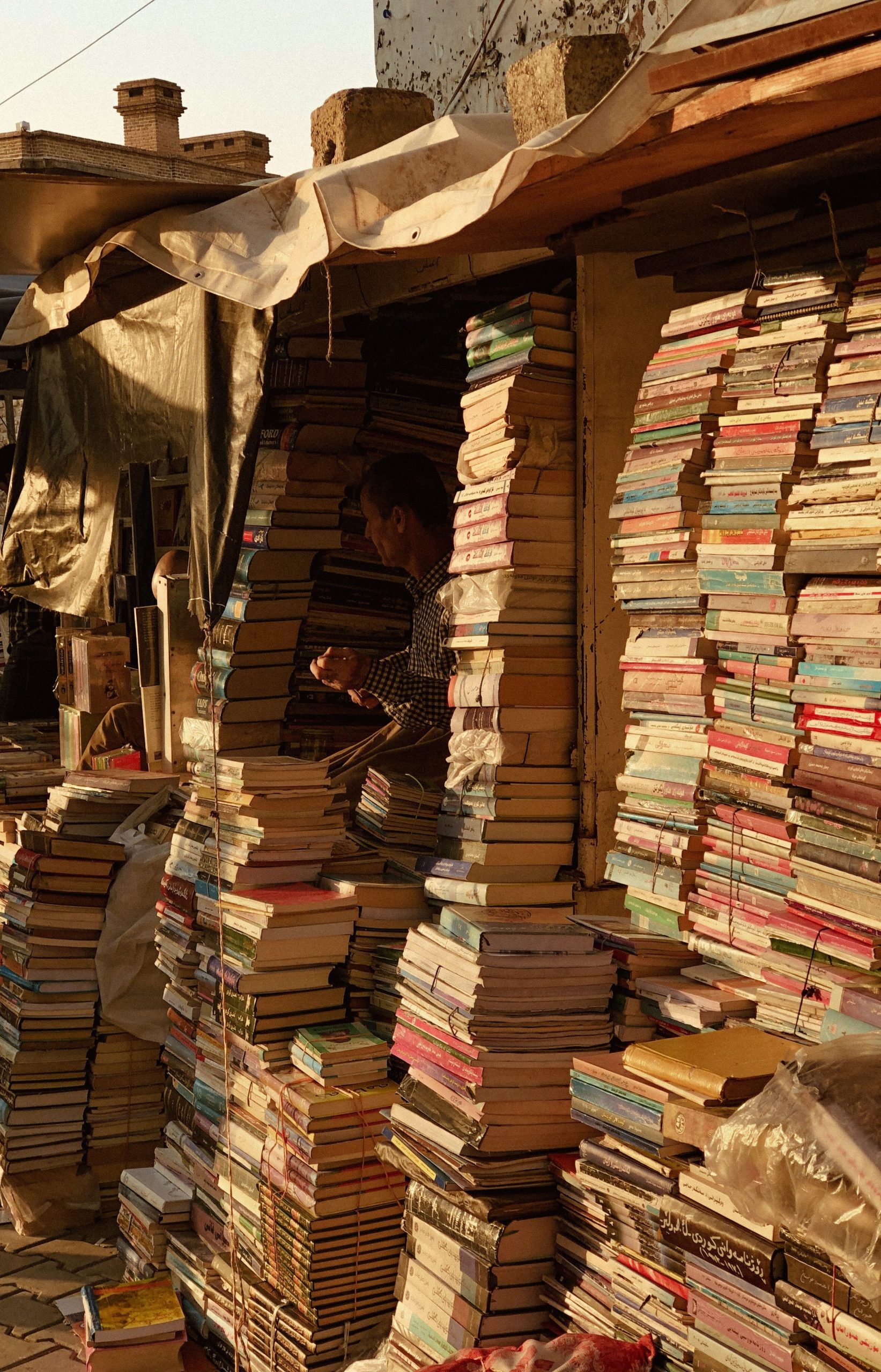
Viewing markets in Connaught Place and Daryaganj merely as places of piracy diminishes their cultural significance. Glamorous bookstores with perfect hardcovers and original copies can feel intimidating for so many people. On the other hand, the hawkers and vendors of these markets feel more accessible and democratic. They expand and build upon the literary ecosystem by offering more than just pirated copies of books.
Prof Aleyas reasons that “people do not turn to these markets only to secure affordable textbooks. They also go there for the pleasure of browsing, for the serendipity of discovering books they were not looking for, and for encounters with ideas beyond prescribed reading lists. They expand the ecosystem through which books and ideas circulate. They are exciting, democratic spaces that sustain reading cultures in ways formal institutions often cannot”.
When discussing solutions to piracy while also keeping literature available to everyone, students and professors share similar viewpoints. They agree that while authors deserve protection and compensation, steps must still be taken to curb piracy without hurting the accessibility of these books.
“If we hope to encourage a reading culture, then we need to create the conditions that make reading possible and meaningful. Perhaps one step is for authors, publishers, and readers alike to stop seeing books solely as commodities to be traded. Another is to recover the joy of thinking, talking about, and savouring books collectively,” stated Prof Aleyas.
The Indraprastha University student said something similar: “If more publishing houses invested in stronger library networks and regional pricing, and enabled wider access, the benefits of buying pirated copies would subsequently reduce. I believe that the problem lies in accessibility as much as it does with copyright laws. In essence, there needs to be protection for authors, but also the accessibility of literature shouldn’t only be available at premium prices.”
Also Read: Whose festival is it, anyway?