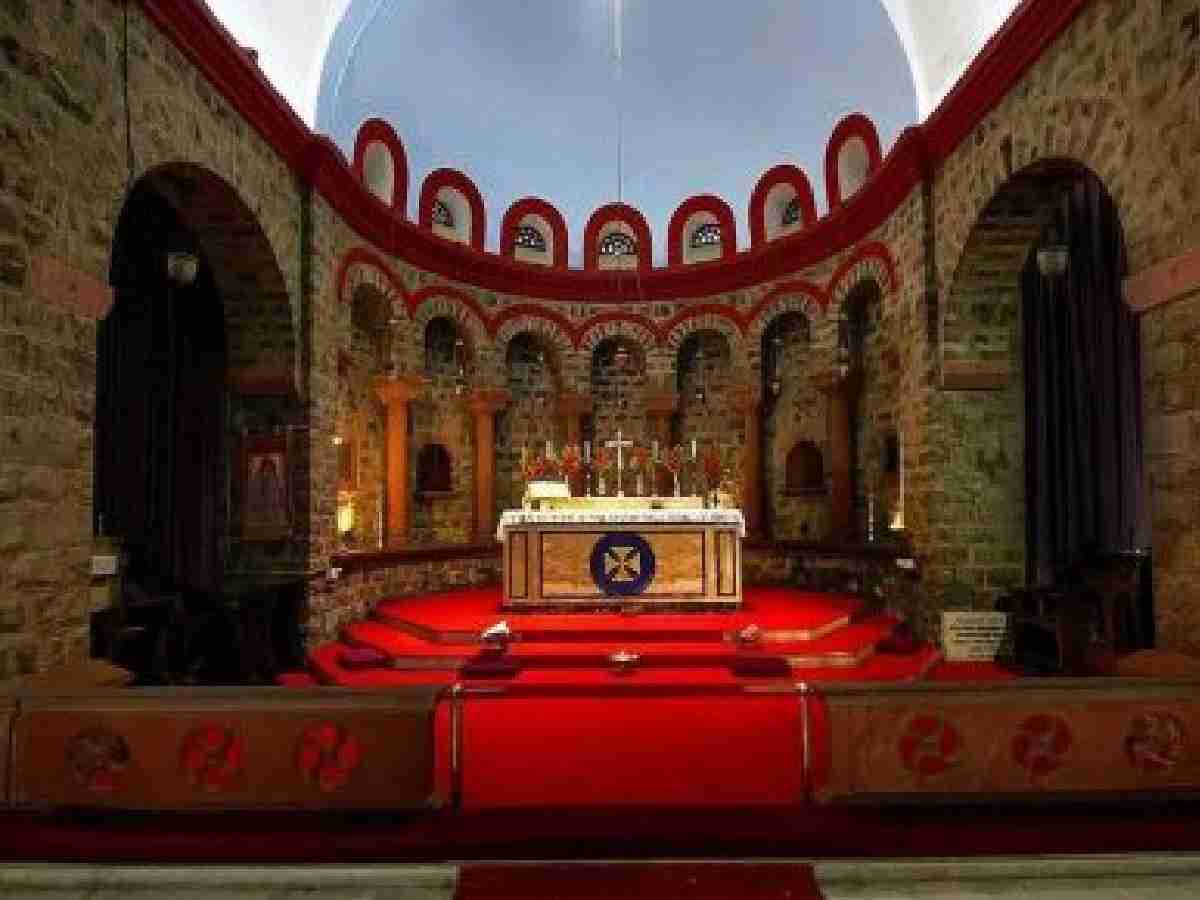
Holy Trinity Church of Turkman Gate
On chilly winter evenings in Delhi, small groups of youths, children, and elders can be seen arriving at Christian family homes, carrying guitars and harmoniums. They visit households to welcome the approaching Christmas by singing hymns that celebrate the birth of Jesus Christ. This age-old tradition, known as carol singing, continues to thrive across the Capital.
One such group has already visited the home of Sushil Massey, a resident of Mayur Vihar. Similar scenes play out in neighbourhoods such as Civil Lines, Turkman Gate, Searchlight Colony, and other areas with sizeable Christian populations. Wherever these groups go, hosts warmly receive them, often sweetening their mouths with slices of Christmas cake or other homemade treats.
Popular hymns
Among English carols, Silent Night remains one of the most prominent. Its familiar lines — “Silent night, holy night / All is calm, all is bright” — describe the peaceful night of Jesus’s birth and are frequently sung in churches across Delhi.
Father Solomon George, former pastor of the Holy Trinity Church in Turkman Gate — established in 1905 — says Silent Night is almost always part of carol-singing rounds. “It conveys joy, peace, and celebration,” he explains. Alongside such hymns, evergreen songs like Jingle Bells are also sung, adding a lighter, festive note.
Hindi hymns hold an equally important place. Popular songs such as “Bada din aaya har saal manaya / Yeshu ka janm hua sansaar mein aaya…” are widely performed. These reflect the Indian tradition of celebrating Christmas as Bada Din — the Great Day — blending faith with local cultural expression.
Roots of tradition
The practice of carol singing has its roots in ancient Christian customs that came to India during the British period and gradually adapted to Indian languages and traditions. In Delhi, the Christian community comprises Catholics, Protestants, Syrian Christians, and members of Orthodox churches.
“Hosts invite carol-singing groups into their homes and offer tea, snacks, or Christmas cake,” says Sakhi John, a faculty member at Jamia Hamdard University. “The tradition reminds us of the birth of Jesus Christ and strengthens unity within the community.” The songs typically centre on themes of birth, peace, love, and hope.
Author and journalist Joseph Gathia recalls how the tradition has evolved over the decades. “In recent times, some carol singers have begun including filmi songs, though many people do not appreciate this,” he says. “In the 1970s, when I lived in Karol Bagh, carols were even sung in Punjabi, as many Punjabi Christian families lived there. Hosts would welcome the groups with coffee, snacks, and sometimes a small cash donation.”
He adds that when a family is struggling financially, carol groups quietly leave behind a Christmas cake so the household can celebrate — a gesture of kindness that is never spoken about openly.
Different languages
In a multilingual city like Delhi, carols are sung in both Hindi and English. Some churches also include hymns in Tamil and Malayalam. There is even talk of starting Punjabi Christian hymn services at St Stephen’s Church, one of the city’s oldest places of worship.
Built in 1862 by the Delhi Brotherhood Society — the same organisation that founded St Stephen’s College — the church is the second-oldest in the Capital. The oldest is St James’ Church at Kashmere Gate, built in 1836.
“Carol singing is not just a religious practice but a deeply social one,” says Solomon George. “It brings warmth to Delhi’s winters as people visit one another to pray, sing, and exchange gifts. It is a wonderful example of India’s inclusive spirit.”
Non-Christian neighbours often join in, standing at doorways or gathering inside homes to listen and participate. Through these shared moments, carolling keeps the spirit of Christmas alive, with melodies carrying messages of love and peace across neighbourhoods.
The season of cakes
With Christmas now only days away, Delhi’s Christian families have begun placing orders for Christmas cakes at iconic establishments such as Wenger’s in Connaught Place and numerous neighbourhood bakeries. Yet, for many, the season also brings a sense of nostalgia — the Capital no longer has the Grand Bakery, which operated for nearly 70 years on Shankar Road in New Rajendra Nagar before shutting down some years ago.
The bakery, opened by a refugee family from Pakistan, was a favourite not only among Delhi’s Christians but also the diplomatic community. Generations grew up savouring its cakes, sweet and savoury biscuits, rusks, and pastries, making it an inseparable part of the city’s Christmas memory.
Even before Christmas arrives, bakeries across Delhi begin receiving orders. Among the city’s most well-known are La Opera in Select Citywalk, Saket; Frontier Bakery in Rajouri Garden; Defence Bakery, established in 1962 in Defence Colony; Bread & More in Vasant Vihar; and Maxim’s Bakers in Kailash Colony.
East Delhi alone has over a hundred bakeries offering cakes, rusks, patties, papaya cakes, fens, and more. Sushil Massey notes that old Christian families often prefer bakeries in Model Town, Daryaganj, and Sabzi Mandi, citing the unbeatable taste of their pineapple, chocolate, and pastry cakes. In south Delhi, Prakash Bakery in Malviya Nagar has enjoyed loyal patronage for decades.
The late writer R.V. Smith once observed that the history of the Christmas cake dates back to the 16th century. In Delhi, it has been part of Christmas celebrations for roughly a century. Across India, Christmas cakes come in many varieties, with fruit cake and plum cake being the most popular. Plain cake, chocolate cake, coffee cake, seed cake, and rum cake are also widely prepared.
Generously shared among family, friends, and neighbours, the Christmas cake holds special significance. Made with a rich mix of dry fruits — cashews, almonds, raisins, pistachios, walnuts, cherries, and tutti frutti — along with citrus juices, spices, butter, brown sugar, and a hint of rum or brandy, its taste is often described as divine.
If you have never tried a Christmas cake, this season might be the perfect time. It promises not just sweetness, but a slice of tradition — one that warms the heart as much as Delhi’s carols warm its winter nights.
Delhi inaugurates the 70th National School Games, hosting over 14,000 participants in 14 sports across…
Delhi High Court asked "Doosra" filmmakers to respond to Sourav Ganguly's plea over alleged violation…
Delhi L-G appointed Paralympian Suvarna Raj as State Commissioner for PwDs following her gold win…
DDA is planning Delhi's longest 24-km cycling track along the Yamuna floodplain, linking key eco-projects…
Police detained several anti-SIR protesters heading to the ECI headquarters in Delhi as mass gatherings…
An exhibition that revisits the significance of Indian Modernism through works from earlier and defining…



