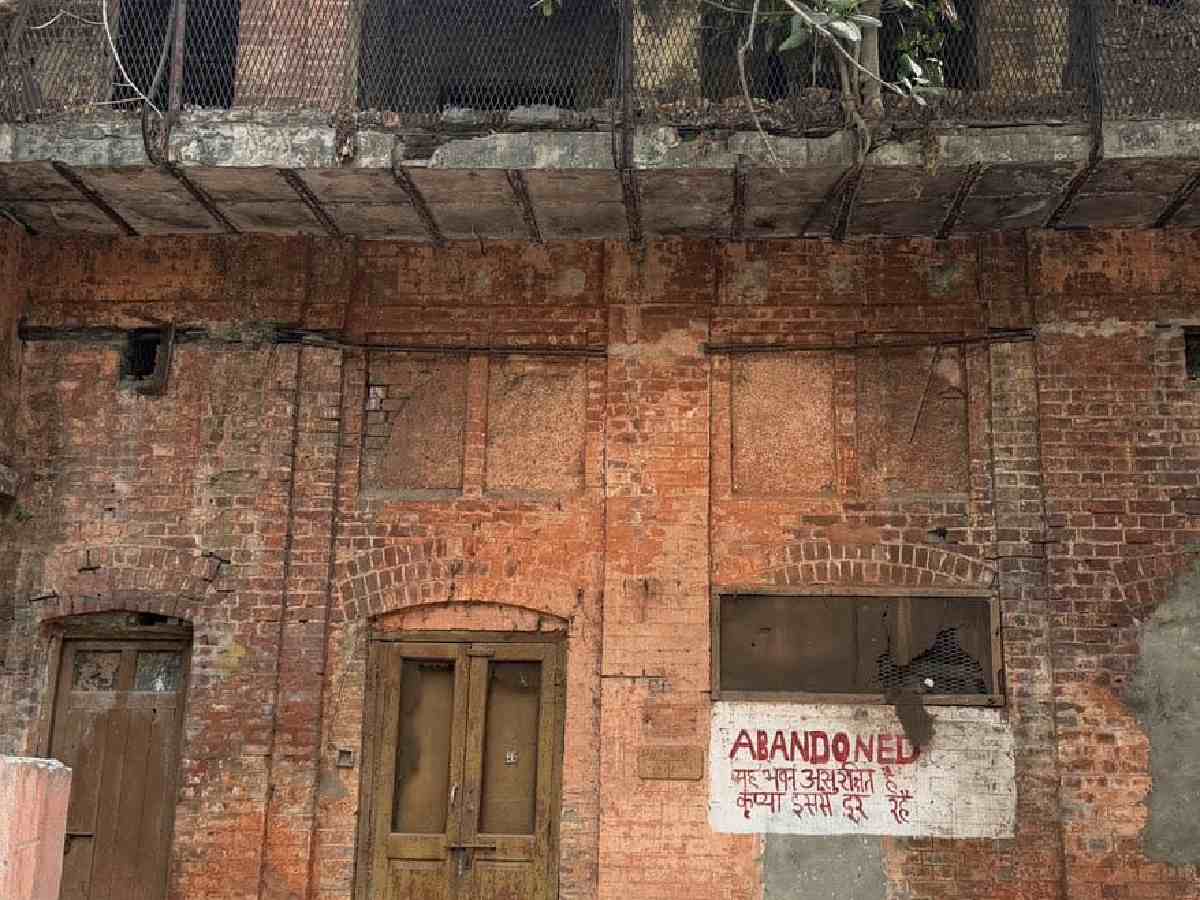
Locked and abandoned flats in Mor Sarai, Capital’s first railway colony
As we stepped into Mor Sarai railway colony, it felt as though we had entered a world far removed from modern Delhi. The air carried a sense of history mixed with quiet sadness. Crumbling walls and broken windows were silent witnesses to a different era.
We were walking towards the house of a man who has called this place his home since 1942. Back then, when he was a toddler, India was under British rule. His address has not changed in the eight decades since.
As we arrived, Nand Kishore was standing outside his house. The 89-year-old greeted us with warmth. He is fit, his memory remains sharp, and he loves sharing stories from the past. He clearly remembers when India gained independence in 1947. He was eight years old at the time. His father worked in the railways and had been given a house in this colony, the first railway colony in Delhi.
The allotment of houses to railway employees began here in 1919. Other railway colonies – at Kishan Ganj, Minto Bridge, Tilak Bridge, Sabzi Mandi and Lajpat Nagar – were developed later. In the early years, flats here were allotted only to railway staff posted at Delhi Junction, including personnel who were often called upon to rush to accident sites and provide emergency assistance.
Living together
Life in Mor Sarai has always been tied to the Indian Railways. Earlier, British officers and Anglo-Indian families lived here alongside Indian railway workers. Young Nand Kishore played freely with the children of white officers and Anglo-Indians. The British families left after independence.
Partition brought many changes to the colony. Some Muslims chose to move to Pakistan, others stayed on.
When Nand Kishore’s father retired in 1957, Nand Kishore had already joined the Railways and was allotted the same house. The continuity gave the family a deep sense of stability.
Nand Kishore also became active in trade union activities. At Delhi Junction, he worked hard and fought for workers’ rights. By 1997, when he turned 60, it was time for him to retire. Before his retirement, his son had already secured a job in the railways. The house was then transferred to his son’s name.
Nand Kishore cannot imagine leaving this place. Talk of redevelopment worries him. The Railways has been considering plans to redevelop Mor Sarai since 2015. Under the new plan, houses vacated by employees are no longer being re-allotted in the same way. Of the colony’s 97 flats, 55 are in a dilapidated condition and remain locked and unoccupied. The slow decay of the colony has left many long-time residents saddened.
Champion of workers’ rights
With a heavy heart, Nand Kishore walks around the colony and points to different houses. He tells you who lived in a particular house. In the corner house stayed his father’s close friend.
As he speaks, the memories come alive. He slows in front of a particular house and falls silent for a moment. It was once home to veteran trade union leader Aftab Ahmad Siddiqui, who lived there with his family for many years.
Comrade Siddiqui dedicated his life to the cause of workers. He fought for both organised and unorganised labourers, leading many protests and facing police lathis bravely. He played a key role in building the union for porters at Delhi’s railway stations, helping them demand their rightful dues. Siddiqui worked tirelessly to make the major railway strikes of 1967 and 1974 a success.
He breathed his last in this very flat in 1986. His son, the well-known author and lawyer Atyab Siddiqui, spent part of his childhood here after the house was allotted to the family and still carries the memories of those days with him.
No connection with peacocks
Mor Sarai Railway Colony continues to serve as a living witness to Delhi’s changing history. It is a place where generations have grown up, worked, and grown old together.
Despite its name, Mor Sarai has no direct connection with peacocks, though it is easy to see why many assume otherwise. Its origins lie elsewhere. The land on which the colony stands once belonged to the family of Lala Chhunnamal, a wealthy and respected resident of Old Delhi. When the British government sought to build a railway colony here, Lala Satyanarain Gurwale – one of the founders of Hindu College – helped persuade the family to part with the land. The project was overseen by a British officer named Moore, after whom the colony was named. Over time, locals began pronouncing “Moore” as “Mor”, and the name endured.
Also Read: Gole Market: Colonial legacy to 21st century redevelopment
Mor Sarai stands as a quiet reminder of Delhi’s railway heritage. It carries stories of struggle, inclusion, and the everyday lives of working people. As the city around it changes rapidly, the old colony continues to hold on to its memories, uncertain of what the future may bring.
At least 50 cases have already been reported this month; NCPCR guidelines mandate help desks,…
DMRC says zero reduction in train trips, attributes decline to security measures and public apprehension…
A Delhi court denied bail to a former DU professor accused of raping a student,…
Delhi Police charged seven dhaba workers in the fatal beating of a Manipuri musician who…
Seven Delhi STPs failed DPCC standards in September, dumping high levels of faecal coliform and…
AISA chief Neha Bora petitioned the Delhi HC against a police notice requiring a peace…

