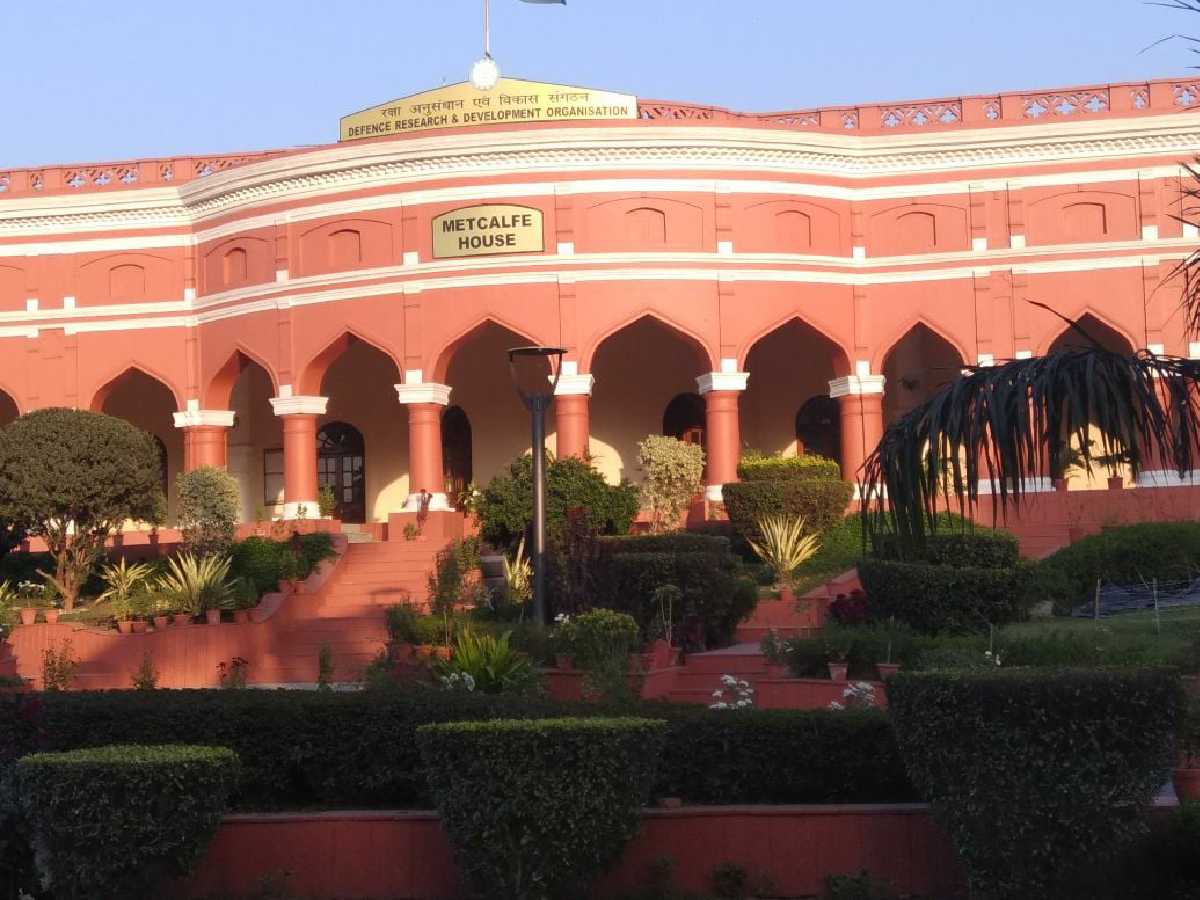
Metcalfe House which houses the Defence Science Centre in New Delhi
If you either walk or drive along the calm, wide roads of Civil Lines, you somehow feel as if time has paused. It’s as though you have crossed an invisible wall, entering a space where traces of the British Raj still linger in the air. But now, the Government of India is considering reshaping Civil Lines, aiming to move it beyond its colonial-era identity and symbols. The very name “Civil Lines” reflects its colonial roots.
Well, the area was developed in the early 19th century by the British, just outside Kashmiri Gate. It was designed as a residential and administrative zone for senior British officers, separate from the military cantonment. European-style bungalows, hotels, and offices defined its landscape. Much of this area was destroyed during the Revolt of 1857, but was later rebuilt by the British.
Key administrative centre
In fact, between 1912 and 1931, Civil Lines functioned as a key administrative centre before New Delhi was formally established. Stories from the Colonial Past: tree-lined avenues, sunlight falling on old bungalow lawns, and the quiet surroundings still echo a different era. The grand white hotel where Edwin Lutyens and his colleagues once discussed the planning of New Delhi, the sprawling residences, and the historic buildings, all seem to preserve memories of colonial times.
Pages of history
Walking here feels like turning pages of history—where Mughal garden remnants coexist with European architectural styles. Several other enduring symbols of the Raj days can still be seen here. For instance, the Delhi Assembly Building and St James Church were built in 1912 and 1835, respectively. Then there are so many private and official bungalows in areas like Civil Lines, Flag Staff Road, Sriram Road, and Court Road.
Many of these bungalows line the wide roads, red-brick exteriors and arched entrances of many mansions still standing as quiet reminders of an era when Civil Lines was an exclusive enclave for the colonial elite. “When I moved to my new Civil Lines home, I was really enamoured with the beauty of this place with so much history. During my morning walks, the old residents told me that the Dalit icon Dr Ambedkar and celebrated author Salman Rushdie’s father also owned a house here,” says Rakesh Gupta, who heads an advertising agency.
Equally significant is Metcalfe House, constructed in the early 19th century as the residence of Sir Thomas Metcalfe, a key British administrator. This imposing neoclassical building, blending European design with local craftsmanship, hosted diplomatic meetings and social events that shaped colonial policies. Once, Badruddin Tyabji , 1934 batch ICS officer, told Patriot that ICS exams and interviews used to be held here.
Ludlow Castle
Nearby, Ludlow Castle served as another prominent Raj-era landmark, a fortified structure that housed British officials and symbolised the consolidation of power after the early conflicts with the Mughal remnants. Furthermore, on the Northern Ridge bordering Civil Lines, the Mutiny Memorial, built in 1863 and later renamed Ajitgarh, towers as a Gothic-style monument commemorating the British victory in the 1857 Revolt.
Its original inscriptions glorified colonial forces, but post-independence revisions have added balance to the historical account. These sites, along with the thoughtfully planted avenues of shade-giving trees chosen by British planners, complete the picture of Civil Lines as a carefully orchestrated symbol of Raj authority and lifestyle.
Viceroys’ abode
The present office of the Vice Chancellor of Delhi University, the Viceregal Lodge, was once the residence and office of the Viceroy, built in 1902. “Prominent British figures like Lord Hardinge, Lord Chelmsford, Lord Reading, and Lord Irwin stayed here. Before the President’s House ( earlier Viceroy House) was built, Viceroys lived at Viceregal Lodge,” informs Professor Raj Kumar Jain, who taught for decades together in Ramjas College and lived near the Viceregal Lodge.
The Maidens Hotel, established in 1903 and now known as Oberoi Maidens, remains a striking symbol of colonial architecture. It is here that Edwin Lutyens and his colleagues were working to build New Delhi. Interestingly, MS Oberoi, the founder of Oberoi Hotels, also lived in the Civil Lines area and even contested the Delhi assembly poll in 1952. Alas, he lost at the hustings.
Hindu Rao Hospital was originally a 14th-century Tughlaq hunting lodge. During the Revolt of 1857, it became a stronghold for British forces, defended by the Gurkha battalion. Today, it is a major government hospital, carrying layers of history—of both resistance and control. Flagstaff Tower, built in 1828, served as a communication hub during the uprising. Nearby Nicholson Cemetery holds graves of British soldiers, while Qudsia Bagh, once a Mughal garden, now stands in ruins—showing a blend of Mughal and colonial influences.
Pillars of democracy
Today, Lok Niwas and the Old Secretariat stand as pillars of Indian democracy, yet their colonial imprint remains visible. At the same time, Civil Lines is not frozen in the past. Cafés, educational institutions, and modern residences are gradually redefining the area. There is a growing conversation about renaming roads, repurposing heritage buildings, and presenting history from an Indian perspective rather than a colonial one.
Also Read: Unchanging addresses in a changing Delhi
South Delhi-based urban planner and architect Ujjwal Updhaya suggests that instead of erasing the past, Civil Lines should reinterpret it through museums, public storytelling, and conservation efforts that acknowledge both colonialism and resistance. Preserving heritage while reshaping identity is a delicate balance.
Civil Lines stands at that crossroads today. It carries the weight of history, yet holds the promise of change. The coming years will reveal how this historic neighbourhood evolves—whether it transforms completely or continues to blend past and present.
Delhi HC sought responses from DU and candidates over alleged post-poll victory rally ban violations…
The monsoon withdrew from Delhi on September 23, with the city recording 16 per cent…
Independent designers, artisans and creative studios come together for a three-day showcase of slow fashion,…
An activist urged the PMO to probe alleged illegal animal slaughtering inside Delhi Zoo; authorities…
CM Rekha Gupta flagged off a Metro train featuring Delhi govt schemes to raise awareness…
MCD removed road encroachments in Delhi's Shalimar Bagh during a late-night demolition drive amid heavy…


