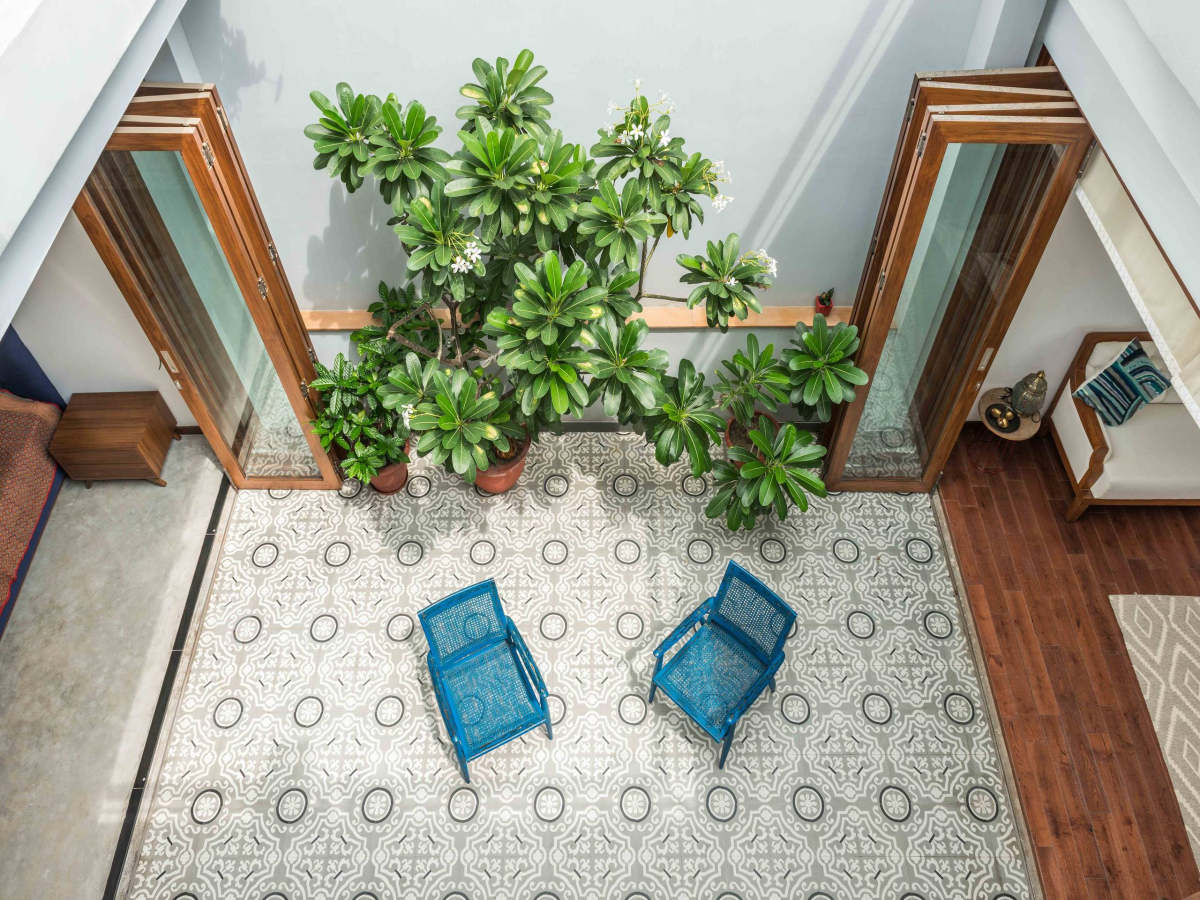
Barsati in South Delhi
In Andhera Band Kamra, a novel written in the 1960s by celebrated Hindi writer Mohan Rakesh, the protagonist lives in a humble barsati in Anand Parbat (West Delhi). The small rooftop evokes the Delhi of that era.
The barsati was a one-room living space built on the terrace of a house which usually included a small kitchen and an attached bathroom. Some had an extra tiny room. The real appeal lay in the large open terrace around these barsatis that one could watch the entire neighbourhood from. On summer evenings, people would place chairs, switch on a fan and enjoy the breeze. In winters, they would soak in the mild sunshine. These spaces offered a quiet space in the bustling Capital.
Many young people who came to Delhi in the 1960s-1990s to build their careers lived in barsatis. The rent was low and affordable.
A common sight
Barsatis were mostly built on the second floor and were a familiar sight in areas such as Lajpat Nagar, Rajouri Garden, Patel Nagar, Rajendra Nagar, Ashok Vihar, Western Extension Area, Vivek Vihar, Greater Kailash, Sunder Nagar, West Nizamuddin and Jangpura. Hundreds of such houses once dotted these neighbourhoods but now only a few dozen remain.
“The decline began 15 to 20 years ago,” says Devinder Gupta, a real estate advisor based in South Delhi.
“As land prices in Delhi climbed to levels comparable with gold, house owners realised they could earn much more by constructing additional full floors instead of keeping barsatis. A new floor could bring three or four times higher rent. This simple economic calculation led to the gradual disappearance of barsatis across the city,” he explains.
A space for dreamers
Several well-known Indians began their journeys from these barsatis.
In the mid-1970s, HCL Techologies founder Shiv Nadar left his job to start his own venture from a barsati in Patel Nagar. When the late cricket great Bishan Singh Bedi came to Delhi in late 1960s, he lived in a barsati in West Patel Nagar.
The barsati of Dr Pratap and Shashi Sehgal in Rajouri Garden became a regular meeting place for literary discussions. In 1987, novelist Harish Naval read portions of Bagpat ke Kharbuze in that very barsati.
‘Very peaceful’
Senior journalist Chandan Mitra lived in a barsati in Ashok Nagar, around 1975, while teaching at Hansraj College. Mitra owned a Lambretta scooter and commuted between his barsati and college. “The barsati life was very peaceful,” he often recalled.
Sanjay Nirupam, a well-known Congress leader of Mumbai, lived for some time in a barsati in Old Rajendra Nagar in the 1980s. During those days, he worked at a media organisation.
Naresh Goyal, founder of Jet Airways, also lived in a barsati after he came to Delhi from Punjab around 1975. He worked part-time at the famous Bengali Sweet House in Bengali Market, living in a barsati in the same locality. When he was arrested by the Enforcement Directorate in 2023, many elderly shopkeepers in Bengali market remembered the modest young man who was once part of their neighbourhood.
Sense of freedom
Barsatis occupied a distinct space in Delhi’s urban life and shaped characters and stories.
They were homes for students, struggling journalists, young professionals and artists. The open terrace offered a sense of freedom. Neighbours could see each other’s lives from the rooftops, and in the evenings, the smell of home-cooked meals would float in the air. During festivals, the terraces would light up with diyas or colourful bulbs.
The few remaining barsatis today stand as quiet reminders of Delhi’s earlier, more modest times. They tell the story of how the city welcomed newcomers and gave them a small but hopeful space to grow. For countless young men and women, these rooftop rooms were silent witnesses to big dreams.
Read More: Delhi HC issues notice on Salman Khan’s plea for stay on release of ‘Kala Hiran’
Each day of closure costs shops in Khan Market and Connaught Place between Rs 60,000…
Delhi generates nearly 15,000 tonnes of waste daily, prompting the government to deploy 1,000 mechanical…
Delhi Police has issued an NOC for the Congress rally at Ramlila Maidan on November…
CJP chief Abhijeet Dipke received conditional bail following his arrest for participating in a Connaught…
The DPCC has floated ₹104 crore tenders to test pilot pollution-control technologies across 40 key…
MCD pushes Bhalswa cleanup to Feb 2027 due to agency transition, leaving over 10 lakh…
