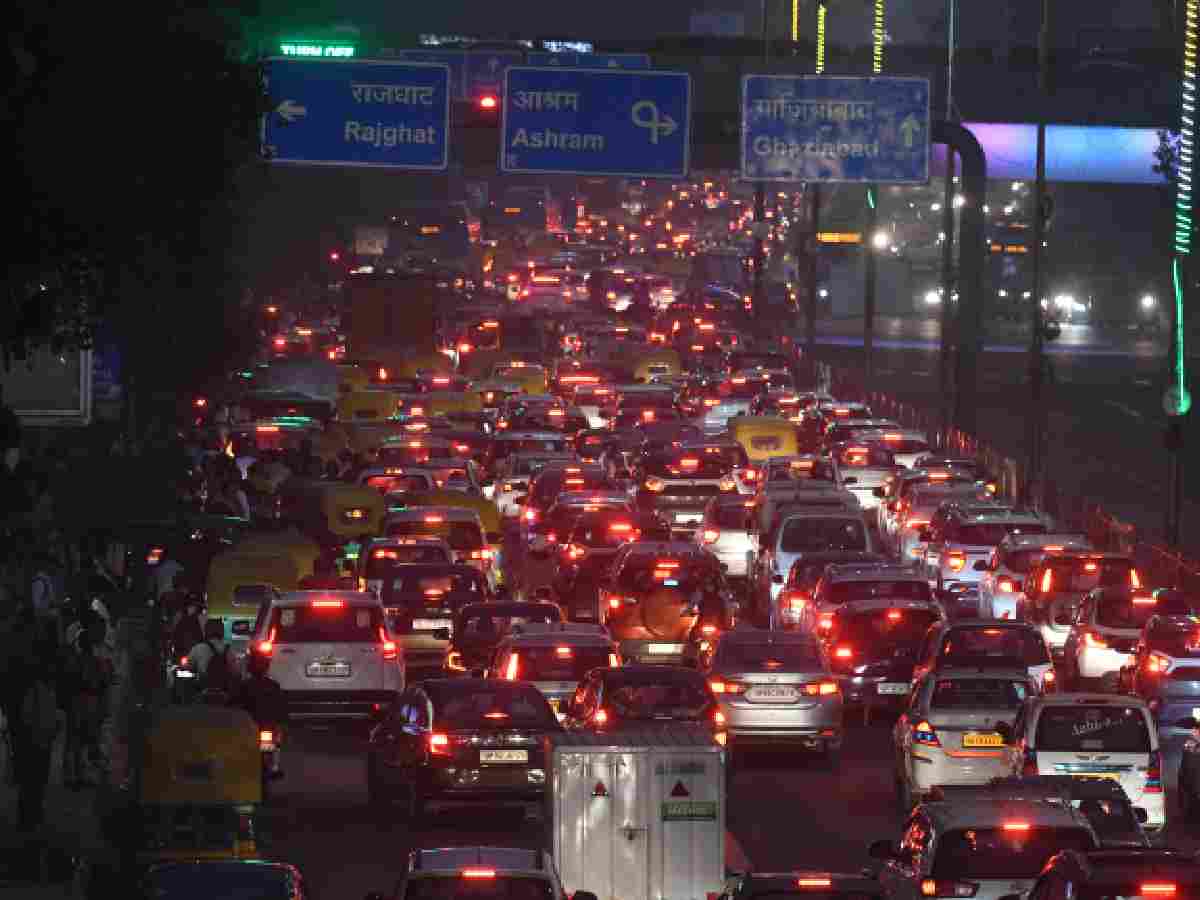
Delhi’s road signage and directional boards, including those at metro stations, will soon feature information in Hindi, English, Punjabi, and Urdu. This initiative aims to promote linguistic diversity and represent the city’s official languages.
Delhi government bureaucrats will also be required to display their names in all four languages on boards outside their offices.
The move is in line with “The Delhi Official Languages Act, 2000,” which designates Hindi as the first official language and Urdu and Punjabi as secondary official languages. Currently, most signboards and nameplates in Delhi are in Hindi and English.
In a written directive dated November 4, the Department of Arts, Culture and Language instructed all departments, civic bodies, and autonomous authorities to comply with the Act, following orders from Lieutenant Governor (LG) VK Saxena.
The directive specifies that the sequence of languages on boards and signage should be Hindi, English, Punjabi, and Urdu, with uniform font sizes for all.
A senior government official said that the guidelines will apply across metro stations, hospitals, public parks, and other public spaces. The Public Works Department (PWD), responsible for managing 1,250 km of Delhi’s roads, will begin updating signage accordingly.
“All government departments, offices, autonomous bodies, and local bodies are directed to implement ‘The Delhi Official Languages Act, 2000’ and ensure the specified order and font sizes for state languages, including English, on boards, signboards, nameplates, and directional signs,” the department’s official statement noted.
The LG’s directive aligns with a 2011 order from the Union Home Ministry’s Department of Official Language, which instructed states in Region A, including Delhi, Bihar, and Haryana, to prioritise Hindi on public signage while determining the order of other languages locally.
Hindi is prioritised due to its official status and widespread use, followed by English for its administrative and communicative significance. Punjabi is included to recognise the city’s large Punjabi-speaking population, while Urdu reflects its cultural and historical importance.
According to the 2023 Delhi Statistical Handbook, Punjabi is spoken by approximately 8.73 lakh people, while Urdu is spoken by nearly 8.67 lakh people.
Shehpar Rasool, Chairperson of the Delhi Urdu Academy, welcomed the decision, expressing happiness about the official implementation of “The Delhi Official Languages Act, 2000.”
Also Read: False promises, freezing nights: Delhi shelter board’s claims exposed
“These languages represent our rich multicultural heritage, aptly described in the Urdu phrase ‘Ganga-Jamni tehzeeb.’ I support all decisions and policies that promote linguistic and cultural diversity,” Rasool said.
(With inputs from PTI)
At least 50 cases have already been reported this month; NCPCR guidelines mandate help desks,…
DMRC says zero reduction in train trips, attributes decline to security measures and public apprehension…
A Delhi court denied bail to a former DU professor accused of raping a student,…
Delhi Police charged seven dhaba workers in the fatal beating of a Manipuri musician who…
Seven Delhi STPs failed DPCC standards in September, dumping high levels of faecal coliform and…
AISA chief Neha Bora petitioned the Delhi HC against a police notice requiring a peace…
