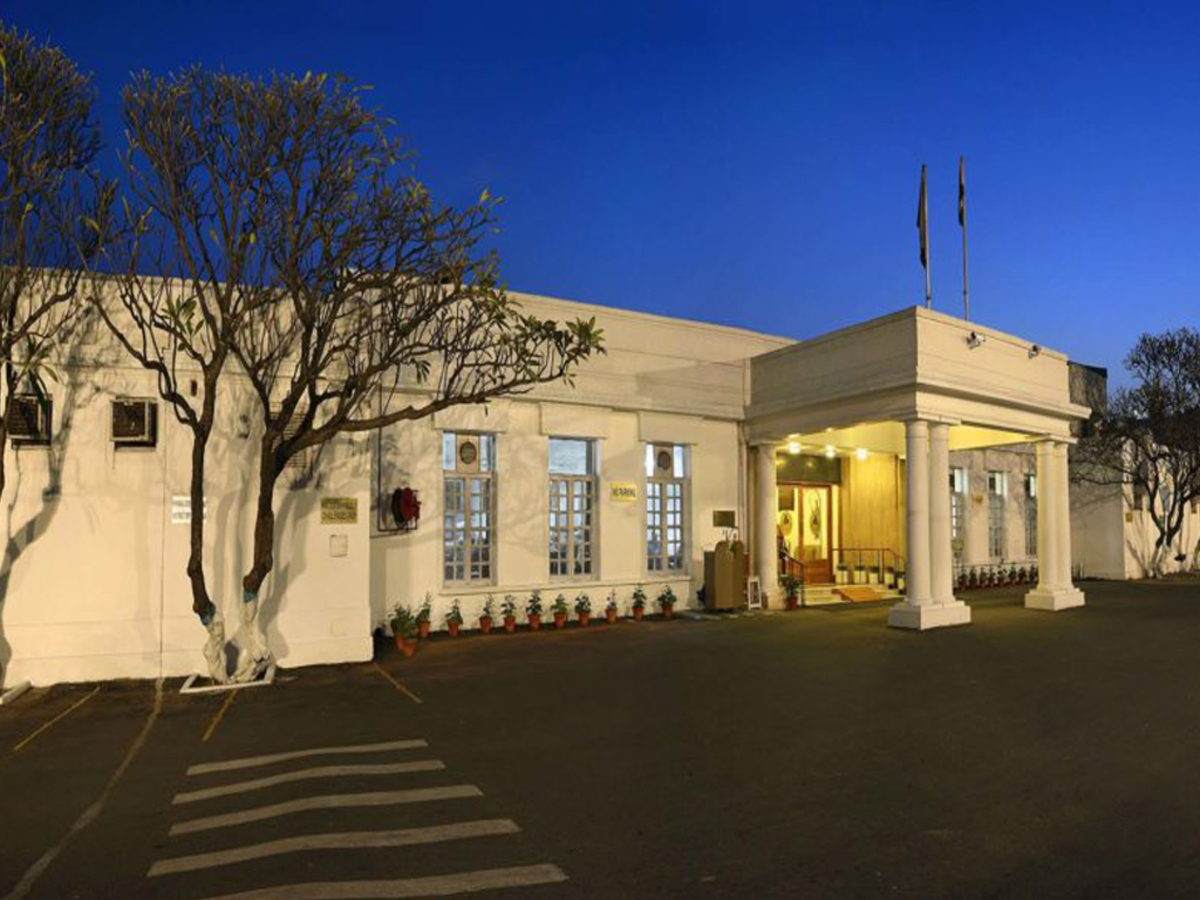
Main entrance leading up to the Delhi Gymkhana Club
It was November 1966, and winter was setting in across the Capital. People had begun wearing at least half-sleeve sweaters, and tennis enthusiasts were eagerly looking forward to the Davis Cup match between India and West Germany at the Delhi Gymkhana Club. Those were the days when stalwarts such as Delhi-born Ramanathan Krishnan, Premjit Lal, and Jaideep Mukerjea represented India.
As the curtains prepare to come down on the Delhi Gymkhana Club, 78-year-old Satya Rastogi recalls the opening day of the match. The mood was electric, and tennis lovers thronged the club to watch the contest. However, it came as a pleasant surprise when spectators spotted newly married couple Dilip Kumar and Saira Banu seated alongside Prime Minister Indira Gandhi.
“Those were innocent times, and security was not what it is now,” recalls Rastogi, a retired civil engineer. “Tennis fans suddenly changed colours and started taking autographs and shaking hands, especially with Dilip Kumar. He was at the peak of his career.”
With the government now directing the club to vacate its 27.3-acre premises by June 5, it is a poignant moment to reflect on the club’s storied past. Among its proudest chapters are the Davis Cup ties it hosted.
Also Read: Uncertainty looms over 600 staff after Centre orders Gymkhana Club to vacate premises by June 5
Grass-court glory
The Davis Cup has long carried a special aura. For a young nation such as India in the post-Independence era, hosting and competing in these ties on home soil represented not just sporting ambition but also national pride. Delhi Gymkhana’s grass courts, with their fast pace and low bounce, provided a unique challenge that favoured crafty baseline players.
“The club has more than two dozen grass courts. It is second only to Wimbledon, making it an ideal venue for high-stakes international matches,” says veteran sports writer Ghaus Mohammad. He adds, “Vijay and Anand Amritraj had also played many matches here.”
The India-West Germany Davis Cup tie was no ordinary contest; it was an Inter-Zonal semi-final carrying the weight of possible progression towards the prestigious Challenge Round. The German side was led by Wilhelm Bungert and Ingo Buding, both seasoned campaigners on the European circuit. The atmosphere at Delhi Gymkhana was festive. Temporary stands buzzed with spectators, while the lush green lawns shimmered under the Delhi sun.
On the court, the home advantage of the grass surface proved decisive. In the opening singles, Krishnan dismantled Bungert in straight sets with his trademark touch and precision. Mukerjea then battled Buding in a gruelling four-setter, dropping the opening set before showcasing remarkable resilience to clinch the rubber. The doubles went in favour of the Germans, with Bungert and Buding prevailing over the Indian pair.
However, the tie remained alive until the reverse singles. Mukerjea once again rose to the occasion, overcoming Bungert in another four-set thriller after losing the opener. India’s 3-2 victory sent shockwaves through the tennis world and propelled the team towards a historic run, eventually reaching the Davis Cup final that year against Australia.
A historic venue
The triumph was more than just a scoreline; it became a testament to the fighting spirit of Indian tennis on the hallowed grounds of Gymkhana. Players later recalled how the venue’s intimate setting and supportive crowds created an unbeatable home fortress.
Ramanathan Krishnan, a two-time Wimbledon semi-finalist, often spoke fondly of his matches there, including memorable encounters against global stars such as Roy Emerson. The 1966 tie remains etched in the club’s history as one of its golden chapters.
Delhi Gymkhana’s association with Davis Cup tennis neither began nor ended in 1966. Records indicate ties against Japan as early as 1961, when the Indian team showcased its growing prowess. In 1978, a tie against New Zealand further highlighted the venue’s role in nurturing talent. The club also hosted national championships and Grand Prix events, drawing leading players from India and abroad.
After a long hiatus, the Davis Cup returned to the club in March 2022 with a World Group playoff tie against Denmark, marking its comeback after nearly five decades. The event generated considerable excitement, with modern facilities complementing the historic grass courts. Temporary seating for around 3,800 spectators was installed.
Delhi Gymkhana Club’s role in hosting these events elevated India’s profile in global tennis circles during an era when resources were limited. As the government takeover looms, the club faces an uncertain future. Supporters mourn the possible loss of a sporting heritage site that produced national champions and hosted international spectacles.
Read More: Gymkhana Club members heave sigh of relief after Centre tells HC no forceful takeover on June 5
Elected to the Delhi Golf Club general committee, Mansher Singh says he wants to build…
A $780 million market built on pavements, where the pleasure of reading meets the price…
Supreme Court advocate Abhishek Pawar alleges women were denied washroom access for seven to eight…
Each day of closure costs shops in Khan Market and Connaught Place between Rs 60,000…
Delhi generates nearly 15,000 tonnes of waste daily, prompting the government to deploy 1,000 mechanical…
Delhi Police has issued an NOC for the Congress rally at Ramlila Maidan on November…

