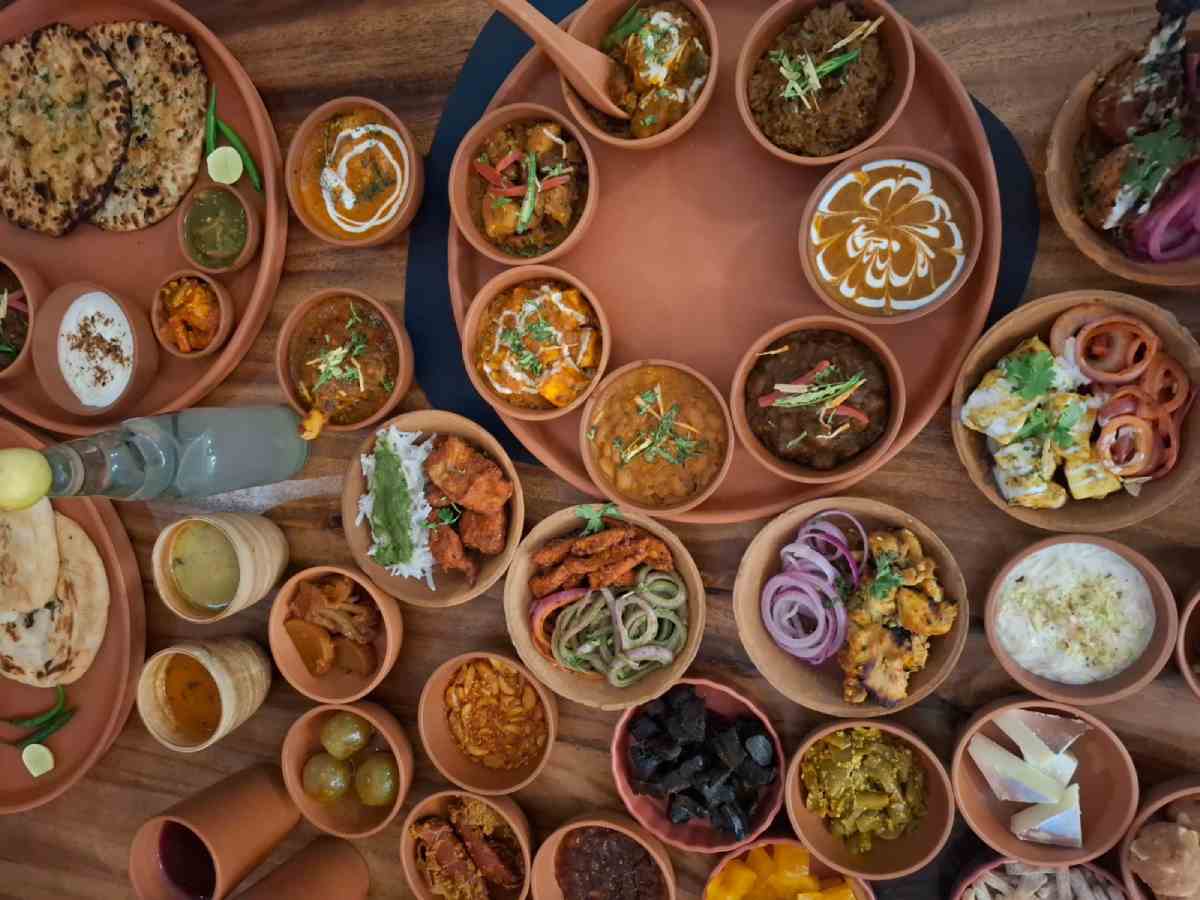
A dhol rhythm plays softly near the entrance as guests step into Food Exchange at Novotel New Delhi City Centre. Bright phulkari motifs line sections of the restaurant, brass utensils sit along the counters, and the aroma of tandoor smoke mingles with butter and roasted spices. The setting feels less like a hotel dining room and more like an attempt to recreate the warmth of a Punjabi household gathering.
Running till May 17, Punjab Da Swad is the hotel’s ongoing Punjabi food festival that brings together robust regional flavours, traditional recipes, and dishes rooted in the culinary culture of Punjab. Spread across an expansive buffet and live stations, the festival recreates the hearty character of Punjabi dining — generous, rich, and unapologetically indulgent.
Beyond sarson da saag
While staples like sarson da saag and makki ki roti remain central to the spread, the festival goes beyond familiar favourites to spotlight recipes rarely seen on regular restaurant menus.
At the live stations, amritsari kulchas arrive crisp from the tandoor, paired with smoky chutneys and pickles. Nearby, large serving pots hold slow-cooked preparations like maa ki dal, pindi chhole, dhaba wala meat, and kunna gosht simmered over hours.
The specially curated buffet also features appetisers such as palak di tikki, kande di bhaji, lawrence road ka chicken tikka, amritsari machhi, and mutton shammi kebab, bringing together flavours associated with Punjabi homes, roadside dhabas, and bustling food streets.
“We wanted people to savour authentic Punjabi food and rediscover recipes that are slowly disappearing from dining tables,” said Chef Dilip Singh, Deputy Head Chef at Novotel New Delhi City Centre. “Punjabi cuisine is much more than just saag and makki ki roti. There are dishes cooked with patience and deep-rooted traditions, and we wanted to bring those flavours to Delhi.”
Among the standout dishes are mutton beli ram and tari wala gosht — rich meat preparations associated with old Punjabi cooking traditions. Cooked slowly over low heat, the dishes carry deep spice notes and the unmistakable richness of slow-cooked gravies.
“Many of these recipes involve long cooking processes and techniques that require time,” Chef Dilip said. “That patience is what creates the flavour.”
Rooted in tradition
The buffet reflects both restaurant-style indulgence and homestyle comfort. Diners can move from smoky kebabs and tikkas to mains that include dal makhani, chhole bhature, bhuna gosht, pind da kukkad, masala fish curry, butter chicken, and kadai subz.
Vegetarian dishes receive equal attention, with preparations like nutri Kulchas, slow-cooked lentils, and seasonal Punjabi staples occupying prominent space on the spread. Alongside the mains are accompaniments such as homemade-style pickles, murabbas, aam papad, and chutneys that evoke roadside dhabas and Punjabi family kitchens alike.
Also Read: Rangeelo Rajasthan brings desert cuisine to Gurugram hotel tables
Chef Dilip points out that some of his personal favourites are dishes rarely found in Delhi restaurants.
“Amritsari wadi and makki Dal are dishes we cook regularly in Punjabi homes, but you don’t usually see them here,” he said. “These are recipes that deserve more attention.”
The festival also embraces the spirit of abundance often associated with Punjabi hospitality. Portions are generous, flavours are bold, and the experience encourages lingering over meals rather than rushing through them.
“Punjabi food doesn’t believe in restraint; it’s rich, expressive, and meant to be enjoyed fully,” Chef Dilip said. “With Punjab Da Swad, we wanted to bring that philosophy to life through a menu that is hearty, flavourful, and deeply rooted in tradition.”
Sweet endings
Desserts continue the traditional approach with Punjabi sweets like tilla kulfi, besan ki burfi, and pinni rounding off the meal. Earthenware serving bowls, rustic décor, and live counters contribute to the immersive atmosphere.
CJP’s Ajinkya Shinde to lead Jantar Mantar protest as three party leaders remain detained
SFI members and lawyers were detained in Delhi ahead of the CJP protest demanding CEC…
Arun Jaitley Stadium under renovation, three ‘home’ games shifted to Palam; Ayush Doseja, whose name…
Ahead of CJP's Jantar Mantar stir, Delhi Police deployed drones and detained150 protesters along with…
CJP claimed three leaders were detained by Delhi Police after arriving from Mumbai ahead of…
Delhi recorded an AQI of 130 in the moderate category, while the minimum temperature settled…

