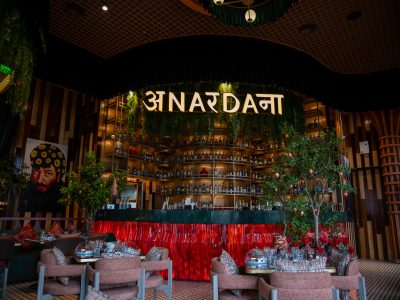
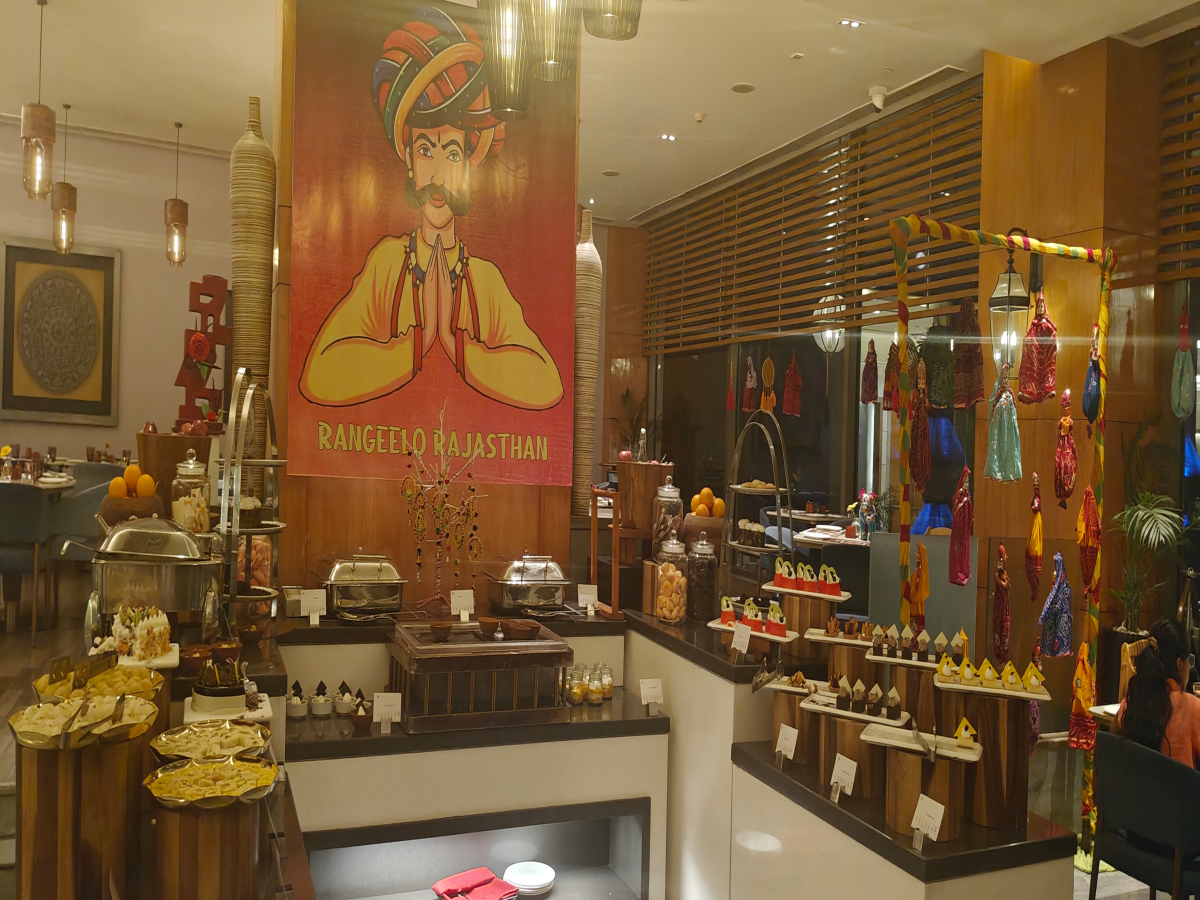
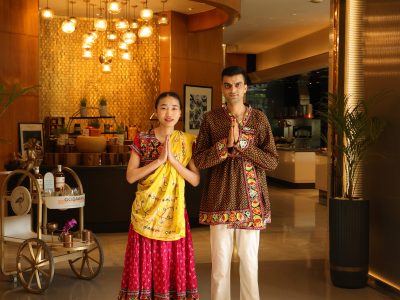
A young woman in a bright Rajasthani lehenga greets guests at the entrance, her presence setting the tone even before the meal begins. Step inside, and Café G feels noticeably altered. The lighting is warmer, the décor leans into traditional patterns and textures, and servers dressed in regional attire move between tables with quiet ease. For a moment, the glass-and-steel edges of Gurugram seem to fall away.
That sense of transition is deliberate.
Rangeelo Rajasthan, currently underway at Café G in Crowne Plaza, goes beyond a themed buffet. It attempts to recreate a layered experience of Rajasthan’s food culture, where each dish is shaped as much by geography and climate as by memory and tradition.
The festival returns after a successful first edition, with a more confident scale this time. The hotel has brought in Chef Swaroop Rana from InterContinental Jaipur, working alongside Executive Chef Sankha Das Mahapatra, to ensure authenticity.
“After the response we got last time, we wanted to bring it back in a bigger way,” says Area General Manager Gaurav Apte. “It’s really about showcasing Rajasthan’s culinary legacy in its truest form, without diluting the flavours.”
Jalees, Associate Director Food and Beverage, highlights the guest response. “We’ve been seeing a lot of footfall this time,” he says. “The feedback has been very positive. People are curious, they want to try something different, and Rajasthani cuisine has that depth. We’ve brought a chef from Jaipur so that the authenticity stays intact.”
Also Read: Japanese dishes at BOYA you won’t easily find in Delhi-NCR
Food that carries memory
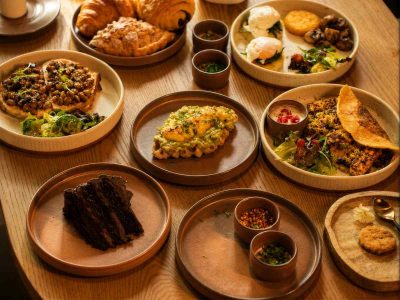
The menu does not overwhelm with novelty. Instead, it leans on dishes that are familiar in name but often not experienced in their original context.
The soup section reflects this diversity, offering murgh makai ki raab, mangodi mutton ka shorba, and a bajra-based raab. These are not typically associated with hotel buffets, making the difference immediately noticeable.
Starters follow a similar approach, with murgh angara and bhuna gosht alongside paneer ki sule and kaju mutter pudina tikki. The flavours are direct and rely more on spice than garnish.
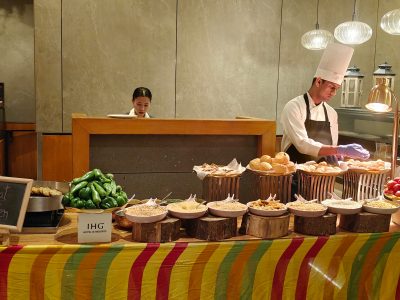
At the live stations, food is prepared in front of diners — moong dal chilla crisping on the griddle, mirchi vada fried in batches, and kachoris served hot with kadhi. The process itself draws attention.
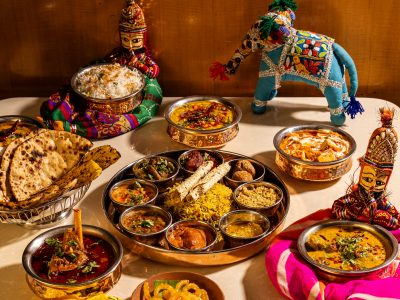
The mains remain the focal point. Dal baati churma anchors the spread, accompanied by laal maas, murgh sekhawati, ker sangri ki sabzi, gatta curry, and aloo mangodi.
Standing near the counter, one of the chefs explains, “We break the baati, mix it with sugar and dry fruits — that’s how it comes together.” He adds, “It doesn’t need water like halwa, and you can keep it for months.”
He further notes, “In villages, baati is cooked in cow dung fire. That gives it a smoky, earthy taste. Here, we use ovens — but we try to keep the flavour as close as possible.”
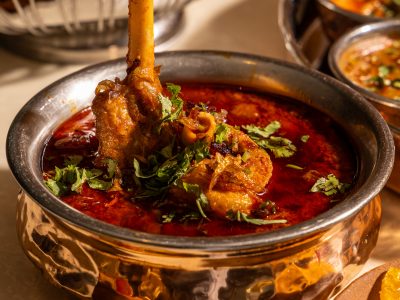
Chef Rana points to laal maas as a commonly misunderstood dish. “People think it’s complicated, but it’s not,” he says. “Mathania chilli, a few basic spices, cooked in ghee — that’s it. It’s very different from something like korma, where you add richness through cashew paste and cream. Here, the spice does the work.”
Built on what survives
Moving through the buffet, the connection between cuisine and climate becomes clear. Rajasthan’s arid conditions have shaped not just ingredients, but cooking and preservation techniques.
Ingredients like bajra, ker and sangri appear repeatedly, reflecting necessity turned tradition. Bajra-based dishes, from soups to rotis, sit alongside preparations such as ker sangri pulao and sev tamatar.
Even garlic chutney stands out — sharp, spicy, and designed to elevate simple meals.
There is also restraint in presentation. The dishes do not rely on elaborate plating. Even in a five-star setting, they retain a certain roughness, pointing to their origins.
A spread between rustic and refined
Despite its rootedness, the experience remains accessible. Rice and dal counters offer thikri ki dal and ker sangri pulao, while breads like bati and bafla add variety in texture. Vegetarian dishes such as papad paneer ka saag and dahi wali bhindi sit alongside meat preparations.
Desserts stay within the regional framework. Malpua with rabri draws attention, alongside lapsi made from bajra and wheat, besan chakki, and multiple variations of churma — kesar, pista, gulab and plain.
Diners take it in
For guests, the experience blends curiosity with comfort.
“The moment you enter, it feels different,” says Niharika Ghosal. “The décor, the way people are dressed — it sets the mood. I really liked the dal baati churma. And the laal maas had that proper spice — it didn’t feel toned down.”
Another diner highlights the interaction with staff. “They explain the dishes, where they come from. That makes a difference,” he says. “It’s not just eating — you’re learning something as well.”
Jalees says this engagement is intentional. “We want people to understand the food, not just try it,” he says. “Each dish has a story, and when you know that, the experience changes.”
More than a themed menu
As the evening progresses, the restaurant fills gradually. The service maintains a steady rhythm, without rush or interruption.
The team emphasises that the aim is not spectacle, but authenticity.
“Every dish here has a history,” a member of the culinary team says. “If guests leave remembering even one or two of those stories, that’s enough for us.”
The festival runs till May 3, with dinner service starting at 7 pm each evening.
By the time diners leave — often lingering over dessert — what stays is not just the food, but a brief immersion into a landscape defined by resilience, simplicity, and a deeply rooted culinary identity.
Read More: Atmanam brings soulful South Indian vegetarian dining to Gurgaon