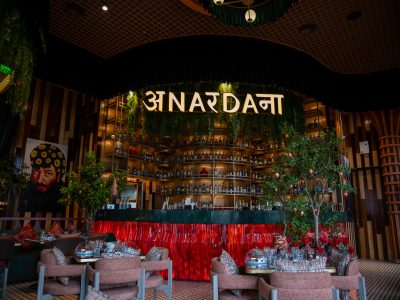
“Ou tenga” is Assamese for elephant apple, a fibrous and sour fruit slow-cooked into tangy stews and fish curries across Northeast India. Found in Assam, Meghalaya, Odisha and West Bengal, the fruit is also known for its medicinal properties. Wild elephants are especially fond of it, which is how it came to be called elephant apple.
For Kabyashree Borgohain, founder of Project Otenga, however, the fruit represents something deeper. Inside the café’s menu is a note explaining how the petals of the fruit intertwine and strengthen instead of falling off before eventually forming the fruit. That idea of people coming together through food, conversation, art and shared experiences lies at the centre of Project Otenga, one of Delhi’s most distinctive new cultural spaces.
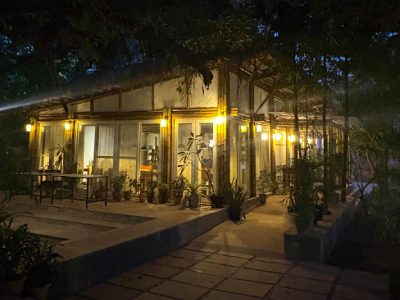
Hidden under towering trees at Shaheedi Park near ITO, Project Otenga does not feel like a regular restaurant. The bamboo-and-glass venue is quiet, earthy and intimate. Birds can be heard in the background, while soft lights fall over wooden tables stacked with books and textured menus.
Some visitors come for Assamese black rice and roselle tea. Others arrive for poetry discussions, board game nights, immersive theatre, painting workshops and conversations around mental health, love and identity.
“The objective was never just to open a restaurant,” Borgohain told Patriot. “The idea actually started back in 2016 when I was studying Strategic Management Design at NID Ahmedabad. The project was focused on understanding how food and shared experiences could help prevent early mental health issues among the floating urban population.”
Food as memory
Borgohain explained that Project Otenga began as a human-centred design experiment around strangers dining together. Over time, it evolved into a larger concept combining food, storytelling, sensory experiences and community-building.
Before opening in Delhi in October 2025, the project had already run successfully inside Ahmedabad University for several years.
“People today are emotionally exhausted and disconnected,” Borgohain said. “We wanted to create a space where people could slow down. Food is not just about filling your stomach. It is also about memory, emotions, conversations, pace and atmosphere. Every touchpoint matters.”
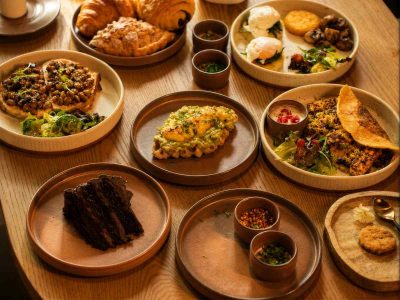
That philosophy becomes visible the moment one opens the menu. The café introduces diners to ingredients rarely found in mainstream Delhi restaurants. There is panitenga, a fermented mustard preparation from Assam; pithaguri, roasted rice flour used in savoury dishes; roselle leaves; perilla seeds; sirarokhong chilli from Manipur; and singju, a Manipuri salad prepared with wild greens and roasted seeds.
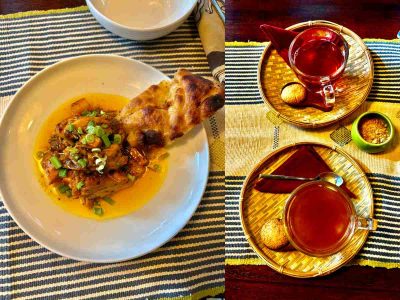
Its “Sense of Home” meals include black rice, aloo pitika, seasonal chutneys, perilla salads and fragrant stews rooted in Assamese and Manipuri cooking traditions. Dishes such as Spinach Pithaguri Curry, Shiitake Mushroom Stew, Paneer Sesame Curry and Paneer with Sumac Berry sit alongside desserts such as Apple Black Rice Cake with perilla white chocolate sauce and Coconut Basque Cheesecake.
The drinks menu also reflects the café’s experimental approach. There is Roselle Tea, Falap smoked tea brewed in bamboo tubes, Silver Needle Tea from Darjeeling and Hey Heimang, made with heimang seeds, jaggery and rhododendron. Cold beverages such as Smoky Roselle and Otenga Picante combine ingredients such as dalle chilli, coriander, mint and kaffir lime.
“Ingredients are the heart and soul here,” said head chef Divyansh. “We source directly from farmers and self-help groups in Assam, Manipur and other Northeastern regions because we want people to genuinely experience these flavours. We are not trying to make the food feel commercial or generic.
Beyond the kitchen
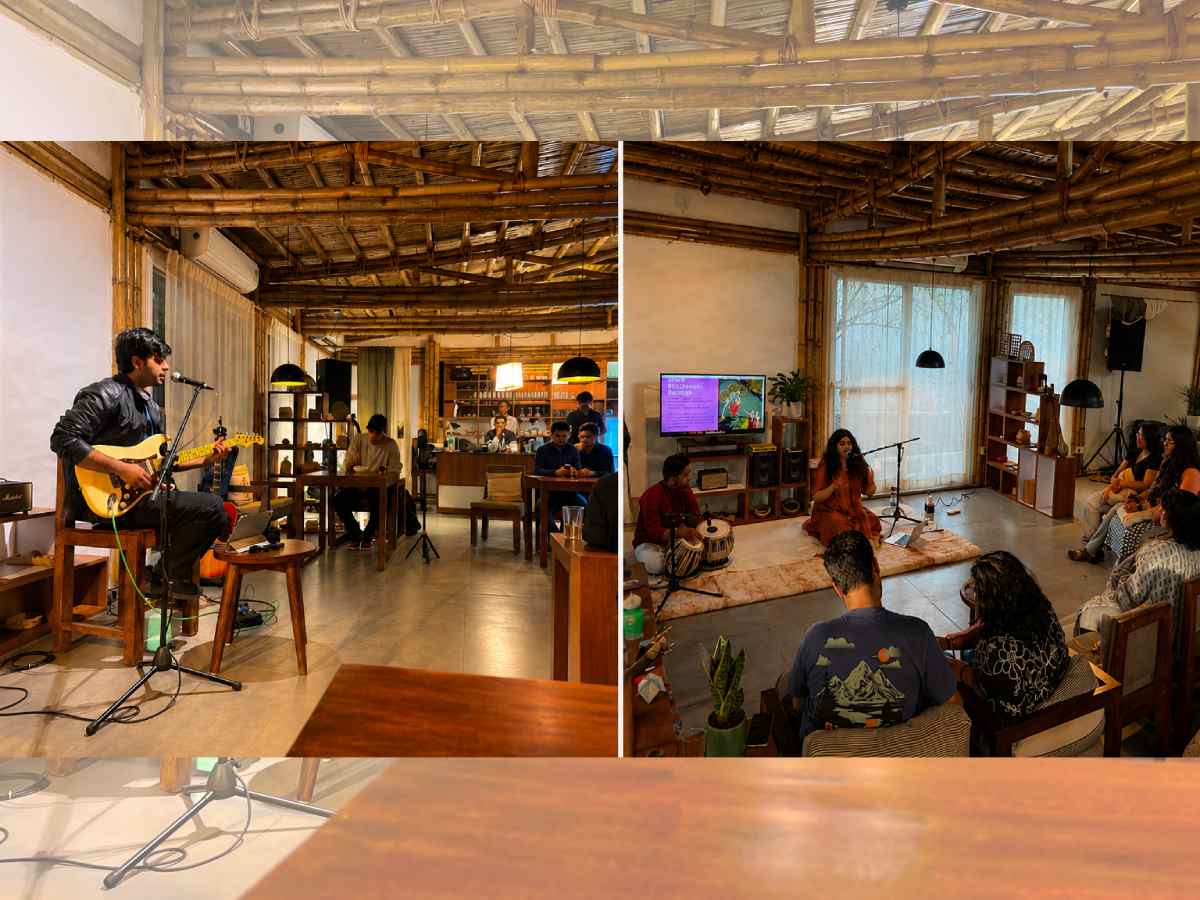
Project Otenga’s identity extends far beyond the kitchen. The venue regularly hosts immersive events that merge food with performance, creativity and conversation.
One of its most talked-about experiences is Taste Nahi Aa Raha Hai, an immersive theatrical dining performance written and performed by Sandesh Pawar. The audience shares a five-course meal while watching the emotional unravelling of a man slowly losing his senses and sense of self. Every course arrives in sync with the performance.
“This is not just dinner and not just theatre,” Borgohain said. “It is about making people emotionally present. We want people to feel something deeply instead of just consuming an experience.”
Another recurring event is Dots on Canvas, a meditative stippling workshop where strangers collectively create a large artwork using tiny dots before taking fragments of the canvas home. Every Tuesday, the café hosts board game nights, continuing a community experiment that first began in Ahmedabad in 2017.
The venue recently organised a game design masterclass led by educator Shradha Jain, exploring behavioural design and emotional engagement through tabletop games. Other events have included poetry gatherings, heritage baithaks, music sessions and discussions around cities, love and identity.
One such gathering, titled Mohabbat Jurm Hai Kyun, invited participants to discuss how Delhi’s ruins, streets and landscapes shape ideas of love. Another event, Letters Between Delhi and Bombay, brought strangers together over chaito discuss poetry, politics, grief and contemporary life.
A place to pause
For many visitors, it is this emotional atmosphere that makes Otenga memorable.
First-time visitor Omar Khayyam described the space as unexpectedly calming. “Main hairan ho gaya yahan aake. Shaam ke time mein bilkul mountains cottage ki vibe hai (This place is such a pleasant surprise. It gives the vibe of mountains),”he told Patriot.
He added that if one’s mind is chaotic, or one wants to sit, relax and read a book, “this is the best place to unwind”.
Another visitor, Ayesha, said she now sees Otenga as more than a dining space.
“I am here for the second time and I really like this place ”, she said. “A whole new menu, a new vibe, and the kind of events they are holding is something I rarely find in Delhi at one place. Heritage baithaks, music, DJs, culinary events, painting, artwork, letters. For me this place is not just a dining place but somewhere I can come whenever I need a pause from my life. I want to experience something new, socialise with like-minded people and of course try Assamese food.”
An attendee of Letters Between Delhi and Bombay laughed while calling herself Otenga’s “unofficial PR manager”.
“I come here often since the last two months whenever I want to relax or meet my friends,” she said. “I have introduced this place to my whole circle. Recently I attended Letters Between Delhi and Bombay and it was amazing. I literally felt relief after sharing experiences, talking about poetry and other stuff. It was a pleasure to share the table with such amazing poets over chai. This spot is my favourite spot in Delhi now.”
Building community slowly
Borgohain believes such reactions reflect the larger purpose behind Project Otenga.
“Today everybody talks about building communities,” she said. “But communities are not built through branding. Communities are the result of nurtured intentions. People return to spaces where they feel emotionally safe, seen and connected.”
She intentionally avoided opening the café in Delhi’s established Northeastern food hubs such as Humayunpur.
“People usually go there for restaurant hopping,” she said. “We wanted to build a destination space where people come intentionally and spend time. We wanted to cancel the noise.”
Otenga’s manager Paul said the aim is to make visitors feel at home from the moment they enter.
“We want people to come here and feel relaxed. Unlike other places, there is no rush to leave the seat once you are done with eating,” he said. “People come here for meetings, wedding planning, to chill with friends, or for me time, and this is exactly what we are building.”
Much of Otenga’s audience has grown organically through social media and word of mouth. Borgohain said the team is comfortable with growing slowly rather than aggressively chasing commercial expansion.
“We are okay with not making profits for some months,” she said. “Slow and sustainable growth matters more than quick highs. We are trying to create something meaningful.”
At a time when Delhi’s café culture is increasingly driven by aesthetics and social media trends, Project Otenga feels different because it focuses less on spectacle and more on emotional experience. A meal here can turn into a conversation about grief, memory or identity. A board game can become a friendship. A poetry event can feel therapeutic.
Under bamboo interiors and warm lights, Project Otenga is quietly becoming something rare in Delhi’s fast-moving urban life: not just a café, but a pause.