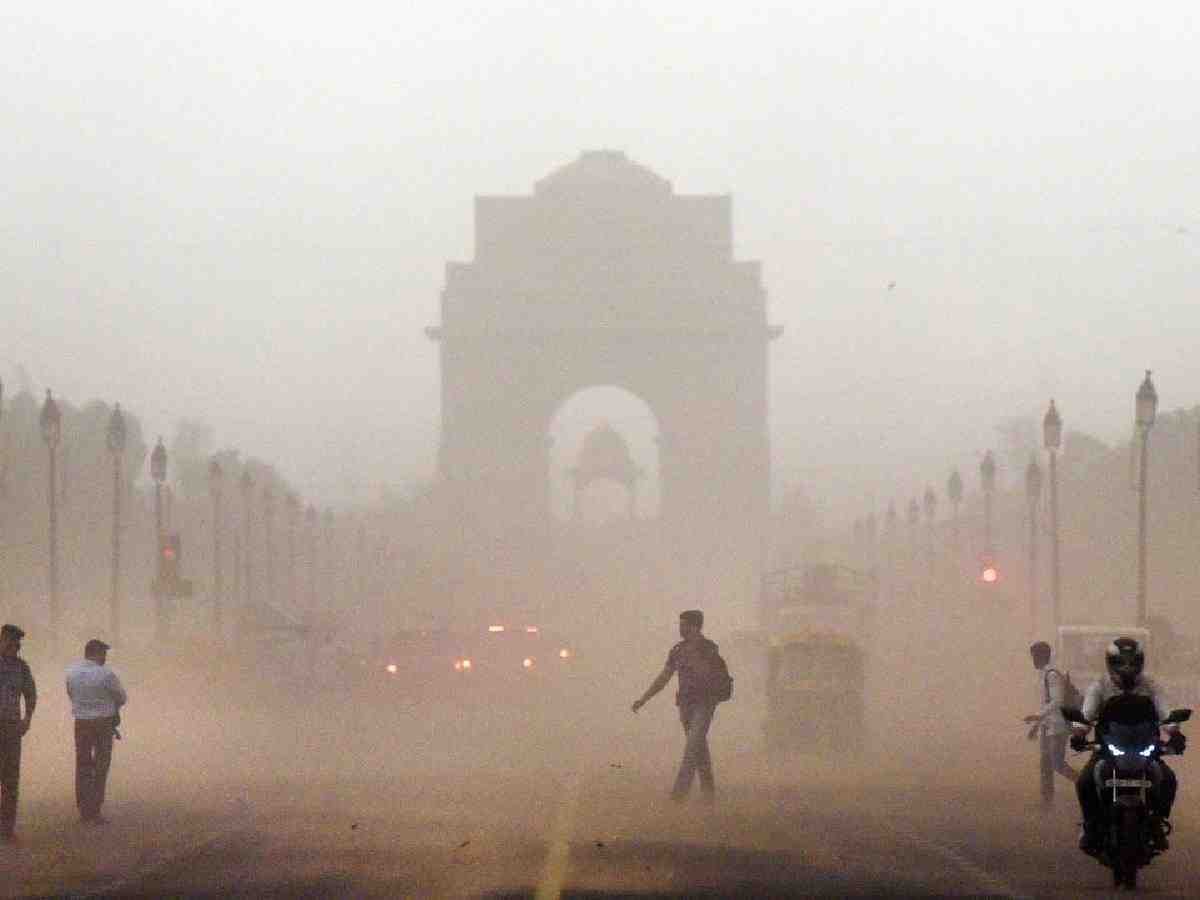
Fine particulate matter could be absorbing moisture from Delhi’s humid air during winters, which could result in an underestimation of the city’s PM1 pollution by up to 20 per cent, according to a new study.
Researchers, including those from the University of Birmingham, UK, explained that the swelling of fine particulate matter by absorbing water from the humid air — hygroscopic growth — reduces the efficiency of sampling devices, possibly leading to underestimation.
The study, published in the journal npj Clean Air, “fills in the gap in the understanding of PM1 pollution in the most polluted megacity in the world.”
New Delhi remained the world’s most polluted capital city, according to the 2024 World Air Quality report by IQAir, a Swiss organisation.
PM1 particles, sized under a micron in diameter, are especially dangerous as they can penetrate lung tissue and enter the bloodstream, IQAir explains.
Study author Ying Chen, from the University of Birmingham, said, “When carrying out air quality assessments, it is crucial to consider hygroscopic growth and the potential for significant underestimation of pollution levels in humid conditions.”
The greatest underestimates in pollution levels occur during the rush hours of winter mornings in December-January, when humidity is at its peak and pollution is most severe, the researchers said.
“The underestimate can be up to 20 per cent (or 50 micrograms per cubic meter) of PM1 concentration on average during humid winter morning rush hours,” they wrote.
In contrast, pollution estimates during the monsoon season show negligible bias, as the swollen pollutant particles are washed out by heavy rainfall, the team added.
Controlling emissions from biomass burning and residential sources — which contain highly hygroscopic chlorine particles — could effectively improve air quality and reduce this bias, thereby helping improve how air quality is understood, the study suggested.
Chen said, “This study highlights the true extent of air pollution in New Delhi and offers a framework for more accurate future assessments that better inform public health strategies and mitigation efforts.”
The team also found that the second-highest underestimate of over 8.5 per cent occurs during the rush hour of spring mornings (February to March), when an average relative humidity of 80 per cent prevails.
Also Read: 500 ‘illegal’ dyeing units in Delhi drain groundwater, pollute Yamuna
However, negligible bias, and therefore underestimation, was found during the wettest months of the monsoon (July to September) and the driest months of summer (April to June).
While frequent rains during the monsoon wash out hygroscopic particles, low levels of humidity during the summer limit the swelling of pollutant particles — both resulting in negligible bias, the researchers explained.
Chen also called for more on-site observations of PM2.5 and PM10 to gain a more rounded understanding of air pollution in New Delhi.
The Supreme Court deferred pleas on Delhi protests and metro and train service curbs to…
A plea in the Supreme Court challenges restrictions on protests at Delhi’s Jantar Mantar and…
Delhi recorded an AQI of 138 in the moderate category on Tuesday, with the minimum…
A 29-year-old driver was allegedly beaten to death by nightclub bouncers in Delhi following a…
Delhi HC to hear pleas seeking regulation of protests in the capital on Tuesday, with…
From a Sikh family in Tilak Nagar performing Shastar Puja to a Malayali household inscribing…
