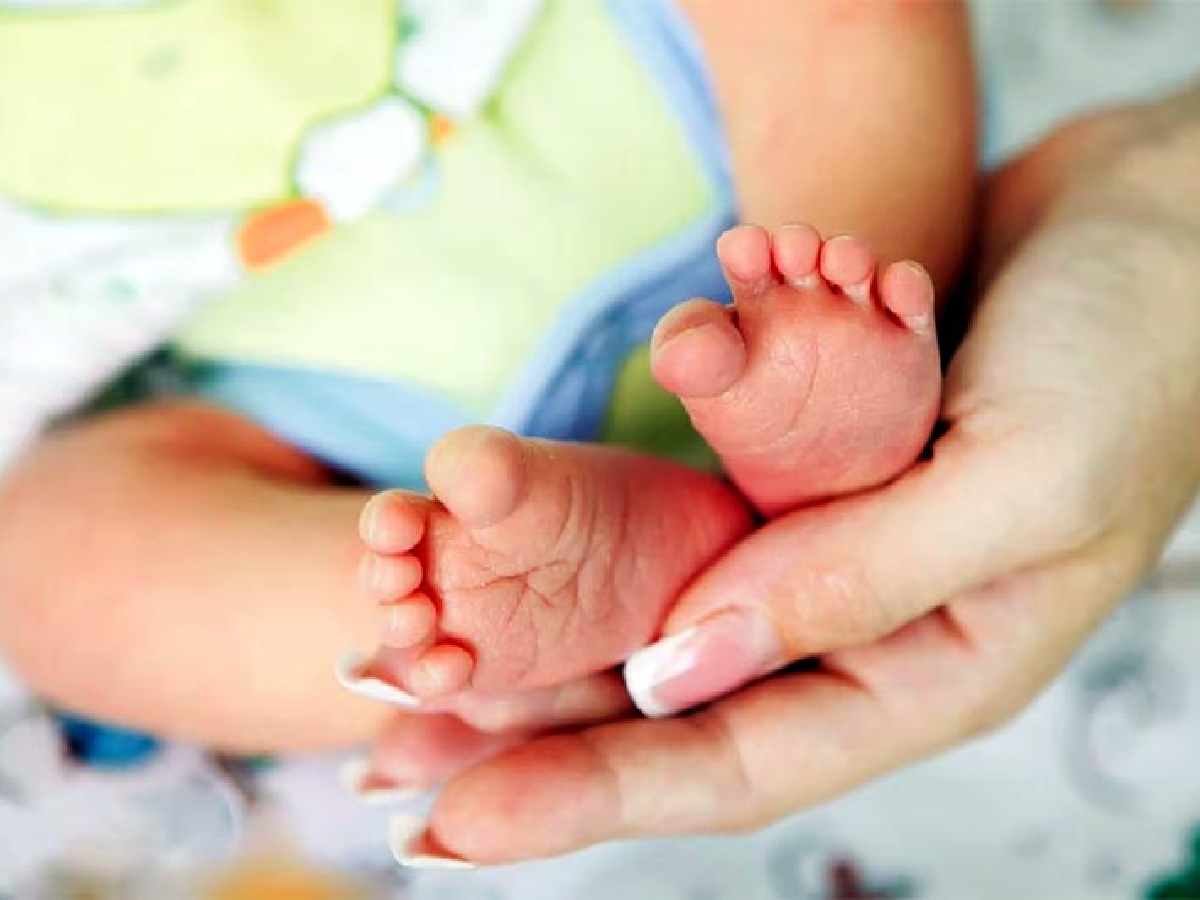
Having a planned caesarean section during delivery could be related to an increased risk of leukaemia — a blood cancer — later in the child’s life, compared with an emergency C-section, a study has found.
A C-section delivery of a child involves making a surgical cut in the mother’s abdomen and uterus. The need for delivering via a C-section can be planned or arise as an emergency during labour.
Researchers at Karolinska Institute said that exposure of a baby to vaginal bacteria in an emergency C-section — which usually begins as a vaginal delivery — could be why planned C-sections carry an increased risk of certain diseases, compared to emergency ones.
“We don’t want mothers to feel anxious about medically indicated C-sections. But when this result is combined with other study results showing that the risk of later asthma, allergies, or type 1 diabetes increases in children born by planned C-section, there is reason to discuss C-sections that are not medically indicated,” lead author Christina-Evmorfia Kampitsi, researcher at Karolinska Institutet, said.
The study, published in The International Journal of Cancer, looked at nearly 25 lakh children born in Sweden during 1982-1989 and 1999-2015 from the Medical Birth Register.
More than 3.75 lakh of these (15.5 per cent) were born by a C-section, of which 1,495 later developed leukaemia — a cancer affecting blood and bone marrow.
Overall, children born by a C-section were seven per cent more likely to develop acute lymphoblastic leukaemia, compared to those born vaginally.
However, compared to an emergency C-section, birth via a planned C-section was associated with a 21 per cent higher risk of developing acute lymphoblastic leukaemia, the most common form of childhood leukaemia.
“We observed an increased (acute lymphoblastic leukaemia) risk among children delivered by planned C-section (of 21 per cent),” the authors wrote.
Emergency caesarean sections usually begin as a vaginal delivery, which causes stress for the baby and exposure to vaginal bacteria if the amniotic sac has ruptured, they said.
Also Read: Could health tracking apps make you sicker?
A foetus grows and develops in an amniotic sac during pregnancy.
However, in planned C-sections — usually performed before labour has started naturally — the baby does not experience this stress and is not exposed to vaginal bacteria, the team said.
The difference in exposure to vaginal bacteria and immunological factors thereof may help the increased risk of acute lymphoblastic leukaemia in a planned — and not emergency — C-section, the researchers added.
The findings help contribute towards understanding what causes acute lymphoblastic leukaemia in children.
IYC marches to Jantar Mantar against its denotification, asserting the constitutional right to peaceful assembly…
Delhi CM Rekha Gupta transfers Rs 1,370 DBT to MCD school students for uniforms and…
Delhi Police dismisses viral video of attack at Rahul Gandhi's residence as fake, warning legal…
SFI and DYFI activists were stopped at police barricades while marching to Jantar Mantar to…
Ambedkar University alleges that protesting students damaged campus property and clashed with security staff during…
Kejriwal slams CJP leaders' custody for tricolour protest, calling police action against Saurav Das and…
