
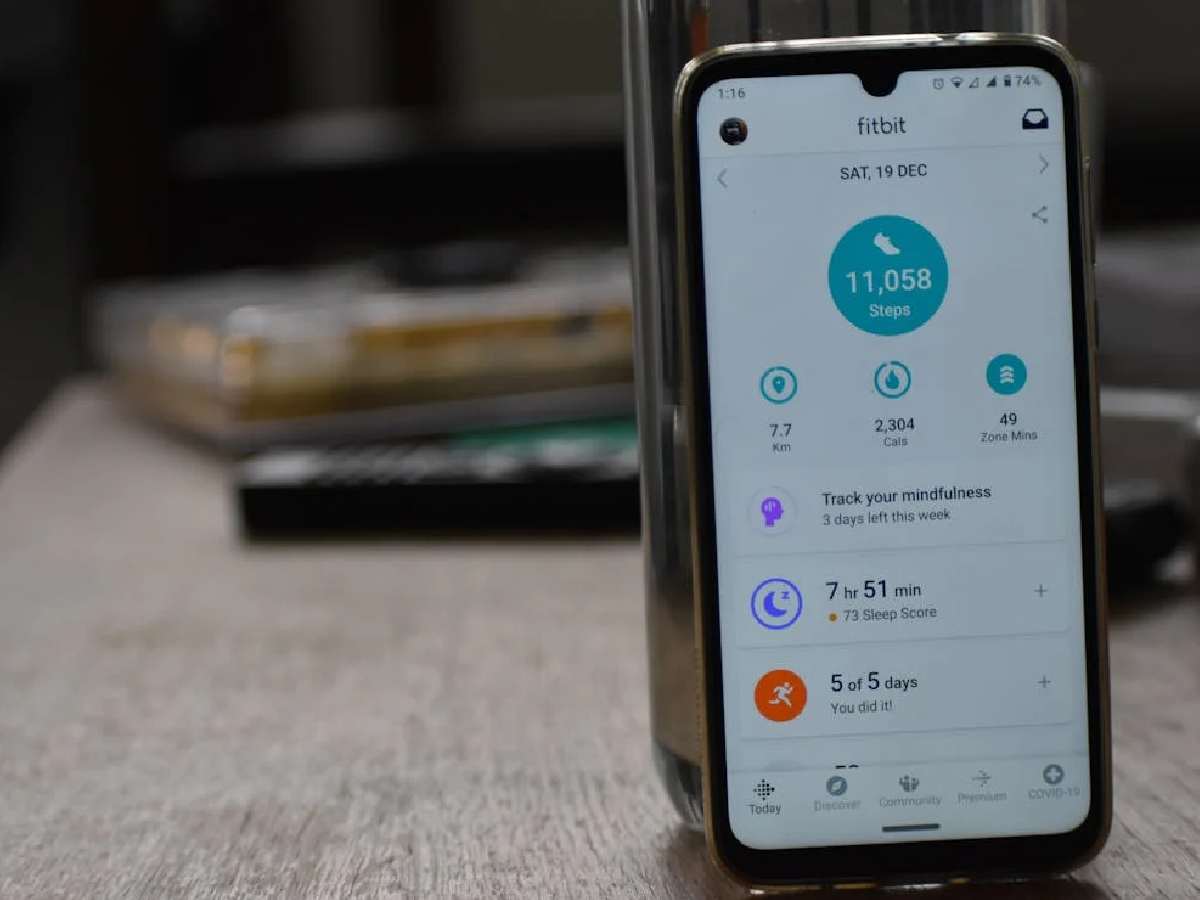
Health: In the age of digital access, the internet is truly an ocean of information. Within seconds, one can look up anything—from symptoms to suggested treatments—and increasingly, seek help as well. Riding the wave of this accessibility is the growing industry of digital wellness. A variety of platforms have emerged that help individuals monitor and manage their health.
There are a myriad of apps and websites available today that allow users to set hydration and medication reminders, track sleep and step counts, monitor weight and calorie intake, and even record menstruation cycles. However, a pressing question arises: can the overuse of such platforms lead to unintended issues?
“Digital platforms for tracking weight and body metrics can backfire, especially when people become overly fixated on numbers,” said Dr Vivudh Singh, Senior Consultant, Cardiology at Fortis Escorts Heart Institute, Okhla Road. “While these tools can motivate and provide structure, they can also trigger or worsen body image issues, obsessive behaviours, and anxiety.”
Dr Devanshu Gautam of Sir Ganga Ram Hospital shared a similar observation. “I have personally observed this in a lot of patients where they are obsessing with their constant checking, and hence falling under the weight of health anxiety,” he said. “If a balance is maintained, these platforms can be helpful to have a quick check on your health status.”
Dr Vinay Anaes, former head of the Resident Doctors Association at AIIMS, also flagged concerns regarding the overuse of health apps. “This is called cyberchondria. It is when a person monitors themselves constantly. ‘Is my heart rate okay? Is my weight okay? What is my BMI? How many calories am I taking?’ A person indulges in it so much that they develop anxiety over it. These apps are supposed to help you and aid you, not cause anxiety,” he said.
He also spoke of the growing resistance patients show when clinical advice does not align with what their apps suggest. “Nowadays, patients do not listen to us. If I tell a patient that six hours of sleep can be just as fulfilling as eight hours, they will not listen to me—they will start arguing with me,” he explained. “We always try to explain to them that these apps are an aid to monitor your health, not a diagnostic module. People do not have complete knowledge, which causes anxiety.”
Dr Anaes emphasised that artificial intelligence is not a passing trend. “AI is not a temporary occurrence. It will keep evolving and stay with us. We must make sure that we are using AI as a helping aid, not making it our doctor.”
Dr Tushar Tayal, Consultant, Internal Medicine, CK Birla Hospital, also warned against overdependence on digital wellness platforms. “These apps are designed to help you understand your body—by showing your steps, heart rate, sleep, or even stress levels,” he said. “But when you start looking at these numbers constantly, it can create worry, especially if something seems ‘wrong’ even when you feel okay.”
Tayal explained that small fluctuations in health metrics are normal and not always a cause for concern. For some users, however, this constant self-monitoring can lead to heightened anxiety. “It is important to use these tools as a guide rather than a medium of self-criticism,” he added.
Varya, a final-year psychology student from Delhi University, shared her thoughts on the use of health tracking apps. “Firstly, it depends from app to app. Like menstrual apps, for instance, provide a sense of mental preparedness for the individual, while weight apps create anxiety,” she said.
“One should try to be intentional with using these apps. If you are using a certain app, you should be aware of the ‘why’ behind it. Why am I using a menstrual cycle tracker, for example? The ‘why’ behind it could be because my cycle is irregular.”