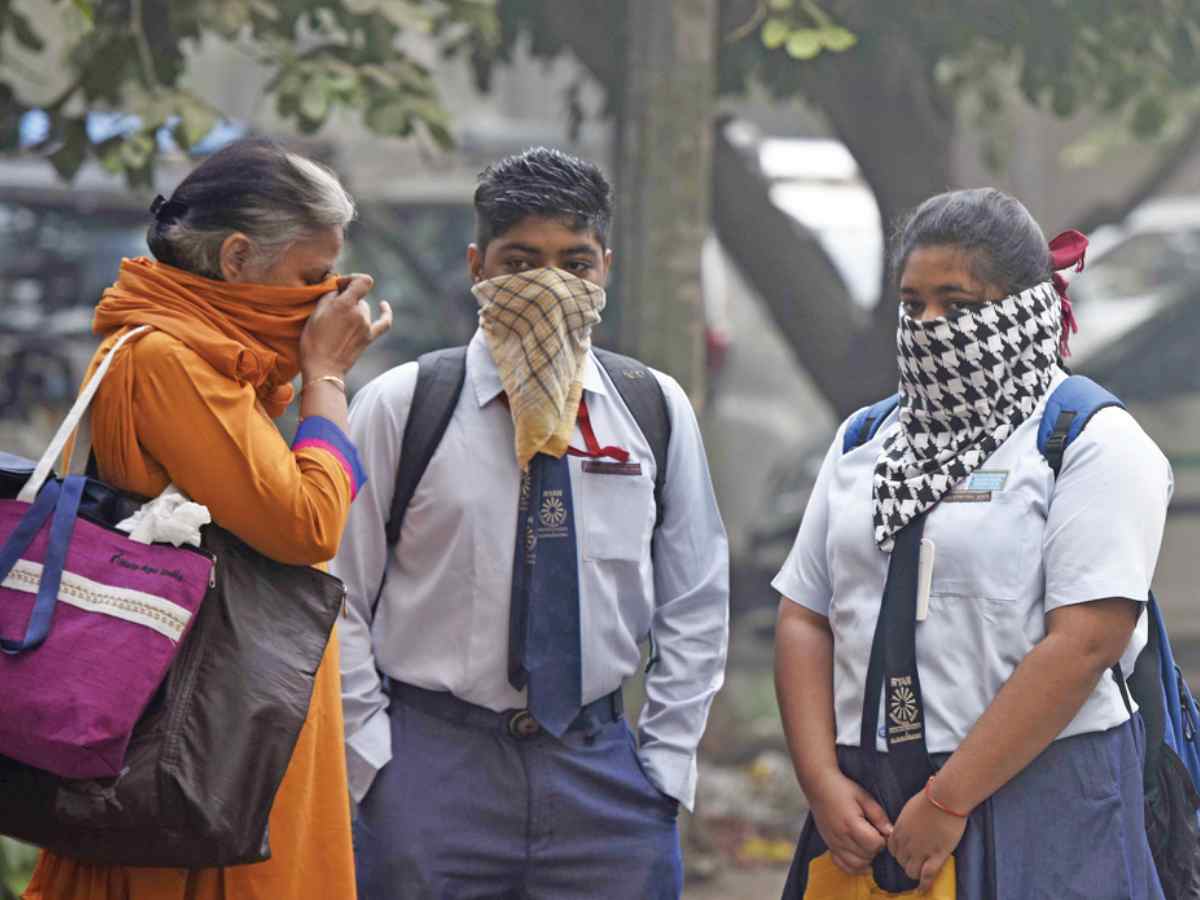
In 2025, the National Capital Region (NCR) crossed a troubling threshold. Environmental degradation and social inequality no longer operated as parallel crises; they converged to reshape public health in fundamental ways. Air pollution, once seen as a seasonal affliction, hardened into a year-round medical emergency. At the same time, widening socio-economic gaps exposed the fragility of a healthcare system struggling to cope with constant pressure.
What emerged was not a sudden catastrophe but a slow, relentless breakdown, one that tested hospitals, clinicians, families, and public institutions alike.
From seasonal smog to a year-long health hazard
For decades, residents of North India endured winter smog with the expectation of relief once spring arrived. In 2025, that relief never came. Shifts in atmospheric patterns prevented pollutants from dispersing during the warmer months, transforming air pollution into a near-permanent condition.
“Air pollution in many North Indian cities has shifted from being a seasonal inconvenience to a near-permanent health hazard,” says Dr Ravi Shekhar Jha, Director and Unit Head of Pulmonology at Fortis Escorts Hospital, Faridabad.
Clinically, the change was immediate and unmistakable. Doctors were no longer treating short-term irritation but long-lasting damage. “Prolonged exposure to high particulate matter levels led to a surge in pollution-induced bronchitis, asthma exacerbations, and chronic cough even among previously healthy individuals,” Dr Jha notes.
Recovery patterns also changed. Patients who once improved during the monsoon months found that their lungs no longer fully healed. “The damage is cumulative—short-term improvement during cleaner air periods no longer fully reverses the harm caused by months of exposure. The concept of ‘safe air days’ is steadily disappearing.”
Hospitals under constant respiratory pressure
This shift blurred the traditional peaks and troughs of respiratory illness. Instead of seasonal spikes, hospitals faced a continuous plateau of high patient volume throughout the year, particularly in emergency departments.
“Emergency rooms and outpatient clinics saw sustained respiratory case loads throughout the year rather than predictable seasonal peaks,” says Dr Jha. The absence of downtime placed extraordinary strain on healthcare systems. According to him, “this constant pressure strained bed availability, oxygen infrastructure, and healthcare personnel.”
The profile of patients also changed. While older adults remained vulnerable, younger individuals increasingly presented with symptoms typically associated with long-term smokers or occupational lung disease. “We also noted a rise in younger patients with chronic respiratory symptoms,” Dr Jha warns, calling it “an alarming signal of long-term public health consequences.”
Children and the cost of exposure
Children emerged as the most visible victims of the city’s deteriorating environment. Because they breathe more rapidly and their lungs are still developing, sustained exposure to PM2.5 posed serious long-term risks.
At the same time, families were forced into difficult trade-offs. “Growing lungs are uniquely sensitive to air pollution, yet school closures or activity restrictions came with educational and psychological costs,” Dr Jha explains.
Even mitigation measures came with complications. “Mask use, though protective, raised concerns when used for prolonged periods in young children, particularly during physical activity,” he says. Despite these risks, institutional responses lagged behind the reality on the ground. “Surprisingly, many schools continued with sports festivals, in spite of bad AQI,” Dr Jha notes, pointing to the “absence of child-centric pollution policies and indoor air quality standards.”
Climate variability and the return of infectious disease
The health crisis extended beyond polluted air. Erratic weather patterns in 2025, marked by unseasonable heat and unpredictable heavy rainfall, altered the behaviour of infectious diseases.
“Erratic monsoons, warmer temperatures, and prolonged water stagnation created ideal conditions for mosquito breeding,” says Dr Jha. As a result, “Dengue, chikungunya, and malaria cases appeared earlier and persisted longer than usual.”
For clinicians, this created a diagnostic challenge. Fever and respiratory distress could point to viral illness, vector-borne infection, or pollution-related exacerbation. Dr Jha explains that “coinfections with pollution-weakened airways appeared to worsen disease severity, particularly in the elderly and immunocompromised populations.”
The quiet rise of chronic illness
While acute respiratory cases dominated public attention, a slower crisis unfolded alongside them. Non-communicable diseases rose steadily as environmental conditions restricted everyday health practices.
When air quality remained consistently hazardous, outdoor exercise became unsafe, removing one of the most accessible forms of preventive healthcare. “Sedentary lifestyles driven by poor air quality limiting outdoor activity contributed to worsening obesity, hypertension, diabetes, and cardiovascular disease,” says Dr Jha.
This, in turn, created a self-reinforcing cycle. Chronic illness increased vulnerability to pollution and infection, while constant environmental stress fed into “mental health concerns, including anxiety and sleep disturbances.”
Inequality and a system under strain
The events of 2025 laid bare the link between public health and social inequality. Those with financial means insulated themselves with air purifiers, high-quality masks, and private healthcare. For most residents, however, survival depended on public hospitals.
“Public hospitals remained the backbone of healthcare delivery, particularly for economically disadvantaged populations,” Dr Jha says. Yet sustained demand exposed long-standing weaknesses, including “chronic underfunding, manpower shortages, and infrastructure gaps.”
Also Read: Yamuna in 2025: A year of scrutiny without recovery
The pressure took a human toll. “Healthcare workers faced burnout, while facilities struggled to balance emergency care with routine services,” he adds.
Lessons from a breaking point
By the end of 2025, it was clear that healthcare could no longer be viewed in isolation from environmental and infrastructural realities. The crisis demonstrated the limits of a reactive system in a city facing permanent environmental stress.
“The public health challenges of 2025 offered hard but valuable lessons,” Dr Jha concludes. “Environmental health must be treated as a core pillar of healthcare policy, not an adjunct issue.”
The path forward, he warns, requires prevention rather than crisis management. Early warning systems, child-focused protections, and serious investment in public hospitals are no longer optional.
“Without coordinated action,” Dr Jha cautions, “cities risk entering a cycle where preventable environmental harm continues to translate into avoidable disease and human”.
DMRC says zero reduction in train trips, attributes decline to security measures and public apprehension…
A Delhi court denied bail to a former DU professor accused of raping a student,…
Delhi Police charged seven dhaba workers in the fatal beating of a Manipuri musician who…
Seven Delhi STPs failed DPCC standards in September, dumping high levels of faecal coliform and…
AISA chief Neha Bora petitioned the Delhi HC against a police notice requiring a peace…
Average AQI of 171 in the first week of this month; falling temperatures and stubble…
