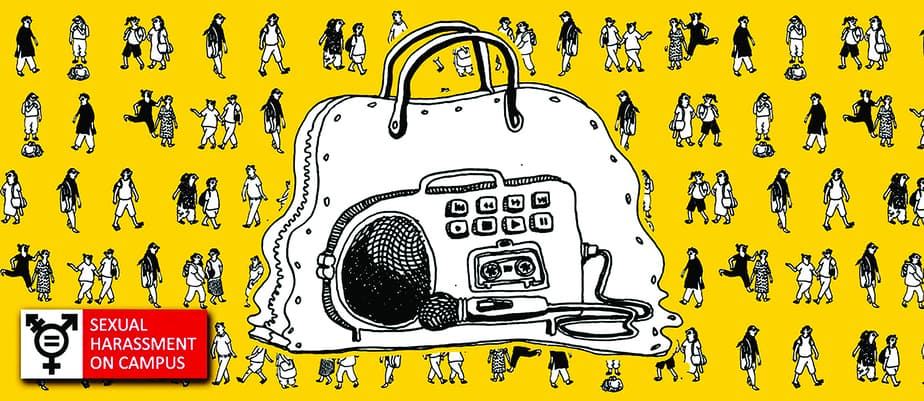
Radio In A Purse project, a Bangalore-based initiative, is capturing students’ stories of being sexually harassed on university campuses across the city. Set up in 2017, the initiative records audio testimonies of sexual harassment by fitting purses with audio equipment. In doing so, the initiative is enabling sharing and facilitation of storytelling.
Radio In A Purse has been at the forefront of initiating conversations on sexual harassment and has so far recorded over 40 testimonies of students.
From Raya Sarkar’s list of sexual harassment offenders, naming and shaming perpetrators of sexual abuse in academia, to the Atul Johri row on the JNU campus, campuses in India are slowly gravitating towards their own #MeToo moment in enabling survivors to come forward and share their personal experiences.
First of its kind, Radio In A Purse project provides a safe space to students across campuses to discuss their experience of sexuality, harassment and questions of gender. And, all of this is done by recording audio testimonies of students over the course of informal sessions.
How did it start?
The brainchild of Bangalore-based Maraa, a media and arts collective, the unique project came into being in 2017, following a thought-provoking session on sexual harassment on university spaces by Alternative Law Forum. Following the University Grants Commission’s guidelines, making it mandatory for campuses to have Internal Complaints Committees, questionnaires were sent across to students mapping out their responses in situations where they have or may be at risk of experiencing harassment on campuses. In December 2017, through coordinated efforts of Maraa and the Students’ Outposts, the Radio In A Purse project came into being.
How does it work?
Through direct engagement with students on the ground, the need to create a safe space for students to come out and discuss their experiences was felt. Following which, Students’ Outpost came up with purses creatively fitted with audio equipment. The purse packed with a laptop and audio recorders were then taken around campus spaces and beyond to start discussions on issues that were only discussed in hushed voices before — the questions of sexuality, masculinity and harassment on the university premises. These discussions included not just intimate experiences of students, but also gives them a sense of ownership of telling their own stories, in their own voices.
Building on the idea of informal conversations, the recorded material was then uploaded to a SoundCloud page, where it could be accessed by others.
Tapping its initial networks, members of Maraa tried to reach out to student groups in five to six colleges to conduct discussions in open spaces such as parks and cafes. Angarika, a member of Maraa, recalls the initial days of the project. She says, “There was a lot of resistance from colleges as it was felt that the collective was trying to touch upon sensitive issues.” Overcoming these obstacles, the project has now been successful in not just recording testimonies, but giving an opportunity to students to make their voices heard. More recently, the student-led initiative has also started with the process of sharing the recorded audio clips over WhatsApp to ensure maximum reach, in turn, facilitating dialogues.
The road ahead
The biggest challenge and a massive opportunity for the project is to engage with university administrations, Ketan, from the collective, says. “We want to deal directly with professors and students alike on campuses and even parents to ensure campus spaces are safe for everyone.” Following the #MeToo campaign, several young females have come out to share their personal experiences of harassment on campuses. The key is to involve men in the conversation as well. The project is actively working towards starting off simpler conversations on ‘what is feminism, understanding masculinity etc’, says Angarika.
While the project currently operates only around Bangalore, the volunteers are hoping to start such informal sessions across campuses in multiple cities.
www.newslaundry.com
After 12 years in theatre, the actor makes his international film debut with a role…
Protester alleges Delhi Police assaulted detainees, deleted phone videos, and detained minors during anti-CEC protest…
Shifting protests away from Jantar Mantar weakens democratic visibility and access to political power, an…
CM Rekha Gupta defends SIR and EC integrity, saying democracy can't be held hostage to…
AISA students march to Supreme Court over 'vote chori' claims against CEC, as police barricade…
DMRC extends closure of six central Delhi metro station gates until 5 pm citing security…
