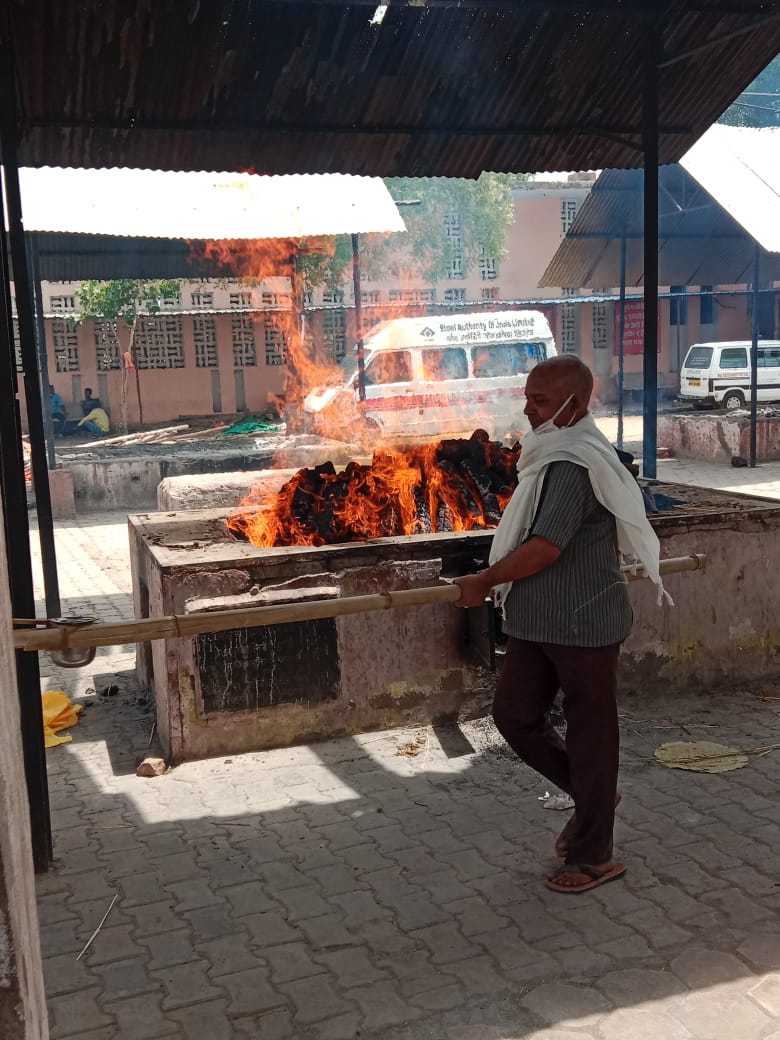
Delhi has seen over 14,000 Covid cremations from April 1, according to MDC data. While crematorium workers are struggling to keep up with the rising death count, Project ARTH by Enactus IIT Delhi is doing their part in supporting free cremation to poor and Covid victims.
A traditional Hindu funeral takes approximately 400-500 kg of wood to cremate a body. According to data, over 4 lakh trees are used in Delhi’s burning ghats every year.
ARTH took up the initiative to redefine this ritual by providing an alternative to wood logs that has religious alignment and does not generate comparable emissions on burning. They aim to replace wood as a fuel, with modified cow-dung logs for conducting the Hindu practice of cremations in the crematoriums of India.
“We have contacted crematoriums in Delhi, Gwalior and Rajkot and supplied them free cow dung logs which are then used to ensure dignified cremations to the needy victims. We ensure that no money is charged to the families through a consistent feedback mechanism. We are constantly trying to reach it to more states and crematoriums to provide the logs and extend our reach,” says Ayush Sultania, team leader of ARTH.
Over 1 lakh kgs of cow dung simply goes as waste in the cow tending centres and dairies around Delhi. According to their studies, it is either dumped into heaps, decomposing anaerobically and generating greenhouse gas emissions or goes to landfills.
With extensive research, they were able to derive a log-shaped fuel out of cow dung with combustion properties superior to cow dung cakes through inclusion of agricultural additives.
“We have had around 200 cremation across the three different states of the country – Delhi, Gwalior and Rajkot of which around 100 have been done in the capital city of India,” says Sultania.
They have set up a manufacturing hub that includes a log extrusion machine, storage facilities and drying systems, in Shree Krishna Gaushala – the biggest cow tending centre of Delhi.
“We are empowering gaushala in helping them set up a manufacturing unit of cow dung based logs (ARTH LOGS), employ staff from gaushalas and provide them with the right technical training. We add organic waste to increase the calorific value of our logs. That is a secret recipe. Currently in Delhi, two cow shelters are involved in helping us give dignified cremation of Covid deceased in the capital,” adds Sultania.
(Cover: Crematorium workers are struggling to keep up with the rising death count in Delhi / Credit: Project ARTH)
After 12 years in theatre, the actor makes his international film debut with a role…
Protester alleges Delhi Police assaulted detainees, deleted phone videos, and detained minors during anti-CEC protest…
Shifting protests away from Jantar Mantar weakens democratic visibility and access to political power, an…
CM Rekha Gupta defends SIR and EC integrity, saying democracy can't be held hostage to…
AISA students march to Supreme Court over 'vote chori' claims against CEC, as police barricade…
DMRC extends closure of six central Delhi metro station gates until 5 pm citing security…

