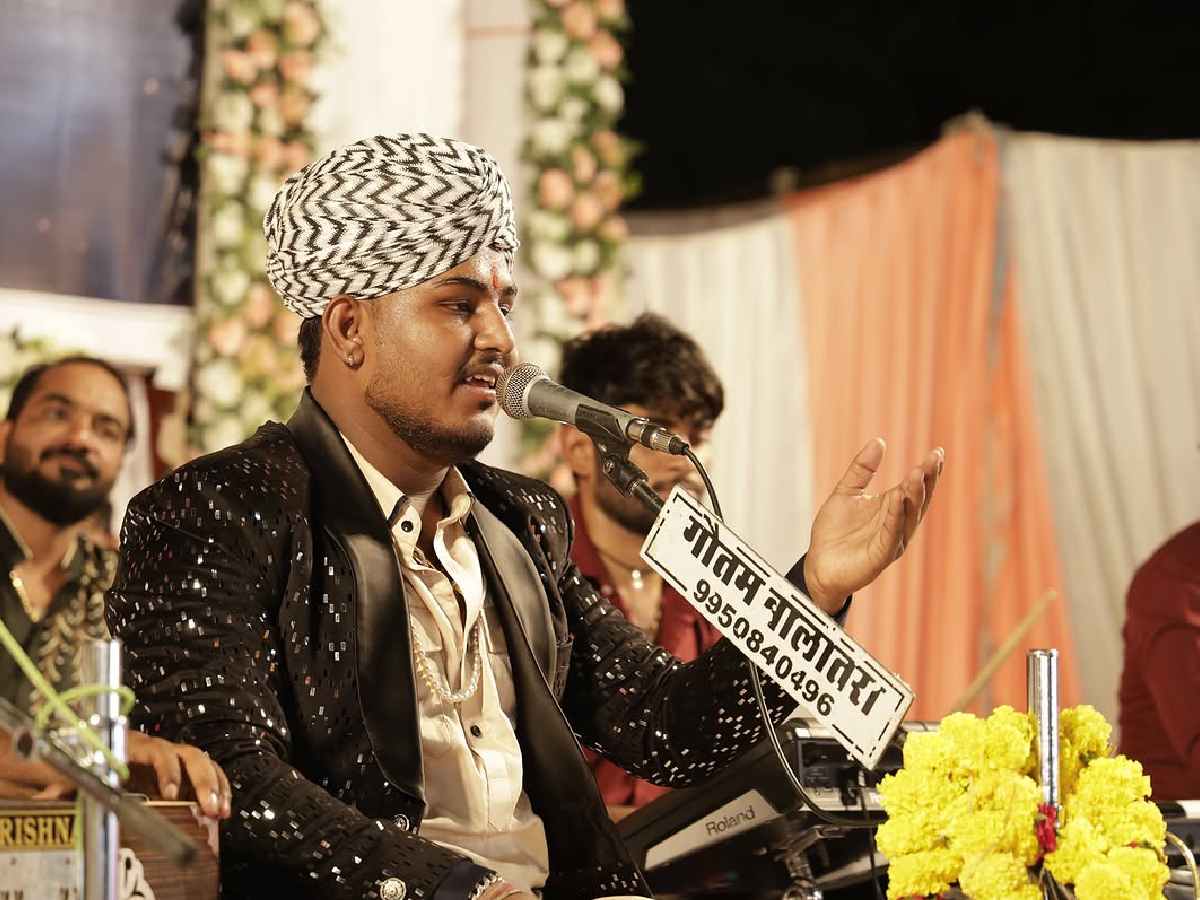
Jasu Khan, the renowned Rajasthani folk singer, performer, and composer, has built a remarkable career by blending his cultural heritage with contemporary influences. A star of The Voice India Kids, he has mesmerised audiences with his soulful renditions of folk and Sufi music.
“I come from the Barmer community of Rajasthan, where music is deeply rooted in our culture. I started singing when I was eight and have performed at many major festivals. A turning point came in 2016 when I participated in The Voice India Kids. My blind audition of Jeena Jeena garnered over 14 million views on YouTube and immense appreciation,” he shared.
Determined to forge his own path, he formed Jasu Khan Indo Fusion by Indian 9 Music, blending Rajasthani folk with Bollywood and Sufi influences. Over the years, he has performed more than 3,000 concerts. “One of the biggest highlights of my career was performing at the Satrang International Music Concert last year alongside legends like AR Rahman and Arijit Singh,” he told Patriot.
Also read: Ranveer Allahbadia told cops he committed ‘mistake’ by making controversial remarks
Staying true to folk roots
For Jasu Khan, folk music is more than just an art form—it is a way of life. “My journey has been filled with passion and challenges. Coming from Rajasthan, where education is limited, I’ve seen firsthand the struggles of a lack of formal learning. That’s why I believe in preserving our heritage while emphasising education.”
With its deep roots in classical traditions, Rajasthani folk music holds immense power, he believes. “Staying true to its authenticity ensures acceptance and appreciation.” The key, he says, is never losing connection with one’s roots. “Education, culture, and Gurus’ guidance shape an artist’s journey, providing the foundation to navigate with confidence. Staying rooted and continuously learning turns challenges into stepping stones.”
One of the biggest hurdles, however, is language. “Rajasthani folk music is unique and holds a special place in Indian culture. One challenge is that many don’t understand the language, yet they still connect with its melody and emotions.” His goal is to present it in a way that transcends language barriers. “By incorporating the traditional Marwari style, I want audiences to recognise Rajasthani as a language worth listening to and enjoying.”
Khan acknowledges that modern influences are shaping music worldwide but insists on retaining folk’s authenticity. “Blending folk with contemporary elements can expand its reach while preserving its essence.”
Bringing Rajasthani folk to a global audience
Despite growing appreciation, he believes Rajasthani folk needs a larger platform. “International festivals, collaborations, and digital platforms are key.” His recent project, Desert Symphony, aimed to revive Rajasthan’s forgotten sounds. Featuring a 25-member ensemble, the initiative showcased traditional instruments in solo performances.
Beyond live performances, digital platforms have been instrumental in expanding folk music’s reach. “Instagram is currently trending, and our music is on all major platforms like Spotify, Gaana, and YouTube. YouTube, in particular, has been impactful, reaching millions, including audiences outside India.” Short-format content has further helped folk music gain traction. “Recently, our music has gained significant attention through reels, crossing millions of views. If you search for Rajasthani folk songs, our tracks perform exceptionally well.”
A unique performance for Delhi audience
“The Delhi audience is receptive and knowledgeable, and this time, we’re bringing something unique,” Jasu Khan shared. “While Rajasthani folk is well-known, we want to challenge stereotypes and introduce a fresh sound.” His upcoming performance will focus on Sufi Sindhi music, a genre that, though deeply connected to his community, is rarely performed in India. “Mostly sung across the border in Pakistan, it also shares strong links with Rajasthani folk traditions.”
Months of preparation have gone into refining this fusion of folk and Sufi influences. “Our goal is to offer an experience that surprises and resonates with audiences beyond their usual expectations of Rajasthani music.”
For Khan, performing in Delhi is always special. “I’ve performed here multiple times, and it feels like home. The audience is knowledgeable, open-minded, and deeply appreciative of diverse musical traditions.” He credits Delhi’s inclusive musical culture for creating an energy that every artist thrives on. “People here embrace all forms of music and culture with equal enthusiasm, making every performance exciting and joyful.”
Also read: Chaos at Delhi award ceremony: Dino Morea exits midway over mismanagement
Jahan-E-Khusrau
At Jahan-e-Khusrau, one of India’s most iconic Sufi music festivals, Khan is set to present a unique Indo-Western fusion performance. “I have something truly special planned for the audience. I’ve collaborated with Yawar Abdal for this set, and together, we’re creating something extraordinary.”
The festival, he says, holds deep significance. “It is unlike any other—a platform dedicated to showcasing true talent and organic art. Performing here has always been a dream, and having the opportunity to perform for Muzaffar Sir is an honour.”
Beyond his own performances, he hopes younger musicians continue folk traditions. “My biggest request to young musicians is to keep our culture alive. Whether singing or playing an instrument, carry forward folk traditions with pride.” He believes folk music is a living heritage. “It has been passed down by our ancestors, shaped by history and nature itself. Preserve and respect it, perform it authentically, and take it forward for future generations.”
A $780 million market built on pavements, where the pleasure of reading meets the price…
Supreme Court advocate Abhishek Pawar alleges women were denied washroom access for seven to eight…
Each day of closure costs shops in Khan Market and Connaught Place between Rs 60,000…
Delhi generates nearly 15,000 tonnes of waste daily, prompting the government to deploy 1,000 mechanical…
Delhi Police has issued an NOC for the Congress rally at Ramlila Maidan on November…
CJP chief Abhijeet Dipke received conditional bail following his arrest for participating in a Connaught…
