When it comes to advertising about sexuality itself, one has to be sensitive and yet deliver a powerful message. If they’re not filtered through various lens, customers may react adversely — even protest and attack the advertiser.
Worldwide, in the past, there have been cases of vandalism over a positive message which could have helped the LGBT community. This year, in the Netherlands, billboards and bus posters featuring male couples kissing were defaced by vandals.
The ads belonged to a Dutch clothier called Suitsupply, and had men posing intimately with each other. To show their disapproval and hatred, the vandals covered the models’ mouths with black tape. Other posters were either torn or removed, with some damage inflicted on the infrastructure as well.
Since there are no clear guidelines on sexuality, no oversight on the advertisements — digital or physical — the end result might be diluted or distorted.
Therefore, the manner in which the brands, the promoters and the owners of the space handle the advertising business should be nuanced and flexible, with readiness to make changes at the very end.
The Indian Outdoor Advertising Association (IOAA) is a national body of outdoor media owners with more than 80% of top Out-Of-Home Media owners and 220+ members across India.
The body protects and promotes the interests of the Outdoor Advertising Media business in India. Indrajit Sen, CEO of the IOAA, says that there are existing rules as per guidelines given by Advertising Standards Council of India. And so far, these rules have safeguarded the body and its members from facing any non-compliance issue.
“Some years back we had a surrogate advertising issue which had some extent of body being shown; we advised the advertisers to not go with and they removed it,” says Sen.
He says that advertisers are conscious that they have to tread carefully, and run the ads past regulating bodies before settling on the final display.
Sen also points out that advertisers would rather edit the ads before the final display is made, so as not to attract wrong attention and possible
vandalism.
In a recent case of censorship, when an illustration for a hoarding creating awareness on LGBTQ issues was rejected by a DMRC (Delhi Metro Rail Corporation) vendor, questions were raised by the clients and the ad agency.
On this, Sen says, “There aren’t any guidelines which make people do this. But people are wary of attracting wrong attention and these sorts of ads are easy targets for vandals.”
“If anyone is avoiding any particular visual, it is purely to avoid controversy in a period when it’s difficult to predict who’s going to react and how,” added Sen.
“Whenever an ad is made, after rounds and rounds of feedback, we finally have one film/print ad that is approved by the client,” says Ananya Pachauri, who works with Leo Burnett, an international advertising company.
She says in the end, brands are trying to project a personality of their own. They can show an ad saying “Meetha hain khaana aaj pehli tareekh hain” which no one find objectionable.
On the DMRC vendor issue she says, “They’re aren’t selling anything but just sensitising people about a homosexual relationship so they can cut the taboo.”
“Live-in relationships could be a taboo for me, not for you. Taboo is perspective. DMRC would not want to offend anyone. A government-run thing would definitely not take risks,” says Pachauri.
She also throws light on the concern on DMRC’s part that says, “what if some people don’t approve of it and get offended and stop taking metro?”
“Advertising never ignores any unforeseen consequences,” says Varun Sharma (name changed), who works for a reputed ad agency in Delhi.
He says that Out-Of-Home campaigns “are actually the worst sometimes, nothing actually creative gets approved.”
However, he says that the advertisements on sexuality on digital platforms work out differently as the audience on digital is much more evolved and interest-based.
Sharma mentions that there are guidelines in place, but not for the representation of a community like LGBTQ.
About the DMRC’s vendor rejection over the illustration mentioned earlier in the article, Sharma thinks that “open to interpretation might be a problem. I guess DMRC didn’t want people to feel uncomfortable.”
He thinks “acceptance doesn’t mean changing the laws. Just that what’s applicable for straight couples, should be fine for LGBT couples too. I believe in equality.”
After the SC’s judgment decriminalised gay sex in India in September, numerous brands promoted the victory of the LGBTQ community in India.
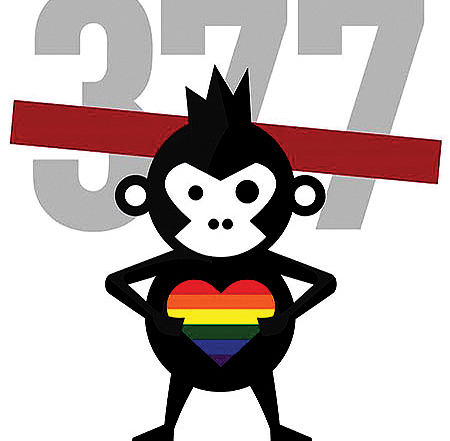
Each one of them putting the rainbow flag, the community’s representational flag, into their products. Like Bira, the beer brand putting a LGBT coloured heart on to their monkey logo.
KFC, had put the rainbow colours on to their buckets, MTV coloured their logo as rainbow too. Swiggy, the food delivery app, introduced a rainbow coloured pastry.
With these digital brands supporting the movement of the LGBTQ community, one thing is certain that advertisements play out differently when the platform is digital.
The DMRC vendor’s stance over not putting up an illustration of a lesbian couple sitting together peacefully, tells us one thing — that social attitudes don’t change overnight.
Patriot waits for the response of DMRC on the rejection of the illustration and the rules and guidelines authorities follow when it comes to advertisements on sexuality.
Each day of closure costs shops in Khan Market and Connaught Place between Rs 60,000…
Delhi generates nearly 15,000 tonnes of waste daily, prompting the government to deploy 1,000 mechanical…
Delhi Police has issued an NOC for the Congress rally at Ramlila Maidan on November…
CJP chief Abhijeet Dipke received conditional bail following his arrest for participating in a Connaught…
The DPCC has floated ₹104 crore tenders to test pilot pollution-control technologies across 40 key…
MCD pushes Bhalswa cleanup to Feb 2027 due to agency transition, leaving over 10 lakh…



