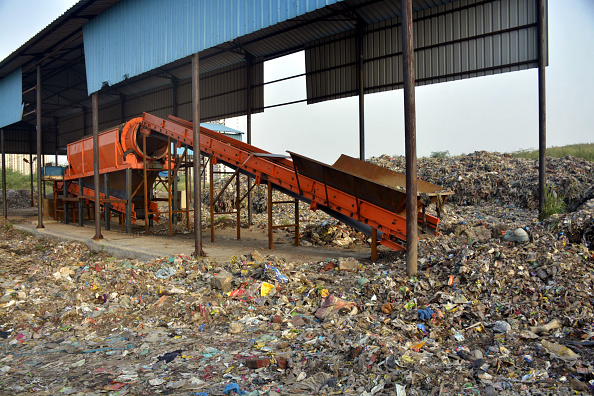
SDMC commissioner Gyanesh Bharti said the site will become operational by March 2023. He said it will be the city’s first engineered sanitary landfill site which would differ from conventional landfills as it will ensure disposal of garbage in a technical and scientific manner.
He said it will come up on a 47.5 acre piece of land allotted by the Delhi Development Authority (DDA) in Tehkhand.
A waste-to-energy plant is being set up at 15 acres of land, while the engineered landfill (E-SLF) is being set up at remaining 32.5 acres with the cost of Rs 42.3 crore, Bharti said in a statement.
He said E-SLF will be used to dispose of nearly 360 metric tons of ashes per day after processing of 3,600 metric tons garbage per day by SDMC operated waste-to-energy plant at Okhla and an under-construction plant at Tehkhand.
Under the project, a seven metre deep pit and a thick layer of soil will be poured at the bottom and thereafter, three layers of liner of different categories will be put on.
A pipeline will be laid in between layer of gravels through which leachate will travel and finally go to leachate treatment plant. With this method and technology, the leachate material coming out of garbage does not pollute groundwater and soil, the statement said.
At traditional landfill sites such as Okhla, Ghazipur and Bhalswa, mainly dumping of garbage takes place resulting in garbage pileup and seepage of toxic materials below the ground and contamination of ground water and soil.
According to SDMC officials, around 3,600 metric tonnes of garbage is generated in south Delhi every day, of which only 50 per cent is processed by SDMC and rest is dumped at Okhla landfill.
The South Delhi Municipal Corporation (SDMC) has set a target to stop dumping of waste at the Okhla landfill site by June 2022 and scientifically close the landfill by the end of 2023.
Bharti further said SDMC is making efforts to make the city garbage free .
SDMC’s emphasis is to dispose of garbage at zonal level and to execute this, various measures have been taken at ward level. These include segregation of dry and wet waste at source by collaborating with RWAs, promotion of home composting, setting up of bio-methanisation plant, installation of pit composter etc, the statement added.
(Cover: representational image: Getty)
BNSS caps custody at 24 hours and requires production before a Magistrate; force permitted only…
An SEM court reserved its order on extending the judicial custody of CJP leaders Saurav…
Delhi recorded its first 'poor' air day of the season on Wednesday as AQI hit…
Stage I of GRAP was invoked later this year in Delhi due to govt's preventive…
DDA plans to resume tethered hot air balloon rides at Baanseera park from Nov 14,…
NDMC is consulting RWAs and traders on draft 2026 property tax bye-laws, seeking feedback on…
