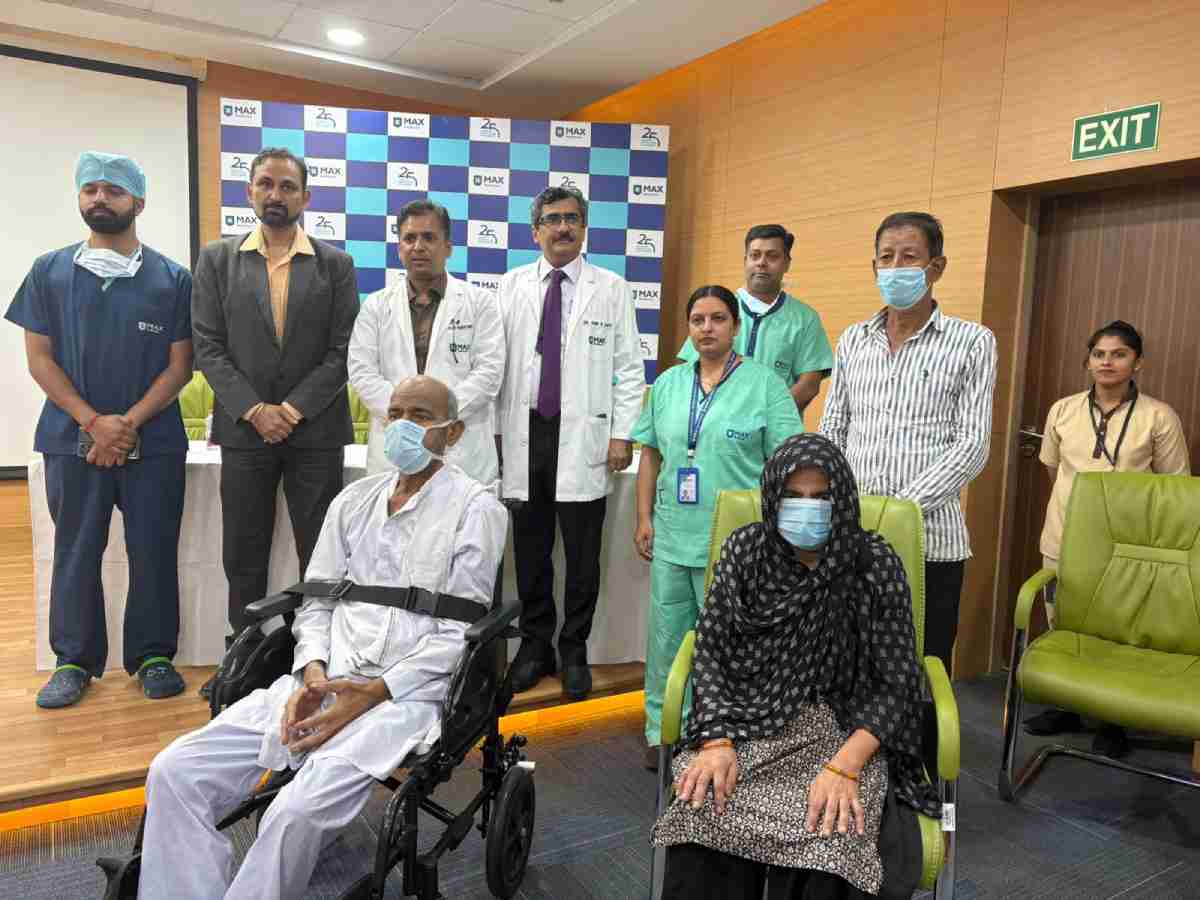
In a rare and technically complex procedure, doctors at Max Super Speciality Hospital, Noida, have successfully carried out a kidney transplant involving two major medical challenges: blood group incompatibility between the donor and recipient, and the removal of a tumour from the donor’s kidney prior to transplant.
The 60-year-old male recipient, who had been on dialysis for two years, had a B+ blood group. His only available donor was his 58-year-old wife with an A+ blood group—an incompatible match under standard protocols. Despite the mismatch, doctors proceeded with an ABO-incompatible transplant, a procedure that is less commonly performed due to its higher risk and complexity.
Further complicating the case, pre-operative screening revealed a 4.2 cm benign tumour—roughly the size of a golf ball—in the donor’s left kidney. According to the transplant team, such tumours are typically removed after the kidney is harvested, using a specialised method known as bench surgery. However, combining this procedure with an ABO-incompatible transplant added a significant degree of surgical and medical risk.
“Such cases demand extreme precision and coordination,” said Dr Amit K Devra, Senior Director of Urology, Robotics, and Kidney Transplant at Max Hospital Noida, who led the surgical team. “We had to ensure the tumour was removed without compromising the integrity of the organ while also managing the immunological challenges of the blood group mismatch.”
To reduce the risk of organ rejection, the recipient underwent two rounds of plasmapheresis—a process that filters antibodies from the blood—prior to surgery. This treatment, while essential, also lowers clotting factors and platelet levels, increasing the risk of bleeding during and after the operation.
Despite these hurdles, the surgery proceeded without major complications. The kidney was removed from the donor, the tumour excised on the surgical bench, and the organ successfully transplanted into the recipient within a tightly managed timeframe. The new kidney began functioning immediately, and the patient was discharged six days after the operation.
Dr Vijay Sinha, Director of Nephrology and Kidney Transplant at the hospital, said the case exemplified the importance of multidisciplinary collaboration in high-risk transplants.
Also Read: World IVF Day 2025: Why more Indian women are facing early fertility challenges
“ABO-incompatible transplants require extensive planning, desensitisation, and careful post-operative monitoring,” said Dr Sinha. “When you add the presence of a tumour in the donor kidney, the complexity increases manyfold. This was truly a team effort, from immunological assessments to perioperative care.”
Both the donor and recipient are reported to be doing well post-surgery.